If you want a broader starting point, you can also explore the Cryotherapy & Freeze Products category for more resources on cryotherapy and freeze products and practical next-step reading.
How to Use This Cryotherapy and Freeze Products Hub
Cryotherapy uses controlled cold exposure to damage unwanted tissue, reduce discomfort in some procedural settings, or support specific office-based treatments. In dermatologic and procedural contexts, it often works through rapid freezing, intracellular ice formation, and vascular disruption within the target tissue. As a result, clinicians may use cryotherapy and freeze products for selected benign lesions, some pre-cancerous lesions, and several wart presentations. However, suitability varies by diagnosis, location, skin type, and treatment goal.
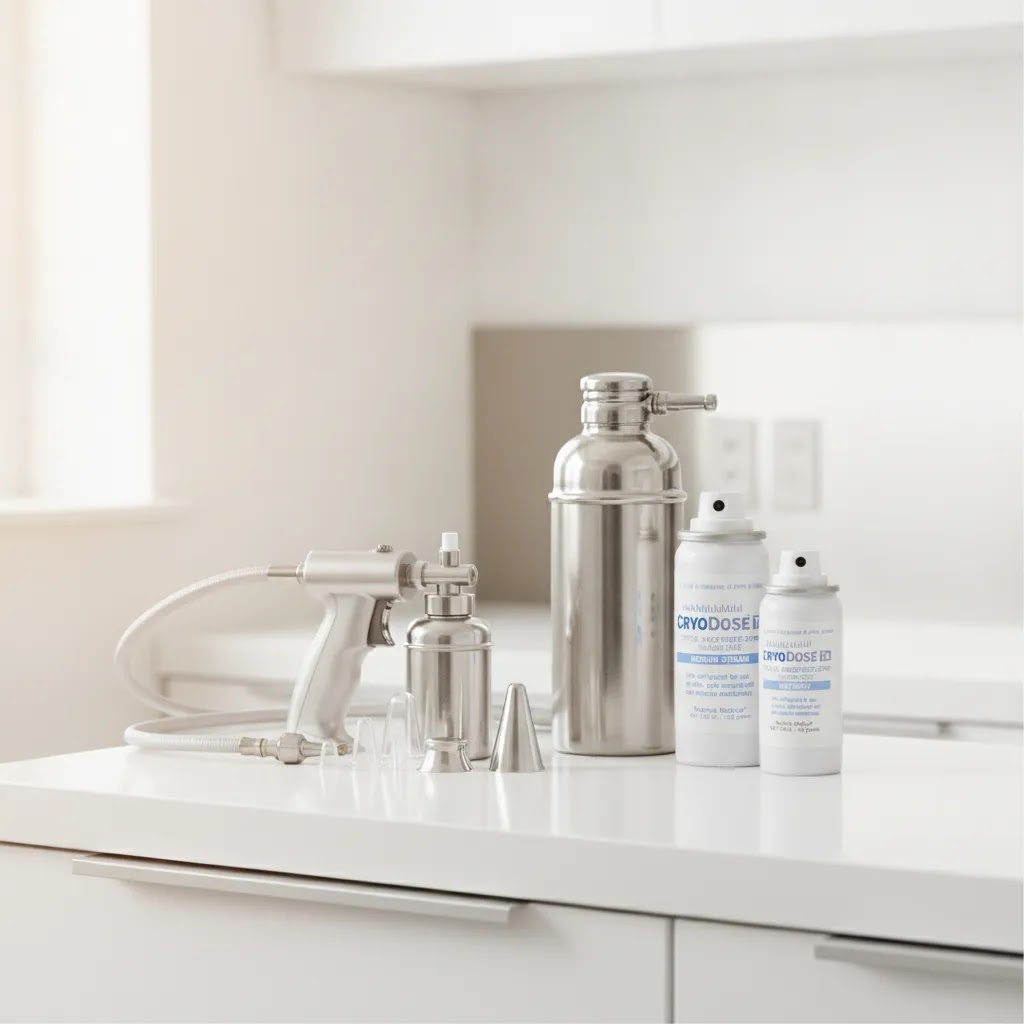
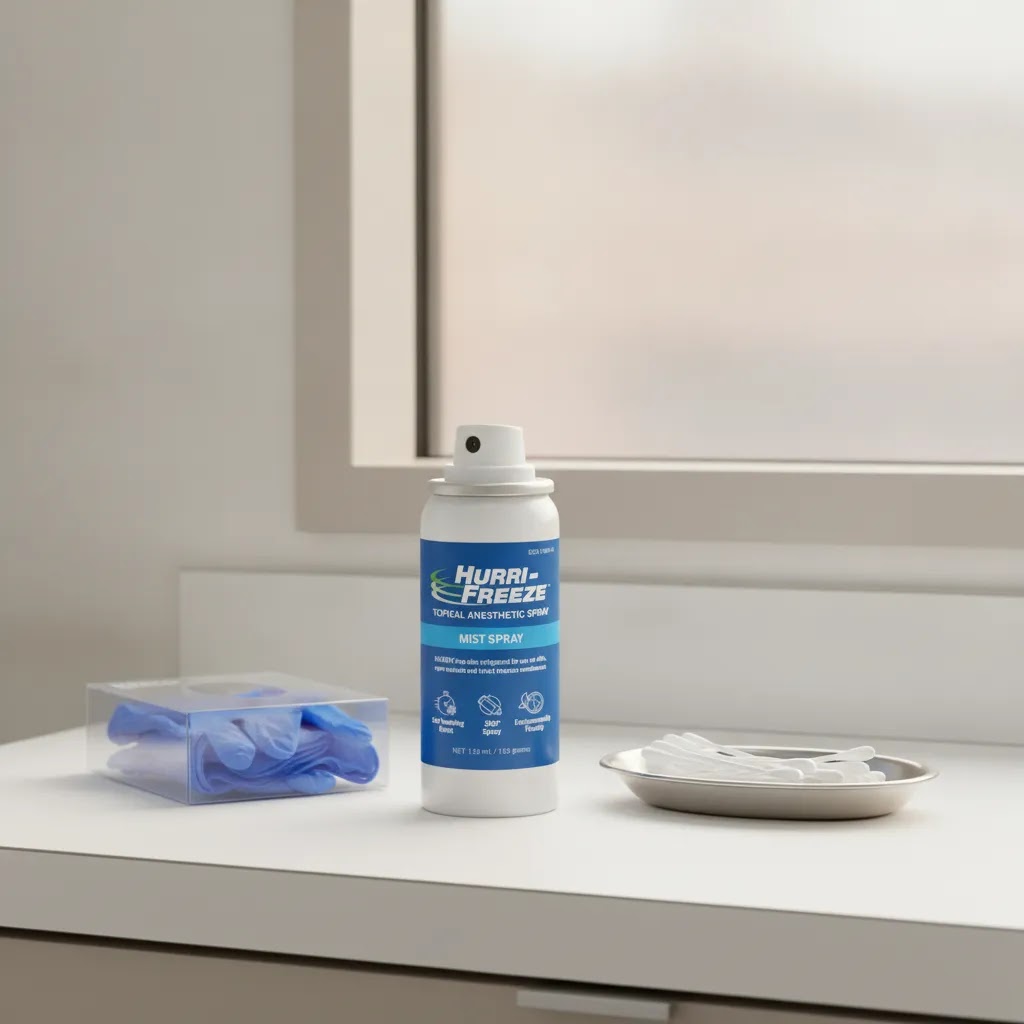
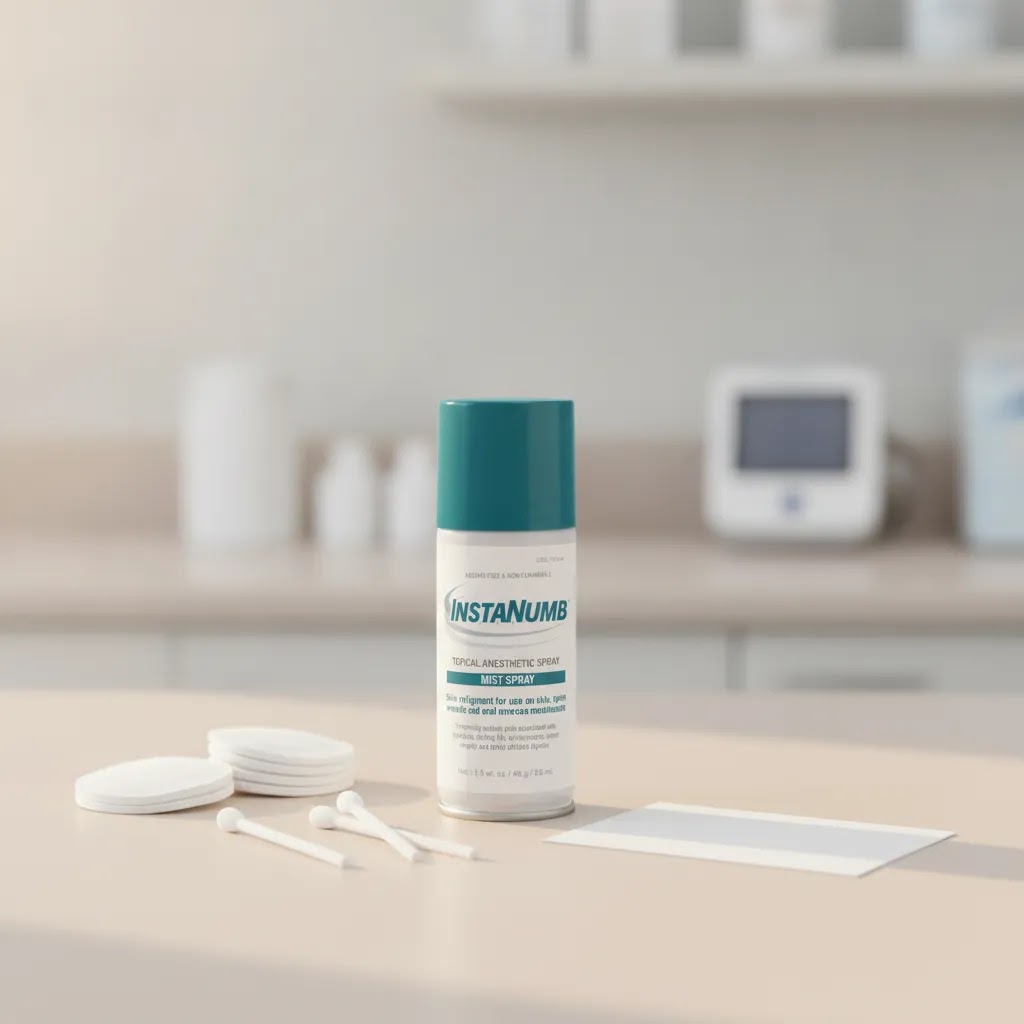
Nuance Medical offers several cryotherapy and freeze products, including CryoDose™ V: Portable Precision Cryotherapy System, CryoDose™ H Portable −55 °C Cryotherapy System, and pain-control sprays such as Hurri-Freeze, CryoDose™ TA, and InstaNumb™.
These tools do not do the same job. Some tools help clinicians treat lesions with cryosurgery. Others help reduce pain for a short time during injections or minor procedures.
The sections below organize the full cryotherapy and freeze products topic cluster. That way, you can move from broad education to more specific questions about healing, side effects, devices, sourcing, and clinical use.
Cryotherapy and Freeze Products by Condition and Setting
Many people use “cryotherapy” as an umbrella term. In practice, though, it can describe very different procedures in very different settings. A simple way to compare cryotherapy and freeze products is to separate office-based skin cryotherapy from internal cryotherapy procedures done in hospitals.
Cryotherapy and freeze products: office-based vs internal cryotherapy
Office-based skin cryotherapy (sometimes called cryosurgery) is what most patients mean when they talk about “freezing something off.” Trained clinicians commonly use it for selected external skin concerns. These include certain warts, skin tags in appropriate cases, actinic keratoses (a pre-cancerous sun-related lesion), and other benign lesions that a clinician judges appropriate after an in-person evaluation.
Internal cryotherapy (often called cryoablation) refers to image-guided freezing of tissue inside the body, for example, certain tumors in organs. Specialized teams usually carry this out in hospital or surgical settings with very different equipment, safety protocols, and decision-making. This hub covers office-based skin cryotherapy and the cryotherapy and freeze products people most often compare in outpatient care.
When cryotherapy and freeze products may not be the right choice
Cryotherapy does not fit every lesion. Diagnosis drives that decision. Before a clinician destroys tissue, that clinician usually wants confidence about what the lesion is.
Many clinicians avoid freezing a lesion when:
- The growth is uncertain, changing, bleeding, unusually pigmented, or otherwise concerning, because it may need closer evaluation and sometimes biopsy before any destructive treatment.
- The area is high-risk for healing or cosmetic change, such as certain facial zones, eyelid margins, or areas with limited circulation, where treatment planning may be more conservative.
- A patient has factors that can change risk or healing expectations, such as a history of significant pigment change after procedures, immune suppression, or impaired wound healing. Individual factors shape suitability, and patients should discuss them in consultation.
Main categories of cryotherapy and freeze products
Many patients also overlook that cryotherapy and freeze products fall into different categories, even when the marketing sounds similar:
- Clinician-delivered cryosurgery systems help clinicians destroy selected skin lesions with controlled precision. These systems focus on consistency and the ability to match technique to lesion type and location.
- Over-the-counter wart freezing kits target common wart presentations and typically use a lower-intensity freezing method than liquid nitrogen. They can be convenient, but they do not diagnose lesions, and they may work less predictably on thicker, stubborn, or misidentified growths.
- Cold topical anesthetic sprays such as Hurri-Freeze, CryoDose™ TA, and InstaNumb™ help control pain for a short time during injections or minor procedures. They do not destroy tissue or “remove” lesions, even though the cooling sensation can sound similar.
Ultimately, the best starting point is clarity on what you want to treat and why. A qualified clinician can confirm whether a lesion appears appropriate for freezing, discuss alternatives, and set realistic expectations for healing and cosmetic outcome.
Clinical Cryosurgery for Cryotherapy and Freeze Products
Cryosurgery: Procedures, Applications, and What to Expect introduces office-based cryosurgery as a targeted treatment approach rather than a one-size-fits-all freezing method. Readers comparing treatment pathways can use this article to understand where cryosurgery fits clinically, how controlled tissue destruction works, and what practical issues usually come up before and after treatment.
Cryotherapy for Actinic Keratosis: Treatment Guide covers a common reason patients seek lesion-directed freezing. It shows readers why diagnosis matters before treatment, what a typical appointment may involve, and why a clinician should assess a suspicious or persistent lesion instead of leaving it to self-treatment.
Liquid Nitrogen Treatment on Face: Procedure and Aftercare addresses an area where readers often feel especially cautious. Facial treatment raises understandable concerns about healing visibility, discoloration risk, and precision. This article covers what careful treatment planning may involve and what to expect from the early healing period on more visible skin.
Cryotherapy Mole Removal: Effectiveness, Process, and Cost reviews an often misunderstood topic. Not every mole is appropriate for cryotherapy, and lesion identification matters before cosmetic or procedural decisions are made. This resource helps readers approach mole-related questions with the right level of caution and medical oversight.
Cryotherapy and Freeze Products Procedure Step-by-Step
For many patients, the hardest part is not the idea of freezing. It is knowing what actually happens in the room. Technique varies by clinician and lesion type, but most office-based cryotherapy appointments follow a similar pattern.
1) Assessment and confirmation of what is being treated
A clinician will usually examine the lesion and surrounding skin, confirm that cryotherapy is an appropriate option, and discuss alternatives when needed. This is also where your history matters. For example, prior treatments, scarring tendencies, pigment change, and treatment on a high-visibility area like the face can all shape the plan.
2) Preparation of the treatment site
The clinician usually cleans the area. Depending on the lesion, the clinician may also reduce surface scale or thickened keratin (the outer layer of skin). Thicker lesions often need different freeze timing than thin, flat lesions. In some cases, the team may discuss pain-control steps, although many treatments are brief.
3) Application method and freeze-thaw cycles
In practice, cryotherapy can be delivered with several applicator approaches. These include spray-based application, cone-style targeting, or a contact method often described as using a cotton-tipped applicator. Your clinician may use one freeze or a series of freeze-thaw cycles depending on the diagnosis and tissue depth.
During the freeze, many patients feel strong cold, stinging, burning, or aching. The feeling usually peaks quickly. Then it eases after the application stops.
4) Immediate appearance afterward
Right after treatment, the skin may look red and slightly swollen. Some areas turn pale or white for a short time because of the freeze. Over the next hours, a blister can form. Later, the area may dry, crust, and gradually shed as the skin turns over.
What determines how “strong” the treatment is
Patients often assume there is one standard dose. In practice, clinicians adjust cryotherapy in real time. Factors that can influence the approach include:
- Temperature capability of the cryogen or device used
- Contact time and whether one or more freeze-thaw cycles are performed
- Applicator type and precision, especially on the face or near delicate structures
- Lesion thickness and size, since deeper or thicker tissue typically requires a different approach than superficial lesions
- Location, because skin thickness and healing behavior vary across the body
- Operator control and experience, which is a major reason medically supervised care matters for complex areas
Questions worth asking before you proceed
In a consultation, this usually becomes a short practical conversation. It helps you feel prepared. Useful questions include:
- How many sessions are typically needed for this type of lesion?
- What should the site look and feel like over the next 1 to 2 weeks?
- What is the aftercare plan, and what should I avoid while it heals?
- If this is on the face or a darker skin tone area, what is my risk of temporary or longer-lasting pigment change?
- When should I follow up if it does not resolve or if it returns?
No two lesions behave in exactly the same way. Even lesions with the same label can heal differently. Clear expectations, appropriate technique, and a follow-up plan make cryotherapy feel much more predictable.
Cryotherapy and Freeze Products Recovery After Cryosurgery
What to Put on Skin After Liquid Nitrogen Treatment is useful for readers who want straightforward aftercare guidance. The focus is not on aggressive home intervention. Instead, it supports normal healing, helps reduce unnecessary irritation, and explains when a treated area may need professional review rather than more product experimentation.
Cryotherapy and Freeze Products Results After Cryosurgery
Pictures of Skin After Cryosurgery: Healing Timeline helps set expectations around appearance changes during recovery. Many readers worry less about the freezing itself than about what the site may look like over the following days and weeks. This article frames those visual stages so the healing process feels more predictable and less alarming.
Cryotherapy and Freeze Products Side Effects
Side Effects of Cryotherapy on Face: Risks and Recovery explains the trade-offs that matter most in visible treatment areas. It covers common effects such as redness, blistering, crusting, and pigment change. It also helps readers understand when side effects are part of normal recovery and when they may need assessment.
Liquid Nitrogen Burns: Causes, Treatment, and Prevention examines an avoidable complication that underscores why product selection and technique matter so much. The article is especially relevant for readers comparing home freezing with clinician-delivered treatment, where control, targeting, and safety protocols tend to be stronger.
Cryotherapy and Freeze Products Billing
Cryotherapy CPT Codes: Billing Guide for Providers speaks more directly to practice teams and clinical buyers than to cosmetic patients, but it still matters within the larger hub. Treatment selection in a medical setting is often influenced by documentation standards, coding structure, and procedure classification, especially for high-volume lesion treatment services.
CPT Code for Cryotherapy of Warts: Billing Reference narrows that conversation to wart treatment. For professional readers, it provides a more specific administrative lens on how wart cryotherapy is categorized and documented in practice.
Cryotherapy and Freeze Products Costs
How Much Does Cryotherapy Cost? Pricing Guide for 2026 gives readers a framework for understanding why pricing can vary. Cost often depends on lesion type, number of treatment areas, clinical setting, and whether repeat sessions may be needed. That broader context helps readers ask better questions during consultation.
Cryotherapy for Warts Cost: Pricing and Insurance Coverage is especially relevant for patients weighing professional treatment against over-the-counter alternatives. It covers the practical decision factors that often shape value, not just the upfront fee.
Cryotherapy and Freeze Products Equipment
Cryotherapy Machines: Types, Features, and Clinical Uses helps readers and buyers compare device categories with more precision. Nuance Medical’s own systems include CryoDose™ V, a portable reusable cryosurgical kit that delivers controlled -70°C cryotherapy, and CryoDose™ H, a portable −55°C cryotherapy system designed for controlled treatment of benign skin lesions. This article is the right next step if you want to compare application style, temperature capability, portability, and practical use in clinic.
Cryotherapy and Freeze Products Recovery
Cryotherapy Stages of Healing: What to Expect After Treatment gives a broader recovery roadmap that applies across several treatment scenarios. Readers often feel more comfortable choosing cryotherapy when they understand the sequence of tenderness, blistering, drying, and skin turnover that may follow a properly targeted treatment.
When to Call a Clinician After Cryotherapy and Freeze Products Treatment
Most cryotherapy sites heal without major issues. Still, it helps to know what is normal and what deserves a prompt check-in. A typical healing pattern may include tenderness, redness, swelling, blistering, crusting, and gradual shedding over days to weeks, depending on treatment depth and location.
Contact a qualified clinician promptly if you notice signs that go beyond expected irritation, especially if symptoms are getting worse instead of settling. Red flags can include:
- Spreading redness, warmth, or increasing swelling around the treated area
- Increasing pain after the first day or two, rather than gradual improvement
- Pus-like drainage, foul odor, or persistent weeping
- Fever or feeling unwell in addition to local skin changes
- Bleeding that does not stop with gentle pressure
- Severe swelling in a sensitive area (for example, around the eye) or any concern about function
- A non-healing open area or ulceration that persists longer than expected for the site and depth of treatment
Blistering and crusting can be normal. However, progressive redness, heat, worsening pain, or drainage can signal that the site needs assessment. Infection is not the most common outcome, but treated skin does have a temporary barrier disruption. As a result, basic wound care and sensible protection matter.
If your clinician gave you specific aftercare instructions, follow those steps first. If something looks or feels very different from what you were told to expect, reach out instead of trying to fix it with more products or repeated freezing. In addition, high-friction areas, facial sites, and patients with healing risk factors often benefit from a lower threshold for follow-up.
For general wound-care guidance, the MedlinePlus wound care overview offers a reliable patient education reference. In addition, the American Academy of Dermatology overview on actinic keratosis explains why diagnosis matters before destructive treatment.
Cryotherapy and Freeze Products for Warts
Cryotherapy for Warts: How Freezing Works and What to Expect explains why wart tissue may respond to repeated freezing cycles and why complete clearance is not always immediate. It is a practical overview for patients deciding whether office-based cryotherapy fits their timeline and tolerance for short-term irritation.
Liquid Nitrogen for Warts: Treatment Process and Healing narrows that discussion to a commonly used cryogen. It is particularly helpful for readers who want a clearer picture of what happens during treatment, how the area may feel afterward, and why follow-up can matter.
Where to Buy Liquid Nitrogen for Warts: Sourcing Guide approaches wart treatment from a purchasing and safety perspective. Readers considering self-sourcing can use this article to understand storage, handling, and risk concerns before assuming that access alone makes home use appropriate.
Cryotherapy for Genital Warts: Treatment Guide covers a sensitive topic that requires medical supervision, accurate diagnosis, and a careful discussion of alternatives. This article helps readers approach treatment discreetly, safely, and with realistic expectations.
General Cryotherapy and Freeze Products Education
Cryotherapy: What It Is, Benefits, and How It Works in 2026 serves as a broad primer for readers who are just entering the topic. It clarifies terminology and separates whole-body wellness trends from clinically targeted freezing used in medical settings.
Cryotherapy Benefits: What the Science Says in 2026 is useful for readers who want a more evidence-aware lens. Rather than relying on marketing language, it helps sort established uses from broader claims that may not apply equally across every cryotherapy format.
Cryogenic Freezing Explained: Science, Uses, and Medical Applications goes deeper into the underlying cold-based mechanism. That makes it a strong fit for readers who want to understand how cryogenic injury works at the tissue level before comparing treatment devices or clinical indications.
Cryotherapy Temperature Ranges and How Cold Therapy Works helps explain why temperature alone does not tell the full story. Contact time, applicator design, tissue depth, and operator control also shape the biological effect and treatment outcome.
High Pressure Cryotherapy: Uses, Benefits, and Comparison explores a more specific category for readers evaluating different delivery systems. It is especially useful when the question is not whether cryotherapy works at all, but which technical approach may suit a particular use case.
Home Cryotherapy and Freeze Products
At-Home Cryotherapy for Warts: OTC Options and Safety addresses a common first step for patients who want a convenient solution. It outlines the main limitations of home kits, including lower freezing intensity, diagnostic uncertainty, and the possibility of treating the wrong lesion.
Cryotherapy Kit for Warts: Best Home Freezing Kits Reviewed adds a more purchase-oriented angle. Readers who are still considering a home route can use this guide to compare product categories while keeping safety and suitability in view.
Liquid Nitrogen Applications in Cryotherapy and Freeze Products
Liquid Nitrogen Tattoo Removal: Process and Results covers a topic that often attracts curiosity because it sounds straightforward but can involve meaningful trade-offs. The article helps readers understand why tattoo removal decisions require careful modality selection and realistic expectations around skin response.
Nuance Cryotherapy and Freeze Products
CryoDose Spray: Professional Cryotherapy by Nuance Medical is the most direct pathway for readers specifically evaluating Nuance Medical’s cryotherapy offering. It connects the educational side of the hub with product-level decision-making and is particularly relevant for clinicians or purchasers looking for a professional-grade system.
Readers interested in the broader product side of procedural comfort can also browse Topical Pain Relief. This matters because treatment experience is not only about lesion clearance or freezing precision. Comfort management before injections or minor procedures may also shape how a practice approaches patient care. For related company updates, New Innovation in Pain Relief and Sustainability offers useful background on the brand’s product direction.
Skin Lesion Removal with Cryotherapy and Freeze Products
Cryotherapy for Skin Tags: Safe and Effective Removal focuses on a concern that is often treated casually online but still benefits from proper lesion identification. The article helps readers understand when a skin tag may be suitable for freezing and when a visible growth should be assessed before any removal attempt.
Wart Removal with Cryotherapy and Freeze Products
Wart Removal Methods: What Works and What to Expect broadens the conversation beyond freezing alone. This is helpful for readers who are comparing cryotherapy with other office-based or home approaches and want a balanced picture of the trade-offs.
Plantar Wart Removal: Treatments That Actually Work focuses on one of the more stubborn wart types. Weight-bearing skin can be harder to treat, and this article helps readers set realistic expectations around discomfort, repeat sessions, and functional recovery.
Wart Removal Near Me: Finding a Provider in 2026 supports the final stage of evaluation by showing readers how to choose a provider thoughtfully. That includes asking about diagnosis, technique, follow-up, and whether a lesion truly appears appropriate for cryotherapy.
Pros and Considerations of Cryotherapy and Freeze Products
Benefits of cryotherapy and freeze products
- Cryotherapy can be a focused, localized treatment that targets unwanted tissue without a surgical incision in many cases.
- Professional cryotherapy devices may allow more controlled application than general home freezing products, which can matter for precision and patient safety.
- Many cryotherapy treatments are performed in office-based settings and typically involve relatively short treatment times.
- The hub structure makes it easier to compare clinical uses, healing expectations, costs, risks, and equipment before choosing a next step.
- Nuance Medical offers both cryotherapy treatment systems and topical anesthetic sprays, which helps clarify the difference between tissue-freezing devices and products intended for temporary pain control.
Considerations for cryotherapy and freeze products
- Cryotherapy is not suitable for every lesion, and self-diagnosis can lead to delayed care or treatment of the wrong skin condition.
- Results vary by lesion type, depth, location, skin response, and whether multiple sessions are needed.
- Common short-term effects may include redness, swelling, blistering, crusting, tenderness, or temporary pigment change.
- Home freezing products may be less precise and may carry a greater risk of undertreatment or accidental injury if used inappropriately.
How to Choose the Right Cryotherapy and Freeze Products Path
A useful starting point is to separate three categories that often get blended together online: lesion-treatment cryotherapy systems, wart-focused consumer freezing products, and topical anesthetic sprays that create rapid cooling for temporary pain relief. They all involve cold, but they serve very different purposes.
Match cryotherapy and freeze products to the goal
First, look at the treatment goal. If the aim is removal or destruction of a benign skin lesion, a professional cryotherapy system such as CryoDose™ V or CryoDose™ H belongs in a different conversation than a pre-procedure anesthetic spray. If the goal is temporary numbing before an injection or minor procedure, products such as Hurri-Freeze, CryoDose™ TA, or InstaNumb™ are more relevant.
Second, consider the level of control needed. Delicate areas, facial lesions, uncertain diagnoses, and recurrent warts often call for medically supervised assessment. Precision of discharge, temperature capability, and applicator design may influence how controlled the treatment feels in practice.
Think about recovery and follow-up
Third, think about the recovery you can reasonably manage. Even straightforward cryotherapy may leave a visible treated site for days or weeks. If the area is highly visible or friction-prone, aftercare planning matters. For example, readers who want a simple overview of how long does it take for scars to fade may find that broader healing context helpful.
Fourth, weigh convenience against diagnostic certainty. Home options may feel simpler, but convenience matters less if the lesion is misidentified or if treatment is repeated without progress. Persistent, changing, painful, or unusual lesions deserve professional evaluation.
Review the source and support
Fifth, assess the provider or product source. For professional buyers, it helps to work with a company that presents clear product descriptions, intended uses, and support resources. Readers who want more company background can review New Year, New Website | Nuance Medical | Deliver Safer Care with Confidence for a general overview of the brand’s direction.
If you are still comparing cryotherapy and freeze products, Nuance Medical can be a useful place to continue your research. The brand’s cryotherapy systems and topical pain relief products reflect a practical, clinically oriented approach. You can explore product pages to see which category best matches your needs. In some cases, post-procedure care may also matter, so related resources such as the bruise treatment guide or best scar cream after surgery may offer helpful context for recovery questions.
Cryotherapy and Freeze Products Comparison Table
| Category | Main purpose | Typical setting | Examples named in this guide | Key note |
|---|---|---|---|---|
| Clinician-delivered cryosurgery systems | Controlled tissue destruction of selected skin lesions | Office-based clinical care | CryoDose™ V, CryoDose™ H | Used for lesion-focused cryotherapy with more control and precision |
| Over-the-counter wart freezing kits | Home freezing for common wart presentations | At home | General OTC wart kits | Typically use lower-intensity freezing than liquid nitrogen and may be less predictable |
| Cold topical anesthetic sprays | Temporary pain control during injections or minor procedures | Office-based procedural care | Hurri-Freeze, CryoDose™ TA, InstaNumb™ | Not used to destroy tissue or remove lesions |
| Internal cryotherapy (cryoablation) | Image-guided freezing of tissue inside the body | Hospital or surgical settings | General internal procedures | Uses very different equipment, safety protocols, and decision-making |
Frequently Asked Questions About Cryotherapy and Freeze Products
What does “cryotherapy and freeze products” usually include?
The term may refer to several different categories, including cryosurgical systems for lesion treatment, wart-freezing products, and cold-based topical anesthetic sprays for temporary pain control. They are not used in the same way. The right option depends on the treatment goal, the anatomy involved, and whether medical supervision is needed.
Is cryotherapy the same as liquid nitrogen treatment?
Not always. Liquid nitrogen is one cryogen used in some clinical settings, but cryotherapy can also describe other controlled freezing systems and cold-delivery methods. Device type, temperature range, and application style can vary, so it helps to look beyond the umbrella term and understand the exact treatment being discussed.
Are professional cryotherapy devices safer than home freezing kits?
Professional treatment may offer better diagnostic oversight and more controlled application, which can improve safety in many cases. That does not mean every clinical treatment is risk-free. Blistering, irritation, and pigment changes can still happen. Home kits may be reasonable for some users, but they can be less precise and less effective for stubborn lesions.
How long does healing usually take after cryotherapy?
Healing time varies by treatment depth, body area, skin response, and the condition being treated. Many people notice redness, blistering, crusting, or dry peeling during the early phase. Superficial sites may settle more quickly, while larger or deeper treatments can take longer. A qualified clinician can give a more individualized timeline.
Can cryotherapy remove all warts in one session?
Sometimes, but not reliably. Warts can be stubborn, and some need more than one treatment session. Location, thickness, immune response, and prior treatment history all influence how quickly a wart may respond. It is best to approach wart cryotherapy with flexible expectations rather than assuming one treatment will always be enough.
Is facial cryotherapy a good choice for every visible lesion?
No. Visible facial lesions deserve careful assessment because diagnosis, pigment risk, and cosmetic healing all matter. Some lesions may be suitable for freezing, while others may require a different approach or biopsy. A consultation is the safest way to determine whether cryotherapy is appropriate for a facial concern.
What is the difference between CryoDose™ systems and topical cold sprays?
CryoDose™ V and CryoDose™ H are cryotherapy systems designed for controlled treatment of skin lesions and related clinical uses. By contrast, products such as Hurri-Freeze, CryoDose™ TA, and InstaNumb™ are topical anesthetic sprays intended for temporary pain control during injections, venipuncture, IV starts, and minor procedures.
Do cryotherapy products have downtime?
Some do, some do not. Lesion-directed cryotherapy often has a visible healing period, even if it does not require formal downtime. Topical anesthetic sprays used for temporary pain control typically work very quickly and are part of procedural preparation rather than lesion recovery. The expected aftercare depends on the product category.
Can cryotherapy remove seborrheic keratosis?
Sometimes. Seborrheic keratoses are common benign growths that can look “stuck on,” and in some cases a clinician may choose cryotherapy as a treatment option. The key step is confirmation of what the lesion is before any destructive treatment, especially if a spot is new, changing, irritated, or atypical in appearance. A qualified clinician can assess whether freezing is appropriate or whether another approach is more suitable.
What is the best product to freeze off a wart?
The “best” option depends on the type of wart, its location, and how confident you are that it is truly a wart. Over-the-counter freezing kits are designed for certain common warts, but they may be less effective for thicker warts, plantar warts, or lesions that have not responded to repeated home treatment. In an office setting, clinician-delivered cryotherapy may provide more controlled targeting and a clear plan for follow-up if the wart persists.
Can cryotherapy remove skin tags?
In some cases, yes. Cryotherapy may be used for selected skin tags, but proper identification matters because not every raised lesion is a simple skin tag. Location also matters, since thin skin and high-friction areas can have different healing behavior. If you are unsure what you are looking at, an in-person assessment is the safest starting point.
Does cryotherapy reduce cortisol?
Some wellness-focused cryotherapy approaches are discussed in relation to stress response, including cortisol, but the evidence is not consistent across formats, temperatures, and exposure protocols. Office-based skin cryotherapy and freeze products used for lesion treatment or temporary numbing are not intended as hormone or stress interventions. If your goal is stress or sleep support, it is worth discussing evidence-based options with a qualified healthcare professional.
Key Takeaways
- Cryotherapy and freeze products include multiple categories, and they should not be treated as interchangeable.
- Professional cryotherapy systems are designed for targeted tissue treatment, while cold topical sprays may be used for temporary pain relief.
- Diagnosis, treatment area, and recovery expectations all influence whether cryotherapy is a good fit.
- Home freezing may be convenient, but medically supervised care may be more appropriate for uncertain, persistent, or visible lesions.
- Nuance Medical offers cryotherapy-related systems and topical pain relief products that support different procedural goals.
Conclusion
Cryotherapy is a broad category. The most useful comparisons come from understanding purpose, precision, and suitability rather than assuming every freezing product works the same way. Some tools help treat benign skin lesions with controlled cold exposure. Others support comfort during procedures through rapid temporary numbing.
That distinction helps readers and professional buyers make more confident decisions. If you want to continue exploring cryotherapy and freeze products, the articles in this hub provide a practical path from basic education to more specific treatment questions. You can also review Nuance Medical’s cryotherapy and topical pain relief product pages to learn more about the available options and decide which product category best matches your needs.
Medical Disclaimer: The information provided in this article is intended for general informational and educational purposes only. It does not constitute medical advice and should not be used as a substitute for a professional consultation with a qualified aesthetic practitioner or healthcare provider. Individual results from aesthetic treatments vary. Always seek the advice of a qualified medical professional before undergoing any cosmetic procedure.