

How the different types of acne scars are classified
Clinicians classify acne scars by shape, depth, and surface level. The first split is simple: atrophic scars sit below the surrounding skin, while hypertrophic scars rise above it.
Atrophic scars are common. They form when the skin rebuilds with too little supportive collagen. As a result, the area heals with a visible depression. In side lighting, these scars can look like pits, saucer-like dips, or narrow channels.
Hypertrophic scars sit above the skin surface. They form when healing creates excess collagen in one concentrated area. Instead of a hollow, you may notice a firm ridge or thickened bump.
This difference guides treatment logic. An indented scar and a raised scar do not respond in the same way. Therefore, using the wrong approach can waste time and lead to frustration. If you are comparing care approaches, the broader Scar Treatment & Skincare category can help place acne scars within the wider scar-care picture.
Why different types of acne scars form
Acne scars form when inflammation reaches the dermis, which is the skin’s deeper support layer. After the breakout clears, your skin has to rebuild that area. The final result depends on how collagen repairs the damage.
If the skin rebuilds with too little collagen, tissue loss creates indentations. That process drives many atrophic scars. By contrast, when healing creates too much collagen in one spot, the scar may become raised. That can lead to hypertrophic scarring or keloid-type behavior.
Deeper and more inflamed breakouts usually carry more scarring risk. Cysts and nodules can disrupt the dermis more than a superficial whitehead. In addition, ruptured or repeatedly irritated lesions can prolong inflammation and make healing less even.
Many patients overlook the effect of mechanical trauma. Picking, squeezing, or repeatedly checking a spot can widen the injury and add more inflammation. As a result, the skin has a greater chance of healing with texture change or lingering color.
Two practical habits matter most. First, treat active acne early to reduce prolonged inflammation. Second, avoid picking or squeezing whenever possible.
It also helps to set realistic expectations. Many post-acne marks stay flat, such as redness or brown discoloration, and these may fade over time. True textural scars are usually more persistent. However, many people still see meaningful improvement when the plan matches the different types of acne scars present.
For broader prevention guidance, the American Academy of Dermatology explains how early treatment and avoiding picking can help reduce acne scarring risk.
Atrophic vs hypertrophic different types of acne scars
The simplest way to separate these scar families is to use both your eyes and your fingertips.
Atrophic scars look sunken. The skin drops below the surrounding surface. You may see tiny puncture-like marks, broad shallow indentations, or rolling unevenness that creates soft shadows across the cheeks. These often stand out more under side lighting than under flat front-facing light.
Hypertrophic scars look raised. The skin feels thicker or firmer than the nearby skin. It may appear pink, tan, or skin-colored depending on skin tone and scar age. These scars can feel like a ridge, bead, or plaque rather than a dip.
A useful self-check is this: close your eyes and run a clean fingertip across the area. An atrophic scar often feels like a drop or groove. A hypertrophic scar often feels like a bump or ledge.
Raised scars from acne are less common than atrophic scars on the face, but they do happen. They appear more often along the jawline, chest, shoulders, or back. Some readers researching texture concerns may also compare options such as the best acne scar treatment, but that conversation becomes useful only after you identify the scar type correctly.
The 3 main atrophic different types of acne scars
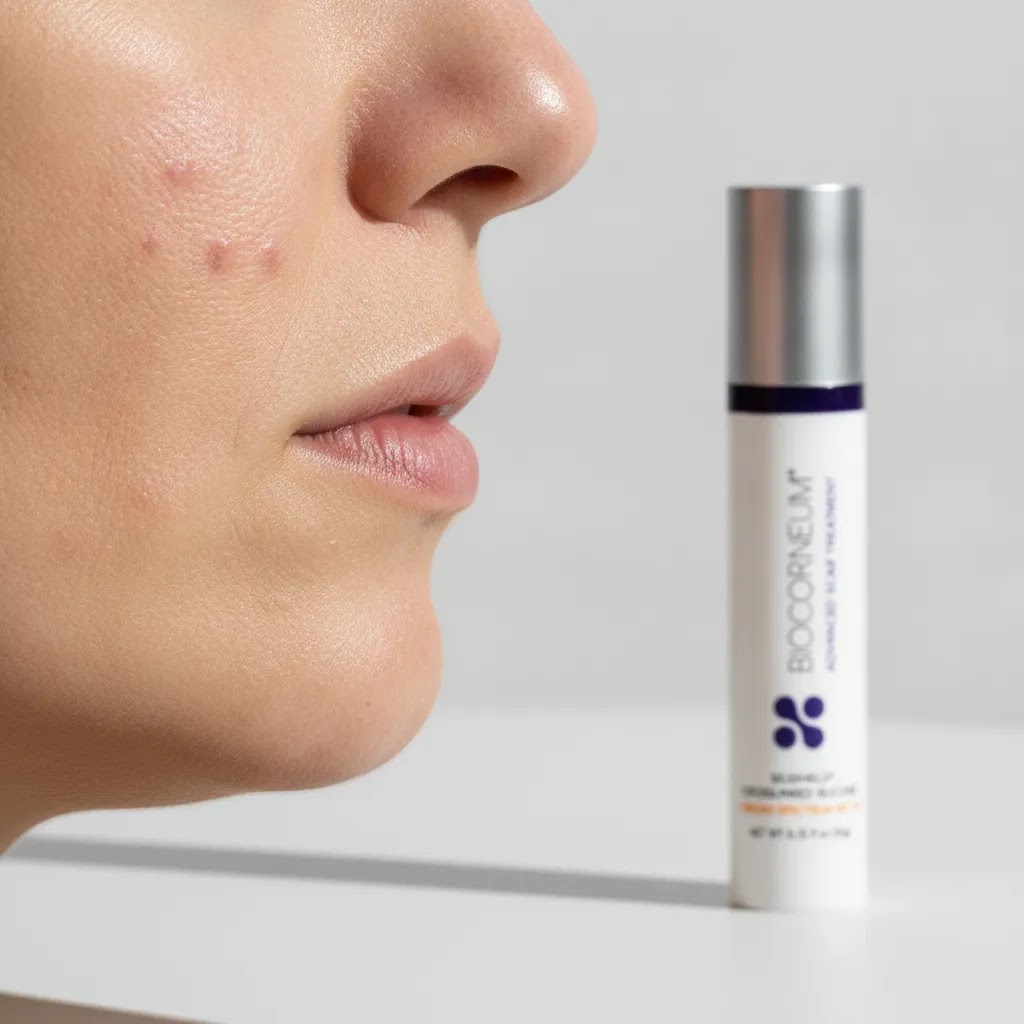
Atrophic acne scars fall into three main groups: ice pick, boxcar, and rolling scars. Many people have more than one type at the same time.
| Scar type | How it looks | Typical feel or visual clue |
|---|---|---|
| Ice pick scars | Narrow and deep, like tiny punctures | Small opening at the surface, but noticeable depth |
| Boxcar scars | Wider, round or oval depressions with defined edges | Crater-like shape with a flatter base |
| Rolling scars | Broad, wave-like unevenness | Soft dips and slopes that change with lighting and movement |
| Hypertrophic scars | Raised, thickened scars | Firm bump, ridge, or plaque above the skin |
Ice pick scars
Ice pick scars are narrow and deep. They often look like tiny, sharply defined punctures that extend downward into the skin. The opening at the surface may look small, but the depth can make them easy to notice.
These scars often stand out when makeup or sunscreen settles into them. On the cheeks or temples, they can create a stippled look, almost like a pin pressed into the skin repeatedly.
Boxcar scars
Boxcar scars are wider than ice pick scars and have more defined edges. They may be shallow or deep, but the shape often looks round or oval with a clear border. Some resemble small craters with a flatter base.
On the skin, boxcar scars can create a pitted appearance that shows up more clearly in natural daylight or angled indoor light. When the skin is hydrated, shallow boxcar scars may look softer. Deeper ones usually stay visible.
Rolling scars
Rolling scars create soft, wave-like undulation across the skin. Instead of one obvious pit, they create broad areas of uneven contour. The cheeks may look tethered or gently pulled inward in a way that changes as the face moves.
These are often the scars people describe as “my skin looks bumpy in certain lighting.” They may not look dramatic up close in flat light. However, side lighting can reveal a landscape of dips and slopes.
If you are also exploring topical support, our article on acne scar cream can help clarify where creams fit in relation to deeper textural change.
Raised different types of acne scars: hypertrophic and keloid patterns
Hypertrophic acne scars sit above the skin and stay within the general boundary of the original injured area. In practical terms, they may feel rope-like, dome-like, or plaque-like. They are often firmer than normal skin.
Keloid scars follow a related but distinct pattern. In that case, scar tissue grows beyond the original boundary of injury. Not every raised acne scar is a keloid. Therefore, self-diagnosis can be tricky, especially on the chest, shoulders, and jawline.
Acne-related raised scars appear more often on the torso than on the central face. They may relate to prolonged inflammation, repeated picking, or an individual tendency toward more exuberant scar formation. In addition, some people have a stronger personal or family tendency toward raised scars.
This is one area where over-the-counter expectations can drift away from reality. A product may support a better healing environment, but it may not flatten an established raised scar on its own. In practice, a treatment plan often depends on scar age, thickness, symptoms, and skin history.
For a medical overview of raised scars and keloids, the U.S. National Library of Medicine’s MedlinePlus offers a helpful general reference.
What people often mistake for different types of acne scars
Not every mark left after acne is a scar. This is one of the biggest reasons people feel confused when they buy a scar product and see little change.
Post-inflammatory hyperpigmentation is discoloration left after inflammation. The skin may look brown, gray-brown, or darker than the surrounding area, but the surface stays flat. This is color change, not true textural scarring.
Post-inflammatory erythema is lingering redness or pinkness after a breakout. Again, the surface may stay smooth even though the color remains noticeable.
Enlarged pores may also resemble shallow scarring, especially on the nose and inner cheeks. However, pores are openings in the skin, while scars are structural healing changes.
Active acne can further complicate the picture. A swollen papule or cyst can cast shadows that mimic a scar until the inflammation fully settles.
Readers who want a visual-first understanding of modern silicone care may find Introducing SiliSilk™: Everyday Silicone Scar Care, Simplified helpful for understanding topical scar support, though it is still important to separate flat discoloration from true raised or indented scarring.
A step-by-step way to assess your scars
This quick home check is not a diagnosis, but it can help you organize what you are seeing before a professional consultation.
- Look in side lighting. Stand near a window or use angled bathroom lighting. Indented scars cast inward shadows. Raised scars cast outward shadows.
- Check whether the skin is flat, raised, or depressed. A flat dark mark is usually pigmentation, not an atrophic or hypertrophic scar.
- Notice the shape. Tiny deep punctures suggest ice pick scars. Wider crater-like depressions suggest boxcar scars. Broad waves suggest rolling scars.
- Feel the texture gently. A groove, pit, or depression points toward atrophic change. A firm ridge or bump points toward hypertrophic change.
- Map the location. Facial cheek scarring often includes atrophic patterns. Chest, shoulders, and jawline deserve extra attention for raised scar patterns.
- Look for mixed patterns. Many patients do not have just one scar type. A single area may include rolling scars, boxcar scars, redness, and enlarged pores at once.
- Document with photos. Taking clear photos in the same lighting can help you see whether texture or color is actually changing over time.
If you are unsure, that uncertainty is normal. Mixed acne scarring is common, and professional assessment is often the fastest way to tell whether the main issue is depth, tethering, pigment, redness, or scar thickening.
What a professional scar assessment looks like
Correct scar identification matters because it affects both safety and effectiveness. A treatment that makes sense for shallow boxcar scarring may not suit raised, keloid-prone tissue. Pigment concerns also follow a separate track. In practice, a clinician does more than name your scar type. They identify what is actually driving what you see in the mirror.
During a consultation, an experienced provider usually assesses the mix of scars in one area, not just the “main” scar. They look at depth, edges, and tethering. Rolling scars often show this anchored-down pattern. They also review scar age, your skincare and treatment history, and your general health history. These factors can shape what they recommend and how your skin may respond.
Skin tone and tendency toward pigment change also matter. Some procedures carry a higher risk of temporary or longer-lasting discoloration in certain skin types. Therefore, the goal is to choose approaches that respect your baseline skin behavior. If you have raised scars, a clinician will also check for keloid-type patterns, including whether the raised area extends beyond the original acne lesion boundary.
Not every “scar” behaves like a typical acne scar. If an area is changing quickly, feels persistently painful or itchy, bleeds easily, or you are not certain what it is, it deserves medical evaluation sooner rather than later. Finally, choosing a qualified medical professional matters not only for results, but also for proper screening, risk discussion, and a plan that matches your skin.
Where topical scar products fit, and where they may not
Topical scar products and silicone-based scar care often make more sense for some scar behaviors than for others. For example, silicone products are commonly discussed in scar management because they may help support smoother, healthier-looking skin and may help minimize the appearance of scars and hyperpigmentation. Nuance Medical also features scar-care resources and products within its broader educational content, including updates such as BIOCORNEUM® SiliSilk™ Wins NewBeauty Award for Best Scar Gel.
That said, topical care has limits. A cream, gel, or silicone formula may support the surface environment of healing skin, but it usually does not rebuild deeper tissue architecture in the way patients often hope for with established atrophic acne scars. If the main issue is a true indentation, broad wave, or deep pitted defect, surface care alone may not fully address the structural change.
Raised scars follow different logic. Some topical support may be useful in a scar-care routine, but a thick, established hypertrophic or keloid-prone scar often needs individual assessment. The key is matching the scar type to the role of the product instead of expecting one formula to suit every kind of acne mark.
If you want more context, you can compare our guide to does silicone scar gel work on acne scars and our article on silicone scar gel for acne scars. Readers exploring adjacent skin categories may also come across resources outside scar care, such as Topical Pain Relief, but those are separate from acne scar management and should not be confused with scar-directed care.
Treatment pathways for different types of acne scars
Acne scar treatment is rarely one tool for one scar. Many faces show a mix of shallow and deep atrophic scars, uneven texture, and leftover redness or pigment. The goal is usually to improve contour and surface quality over time. In many cases, that means using a combination plan rather than trying to “remove” every mark. A qualified practitioner can help you match options to your scar pattern, skin tone, and tolerance for downtime.
Atrophic scars often respond best to approaches that target texture and collagen remodeling. Depending on the situation, this may include in-office resurfacing or collagen-stimulating procedures. For example, laser resurfacing and dermabrasion are often discussed in clinical scar care because they can help improve surface irregularity in selected patients. The right choice depends on scar depth, your skin type, and your history of pigment change.
Raised scars follow different logic. The focus is usually on flattening, softening, and calming the scar tissue, especially if the area feels firm, itchy, tight, or continues to thicken. Raised scars that behave like keloids often need extra caution and individualized planning because irritation can worsen the pattern in keloid-prone skin.
A quick matching guide (for understanding, not self-treatment)
Here is a practical way to connect what you see to the general treatment lane it tends to fit. Final recommendations should still come from a professional assessment.
- Ice pick scars: narrow, deep “pinpoint” openings often need targeted strategies rather than only broad resurfacing, because the depth can be greater than the surface opening suggests.
- Boxcar scars: wider crater-like depressions may respond to resurfacing and collagen remodeling approaches, especially when edges are well-defined.
- Rolling scars: broad waves and tethering often point toward approaches that address the deeper anchoring under the skin, not just the surface texture.
- Hypertrophic scars: raised scars that stay within the original acne boundary often require flattening strategies and careful monitoring of scar behavior.
- Keloid-type patterns: raised scars that extend beyond the original boundary deserve a cautious plan and medical oversight, since not every procedure is appropriate for keloid-prone tissue.
- Redness and pigment: if the surface is flat but color remains, you are often dealing with post-acne erythema or hyperpigmentation rather than true scarring, and the plan is typically more about calming inflammation, supporting barrier health, and consistent sun protection.
In practice, timelines vary. Texture remodeling tends to be gradual and is often measured in months. Multiple sessions may be recommended depending on severity and goals. Any procedure can carry risks or side effects, including irritation and pigment change. Therefore, the safest next step is a personalized consultation where risks, downtime, and realistic outcomes can be discussed clearly.
How Nuance Medical fits into the conversation
Nuance Medical presents scar-care education through a medical, evidence-aware lens that fits this topic well: identify the scar correctly first, then choose the least confusing path forward. That approach is especially useful with the different types of acne scars, where one person may call everything a “scar” even if the skin actually shows a mix of flat discoloration, shallow boxcar scars, and a few raised areas.
If you are researching next steps, Nuance Medical can serve as a useful starting point for comparing scar-care resources and learning how different product formats may fit different concerns. For example, readers who want product-focused education can review Biocorneum scar treatment. A no-pressure consultation or guided discussion is often the most efficient way to determine whether you are dealing mainly with atrophic scarring, hypertrophic scarring, post-acne pigment, or a combination.
Pros and Considerations
Benefits
- Learning whether a scar is atrophic or hypertrophic gives you a more accurate framework for evaluating products, procedures, and expectations.
- Visual classification helps separate true textural scarring from flat post-acne discoloration, which often needs a different conversation.
- Identifying scar shape, such as ice pick, boxcar, or rolling, can make professional consultations more productive and specific.
- A scar-type-first approach may reduce wasted spending on options that are poorly matched to the skin change you actually have.
- Understanding the difference between indented and raised scars can help you notice mixed-pattern scarring, which is common and often overlooked.
Considerations
- Self-assessment has limits, especially if your skin has both discoloration and texture changes in the same area.
- Raised scars can be confused with keloids, and that distinction may matter for management and risk discussion.
- Topical care may support some scar concerns, but it may not meaningfully change deeper, established atrophic texture on its own.
- Lighting can exaggerate or hide acne scars, so what you see at home may not tell the full story.
- Results from any scar treatment vary by scar age, skin type, inflammation history, and whether active acne is still present.
Frequently Asked Questions
What are the main different types of acne scars?
The main different types of acne scars are atrophic and hypertrophic scars. Atrophic scars are indented and include ice pick, boxcar, and rolling scars. Hypertrophic scars are raised and thickened. Some people also have post-acne pigmentation or redness, which can look scar-like but are not true textural scars.
How do I know if my acne scar is atrophic or hypertrophic?
An atrophic scar sits below the surrounding skin, while a hypertrophic scar sits above it. Side lighting often makes this easier to see. If your finger glides over a dip, groove, or pit, that usually suggests atrophic change. If it catches on a firm bump or ridge, that suggests a raised scar pattern.
Are boxcar and ice pick scars the same thing?
No, they are both atrophic scars, but they have different shapes. Ice pick scars are narrower and typically deeper, almost like tiny punctures. Boxcar scars are wider with more defined edges and a flatter base. Both can appear in the same person, sometimes in the same area of the face.
Can acne scars be raised instead of indented?
Yes, acne scars can be raised. Hypertrophic scars and keloid-type scars are examples of raised scar tissue. These are more often seen on areas such as the jawline, chest, shoulders, and back than on the central cheeks. A professional assessment can help determine whether a raised scar is staying within the original area or extending beyond it.
Is dark acne discoloration a scar?
Not always. A dark or red mark after acne may be post-inflammatory hyperpigmentation or post-inflammatory erythema rather than a true scar. In those cases, the surface is typically flat even though the color remains visible. Texture matters more than color when identifying actual atrophic or hypertrophic scarring.
Do topical scar creams work for all acne scars?
No, topical products do not work the same way for every scar type. Surface-based care may support some aspects of scar appearance, but deeper atrophic scars often involve structural tissue loss that a topical product alone may not fully address. Suitability depends on whether the concern is raised scar tissue, flat discoloration, or an established depression in the skin.
Why do my acne scars look worse in some lighting?
Lighting changes how shadows fall across uneven skin. Rolling and boxcar scars often look more visible in side lighting because the depressions cast shadow. Flat front-facing light may soften their appearance. This is why photo comparisons should be taken in consistent conditions if you are trying to judge change over time.
Can one person have several different types of acne scars at once?
Yes, mixed-pattern acne scarring is very common. You may have rolling scars on the cheeks, a few ice pick scars near the temples, and lingering pigment from recent breakouts at the same time. That mix is one reason a personalized assessment can be more useful than trying to label the entire face with a single scar type.
Are raised acne scars more serious than indented ones?
Not necessarily more serious, but they are different and may need a different strategy. Raised scars can sometimes be symptomatic, feeling itchy, tight, or firm. They also deserve careful review if you have a personal or family tendency toward keloid formation. The best approach depends on scar behavior, location, and history.
What type of acne scars the most?
Deeper, more inflammatory acne tends to be associated with a higher risk of scarring. Cysts and nodules, which sit deeper under the skin, can create more dermal disruption than superficial breakouts. Picking or squeezing can also increase inflammation and raise the chance of lasting texture change.
What are the 7 types of acne?
A common way to describe acne types includes whiteheads, blackheads, papules, pustules, nodules, cysts, and acne conglobata (a more severe, interconnected form). Not every classification list uses the same exact categories, but the key idea is that acne ranges from superficial clogged pores to deeper inflammatory lesions. The deeper and more inflamed the breakout, the more important early management tends to be for reducing lingering marks.
What is Type 1 2 3 4 acne?
“Type 1 to Type 4 acne” is often used as a severity shorthand rather than a strict medical diagnosis. In many descriptions, Type 1 is mostly comedonal acne (whiteheads and blackheads), Type 2 adds mild inflammation (papules and pustules), Type 3 is more moderate inflammatory acne, and Type 4 is more severe acne that may include nodules or cysts. If you are unsure where you fit, a qualified clinician can assess severity and discuss strategies to reduce ongoing inflammation and scarring risk.
How do I tell what kind of acne scar I have?
You can often start by checking whether the mark is flat, indented, or raised. Flat marks are usually post-acne discoloration, indented marks suggest atrophic scars like ice pick, boxcar, or rolling scars, and raised marks suggest hypertrophic or keloid-type patterns. Side lighting and a gentle fingertip check can help, but a professional assessment is the most reliable way to confirm what you are seeing, especially when multiple patterns overlap.
Key Takeaways
- Start with the biggest distinction: atrophic scars are indented, hypertrophic scars are raised.
- The 3 main atrophic acne scar types are ice pick, boxcar, and rolling scars.
- Flat red or dark post-acne marks are often not true scars, even if they are persistent.
- Many people have mixed acne scar patterns, not just one type.
- Correct identification usually leads to more realistic expectations and better treatment conversations.
Conclusion
The phrase “different types of acne scars” sounds simple, but the details matter. A shallow rolling depression, a narrow ice pick scar, and a thick raised scar are not versions of the same problem.
They reflect different healing patterns and usually call for different expectations. If there is one useful takeaway, it is this: classify the scar before judging the product, treatment, or online advice. That small shift can make your research far more productive and much less frustrating.
If you want to keep learning, Nuance Medical’s scar-care resources offer a practical next step, especially if you are comparing topical support, general scar guidance, or broader acne scar treatment pathways. A qualified practitioner can then help translate what you see in the mirror into a plan that fits your skin.
Medical Disclaimer: The information provided in this article is intended for general informational and educational purposes only. It does not constitute medical advice and should not be used as a substitute for a professional consultation with a qualified aesthetic practitioner or healthcare provider. Individual results from aesthetic treatments vary. Always seek the advice of a qualified medical professional before undergoing any cosmetic procedure.