
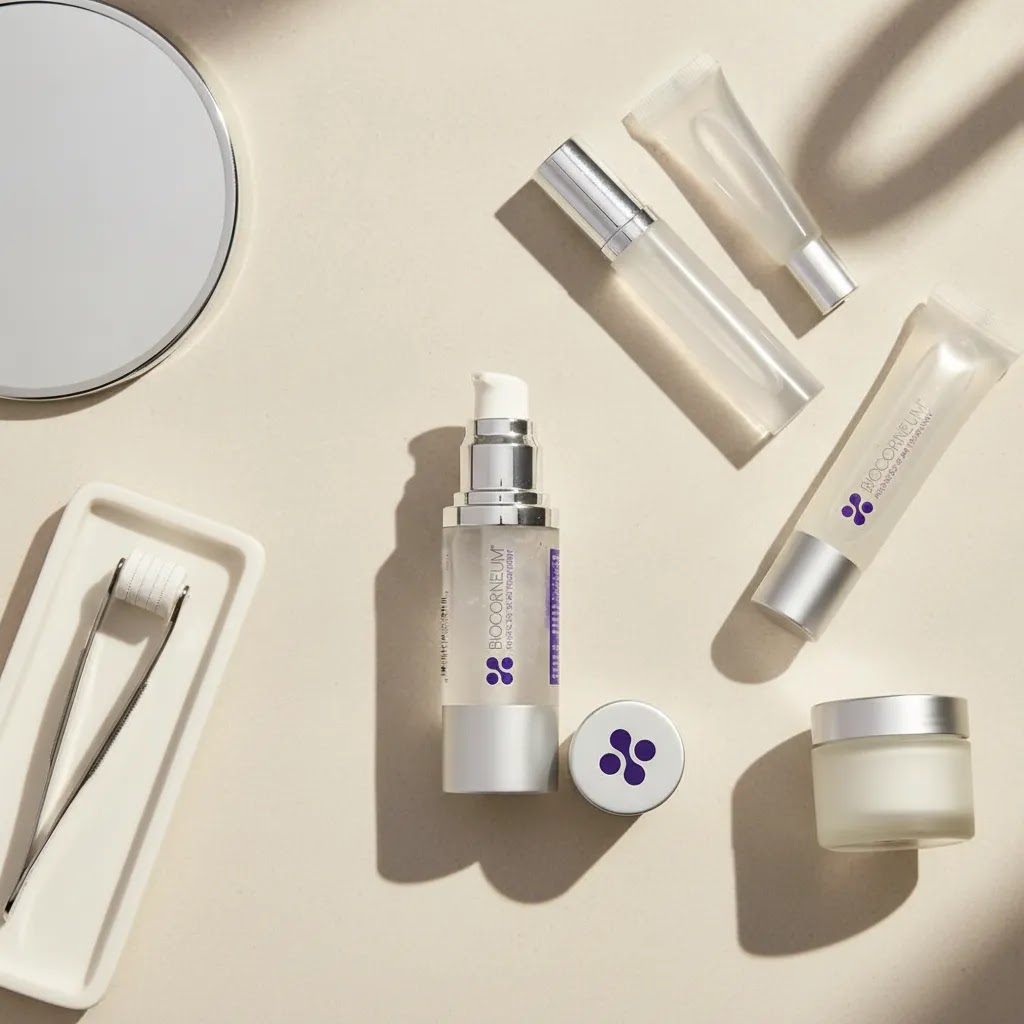
Best Acne Scar Cream Ranking Logic by Scar Type
This ranking is built around a simple clinical reality: not every “acne scar” responds the same way to a cream. Some people are dealing mostly with post-inflammatory hyperpigmentation, which looks like flat brown marks. Others have pink or red post-inflammatory erythema. Still others have actual loss of collagen, which creates pits or depressions in the skin.
Topical products may be most helpful for discoloration, surface comfort, and supporting a healthier skin barrier. However, they may be less effective for deeper atrophic acne scars. That is why a product that feels excellent for a healing superficial mark may still leave someone underwhelmed if they expected it to fill an ice pick scar.
In this article, the “best” products are ranked by real-world fit for acne-specific scar patterns, daily wear, location on the face or body, and practicality of repeated use. If you are comparing creams with broader procedural options, our guide to best acne scar treatment gives the larger treatment picture.
Best Acne Scar Cream: What Different Scar Types Need
Here’s the thing: a lot of frustration around acne scar creams comes from treating different concerns as if they are the same. The most useful first step is separating post-acne marks from acne scarring. When you know what you are looking at, it becomes much easier to choose a product that matches reality.
Best acne scar cream for PIH: flat brown or gray-brown marks
PIH is discoloration that sits flat in the skin. In the mirror, it usually looks like a stain rather than a dent. It is often more noticeable after a breakout heals, especially in medium to deeper skin tones or in anyone who tans easily.
What topicals may help: consistent daily routines that support even tone, hydration, and barrier comfort can help PIH fade over time. Sun protection is a practical part of this, because ultraviolet exposure can keep pigment looking darker for longer. For more on persistent pink or red marks, see our guide to red acne scars.
What topicals usually cannot do: a brightening routine will not change a true indentation if the “mark” is actually a shadow from a depressed scar rather than pigment.
Best acne scar cream for PIE: flat pink, red, or purple-red marks
PIE is the lingering “pink mark” many people see after acne inflammation settles down. It is also typically flat, and it often looks more vivid after heat, exercise, or a hot shower.
What topicals may help: gentle, non-irritating routines that support the skin barrier and reduce ongoing irritation can be helpful. In practice, this means avoiding the cycle of over-exfoliation, redness, and more redness.
What topicals usually cannot do: creams cannot reliably “erase” vascular redness on a set timeline. PIE often improves gradually, and it may fade more slowly if the skin stays inflamed or over-treated.
Best acne scar cream for atrophic acne scars
Atrophic scarring is where acne has left a structural change in the skin, usually from collagen loss. Many patients overlook how different these scars look under real lighting. In overhead bathroom light, you may see them less. Under side lighting, such as car light or a window, they can look like pits or shadows.
- Ice pick scars typically look like narrow, deeper “pinpoint” holes.
- Boxcar scars tend to look wider with sharper edges, like a small crater.
- Rolling scars create broader, wavy unevenness, often seen as rippling when light hits from the side.
What topicals may help: they can support the surface, hydration, and comfort of the skin. In addition, they may help a scar look less noticeable by improving how light reflects off the surface. Silicone products may offer a protective film that supports the look of superficial scarring in some cases. If you want a deeper look at category fit, read does silicone scar gel work on acne scars.
What topicals usually cannot do: creams do not reliably rebuild missing collagen in a way that meaningfully lifts a deep indentation. If your main goal is contour correction, a topical may be supportive, but it often is not the whole answer.
When to consider a clinician evaluation for acne scars
If your scars look pitted or shadowed under side lighting, if you have a mix of scar types, or if you have stayed consistent with topical care for a few months without meaningful change, it may be worth getting an in-office assessment. A qualified practitioner can help map what is actually discoloration versus true scarring, then discuss whether options like chemical peels, microneedling, laser resurfacing, dermabrasion, or fillers are appropriate for your specific pattern and skin behavior. As with any aesthetic treatment, there are potential side effects and suitability factors that should be discussed in a consultation. For general acne care basics, the American Academy of Dermatology offers practical guidance.
Best Acne Scar Cream Comparison Table
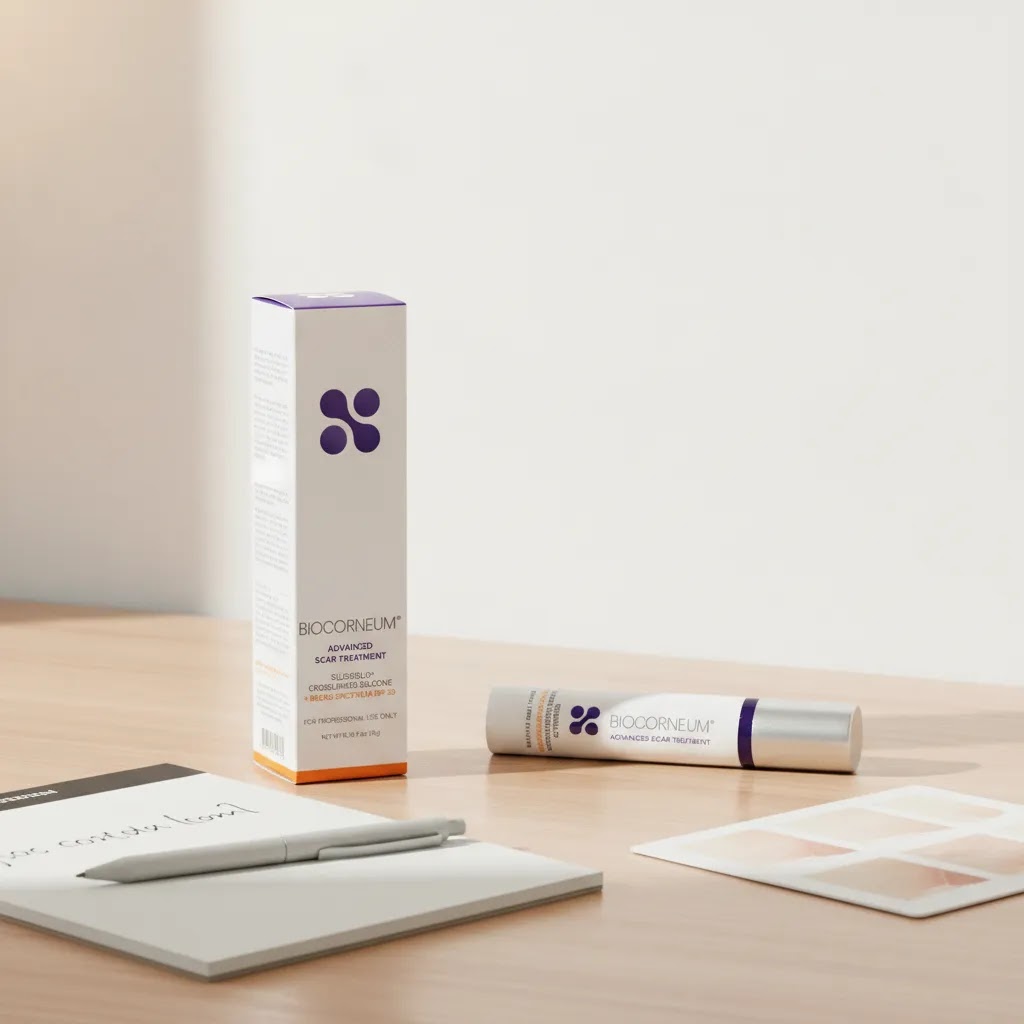
| Product | Price | Format | Best Fit | Main Limitation |
|---|---|---|---|---|
| BIOCORNEUM SiliSilk Advanced Scar Gel, 30g | $84.95 | Silicone gel | Visible areas, layering under skincare or makeup, smoother finish | SPF-free, deeper pitted acne scars may need more than topical care |
| BIOCORNEUM 10g | $55 | Topical scar gel | Smaller areas, trial use, flexible or irregular surfaces | May run out faster for larger treatment zones |
| BIOCORNEUM 20g | $75 | Topical scar gel | Moderate treatment areas, longer routine than 10g | Still not the most economical for large body areas |
| BIOCORNEUM 50g | $130 | Topical scar gel | Larger areas or longer-term repeated use | Highest upfront cost |
| Pro-Sil 17g | $76.95 | Silicone scar stick | Targeted spot use on acne scars in exposed areas | Requires repeated daily application |
Best Acne Scar Cream Ingredients: Silicone vs Retinoids vs Brighteners
If you search for “best acne scar cream,” you will quickly notice that many popular products are not silicone gels at all. Consider this a framework for comparing what you will see in stores and online, without relying on marketing claims.
Silicone gels in a best acne scar cream routine
Silicone products are designed to form a thin, flexible film over the skin. Rather than “treating from within,” silicone is often used as a surface-support approach. As a result, it helps maintain a hydrated, protected environment that may support scar appearance over time. This is why silicone gels are commonly discussed in scar care, even beyond acne.
Best fit: superficial scars, areas where daily wear matters, and routines where a smooth, non-greasy finish improves consistency.
Practical limitation: silicone does not directly rebuild missing collagen in a deep atrophic scar, and it does not replace procedure-based scar revision when the primary concern is indentation.
Retinoids: cell turnover and texture support
Retinoids, such as retinol (over-the-counter) or prescription-strength retinoids, support skin cell turnover and can help refine overall texture over time. For post-acne concerns, this can mean gradually improving the look of uneven texture and helping discoloration fade more evenly, particularly when paired with sun protection.
Best fit: a mix of post-acne marks and mild texture concerns, and readers who are willing to stay consistent over months, not days.
Cautions: irritation is common when retinoids are started too aggressively. Dryness, peeling, and sensitivity can make marks look redder temporarily. That can be discouraging if you expected fast cosmetic improvement. A slow ramp-up and a barrier-supporting moisturizer often matter as much as the retinoid itself.
Brighteners and gentle exfoliants in acne scar cream routines
Many “scar” products are really discoloration products. Common examples include niacinamide, licorice extract, and gentle acids such as polyhydroxy acids (PHAs). In plain English, these are generally aimed at uneven tone and dullness, not at physically lifting a pitted scar.
Best fit: flat brown marks (PIH) and some unevenness in tone after acne has healed.
Cautions: acids and highly active routines can be too much for reactive skin. If you are seeing ongoing stinging, increased redness, or a tight, shiny look, the routine may be working against you by keeping the area irritated.
Onion extract and allantoin: “scar gel” style formulas
You may also see products built around ingredients like onion extract and allantoin. These are commonly positioned as general scar gels, and they tend to sit in a different category than retinoid serums or pigment-focused brighteners.
Best fit: readers who want a dedicated scar gel format and prefer a single-product approach.
Reality check: like other topicals, these formulas may support appearance in some cases, but they should not be expected to “remove” deep acne scarring.
Why timing and sun protection change what you see
Acne marks often have an early phase where the skin is still settling down after inflammation. During that time, consistent gentle care can be more helpful than constantly switching products. Ultraviolet exposure is another factor that is easy to underestimate. Even if you are not outdoors all day, day-to-day incidental sun can keep brown marks looking darker and can slow how quickly they appear to fade. A product that you can reliably wear under sunscreen often fits real life better than one that disrupts the rest of your routine. For sunscreen basics, the AAD sunscreen FAQs are a useful reference.
Best Acne Scar Cream Ranked Reviews
BIOCORNEUM SiliSilk Advanced Scar Gel, 30g
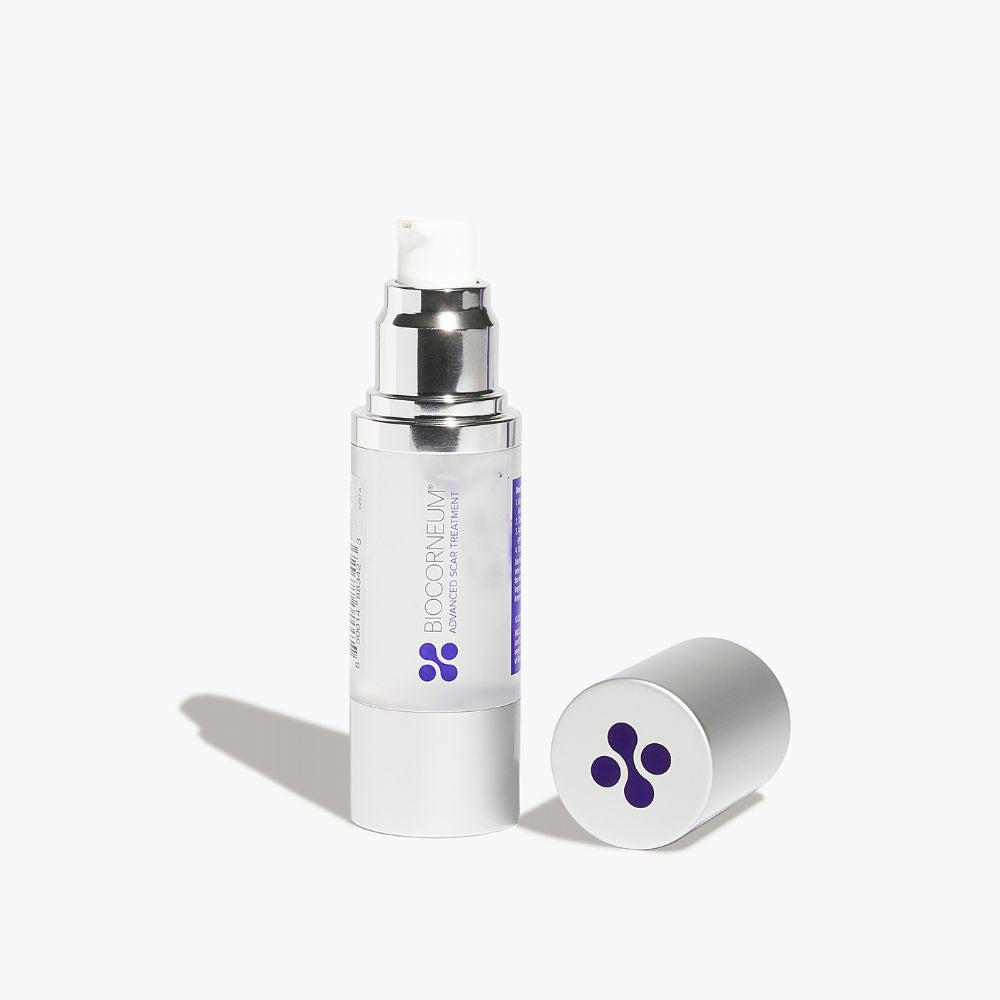 This is the strongest all-around pick in the group for readers who want a silicone-based acne scar cream alternative with elegant daily wear. It is described as a clear, fast-drying silicone gel with an ultra-smooth, silky finish. That matters for facial use, where texture, residue, and layering often determine whether a product actually stays in the routine.
For acne-related marks, this product may be most useful where the concern is residual discoloration, a healing superficial scar, or a smooth protective layer that works under daytime skincare. It is not presented as a scar remover, and that honesty is useful. Silicone can support scar appearance, but it does not rebuild deeply indented tissue on its own.
- Clinically framed silicone scar care with a lightweight, non-greasy feel
- Fast-drying and clear, which may suit facial use and different skin tones
- Designed to layer under sunscreen, makeup, or other skincare
- Water- and sweat-resistant for daily wear
- Travel-friendly 30g size
Best for: flat or superficial acne-related marks, visible areas, and readers who want the most cosmetically elegant texture in this roundup.
Considerations: it is SPF-free, so outdoor use still calls for a separate sunscreen. It may not do enough for ice pick, boxcar, or rolling scars on its own. Price is mid-to-premium at $84.95.
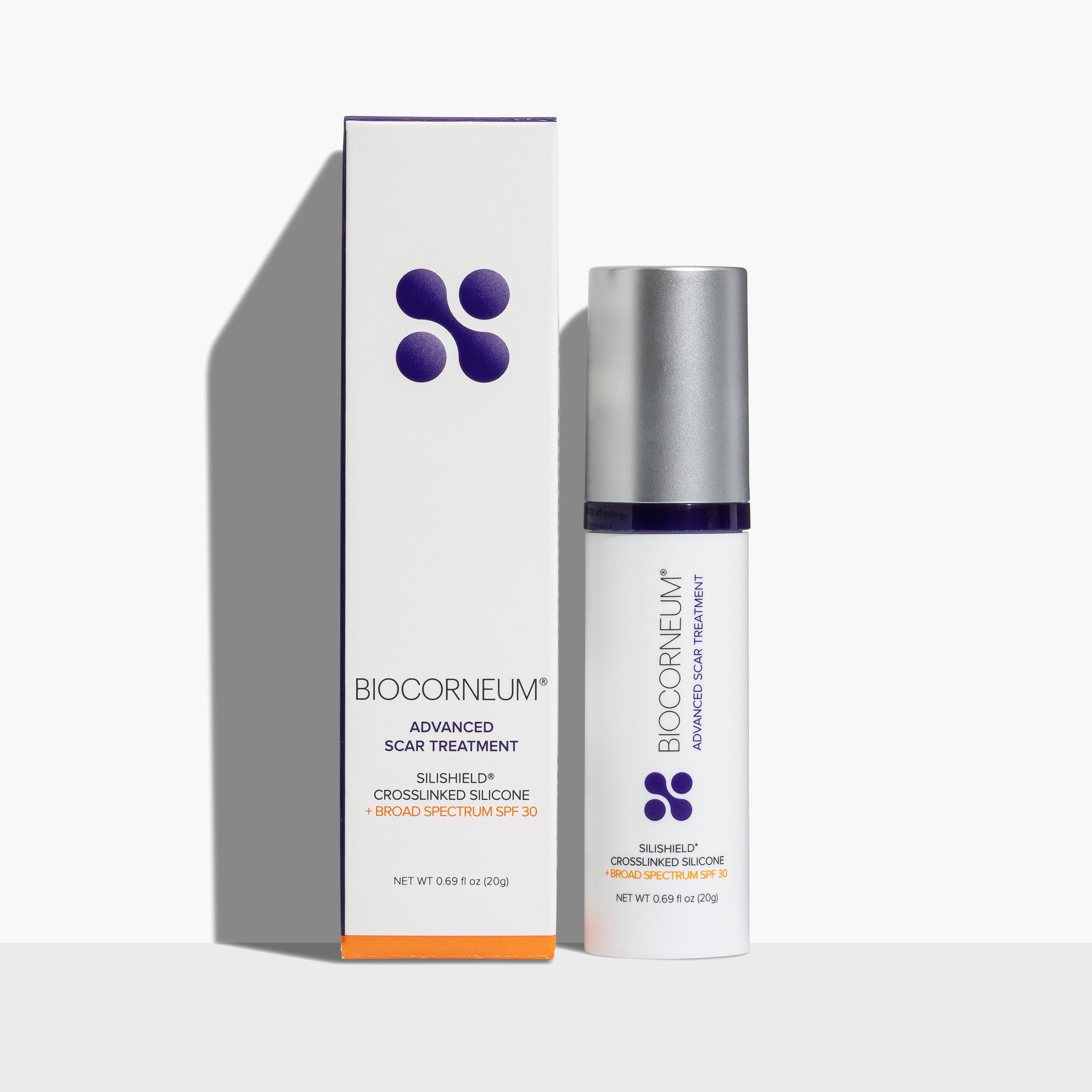
BIOCORNEUM 10g
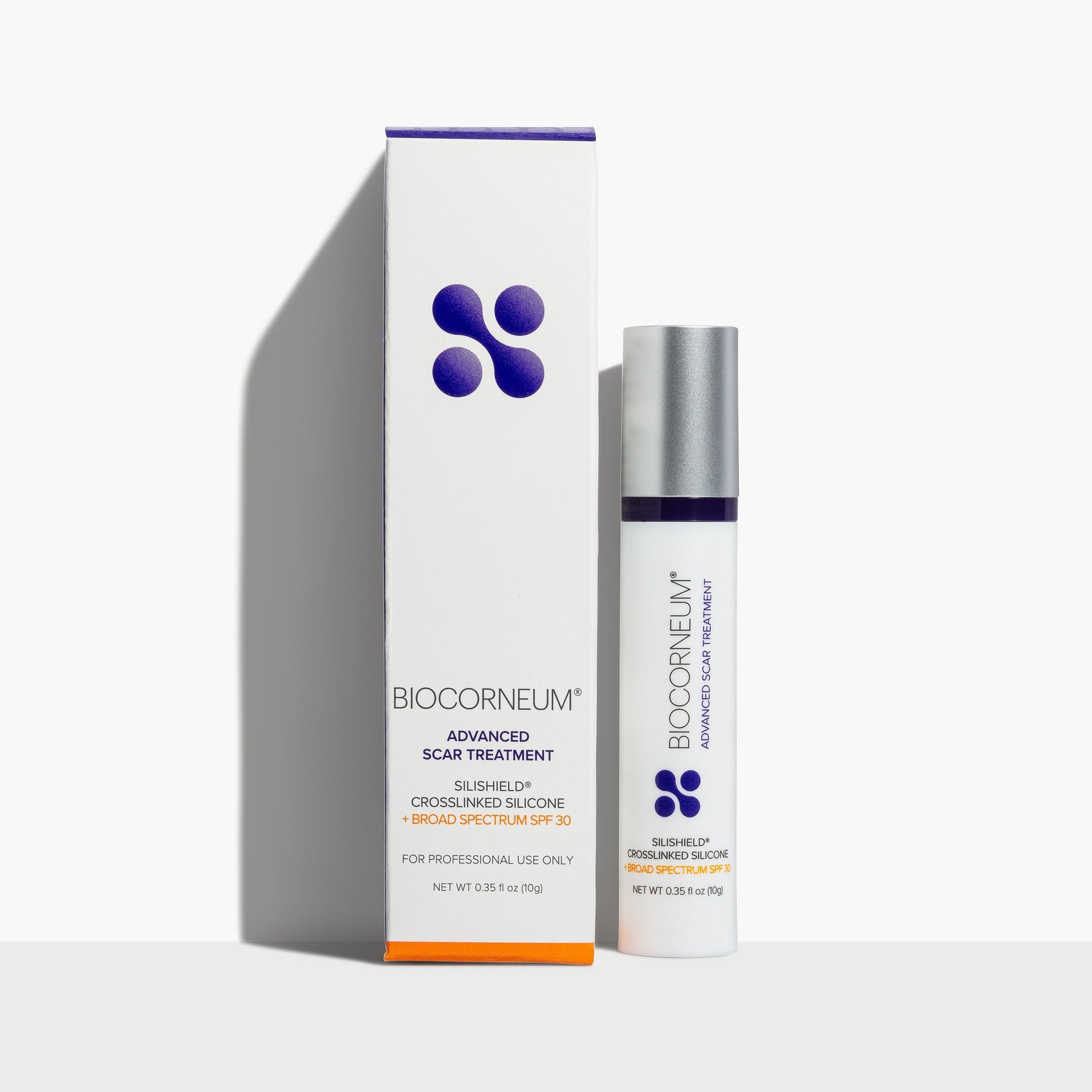 BIOCORNEUM 10g is the smallest size option here, which makes it a practical entry point if you are treating a limited acne-scar area or want to test whether a silicone scar product fits your skin and routine before buying more. The product information emphasizes scars from procedures, trauma, wounds, and burns, and notes use on old or new scars.
For acne-scar readers, the strongest fit is a small treatment zone, uneven surfaces, or skin that moves a lot. For example, that could include a jawline area, temple area, or a patch of scars on the upper back. The product information also states that it is self-adhering and does not require tape, which helps on areas where patches are awkward.
- Lower entry price at $55
- Useful for small treatment areas or trial use
- Described as suitable for irregular surfaces and flexible skin
- Can be combined with other physician-recommended treatment options
- Suitable for children over 6 months, according to product information
Best for: smaller acne-scar zones and readers who want a lower-commitment starting size.
Considerations: the smaller size may be less economical if you use it across a broad area. Product information does not specify the same silky finish details highlighted for SiliSilk. Like all topicals here, it may have limited value for deep pitted scars.
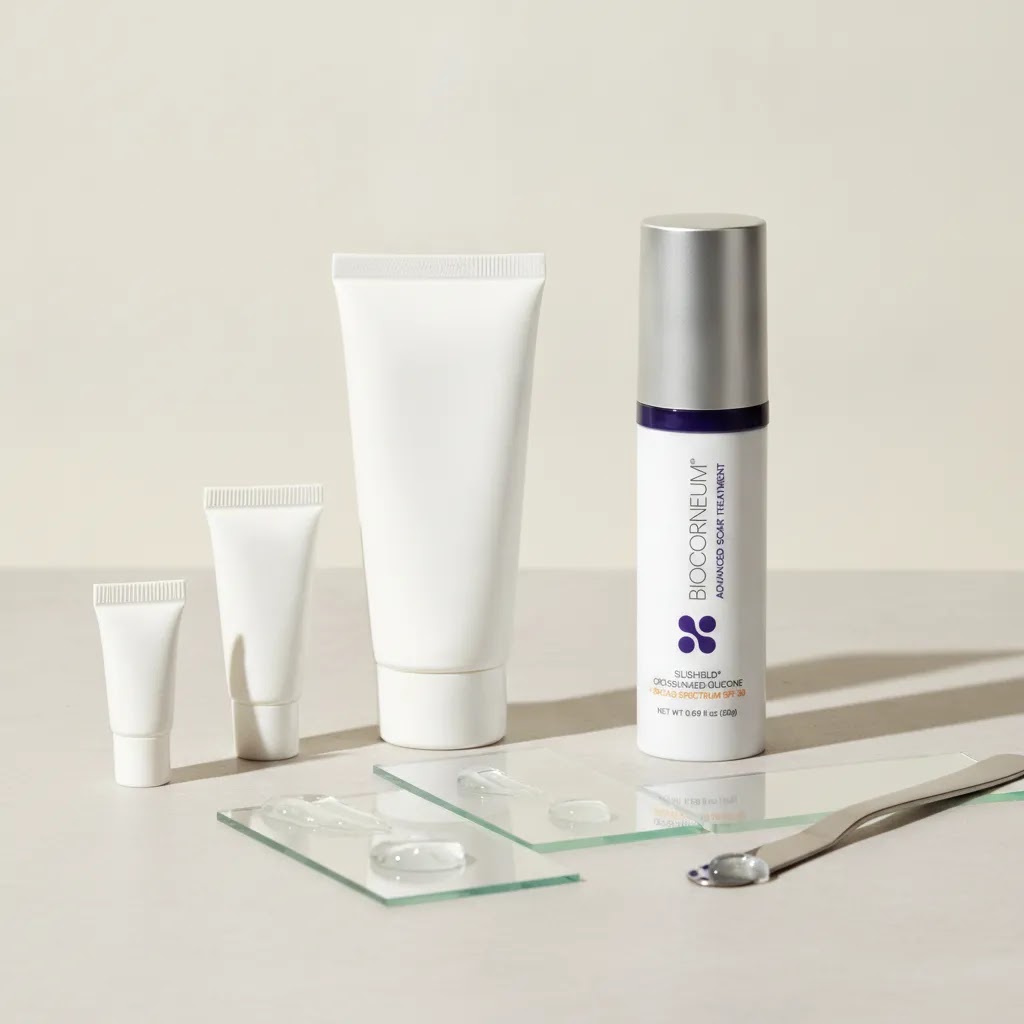
BIOCORNEUM 20g
BIOCORNEUM 20g sits in the middle of the range and is often the most sensible size for a reader treating more than a tiny spot but not a large body area. The product details mirror the larger and smaller BIOCORNEUM options, including use on scars from surgical and cosmetic procedures, trauma, wounds, and burns, and suitability for old or new scars.
For acne scarring, this size may make the most sense if you have a moderate treatment area and know you are likely to be consistent over time. Daily silicone routines usually work best when the product quantity matches how long you can realistically keep using it.
- Middle-ground size for readers who need more than a trial tube
- Listed for flexible, irregular, or sun-exposed areas such as face, neck, chest, and hands
- Self-adhering, with no tape required
- May work well alongside a broader clinician-guided scar plan
- More practical for repeat use than the 10g size
Best for: moderate acne-scar treatment zones and readers who already know they prefer gel over sheets.
Considerations: $75 is a meaningful spend for a topical product. Product information is broad rather than acne-specific. It still does not change the basic limitation of topical care for true atrophic scars.
BIOCORNEUM 50g
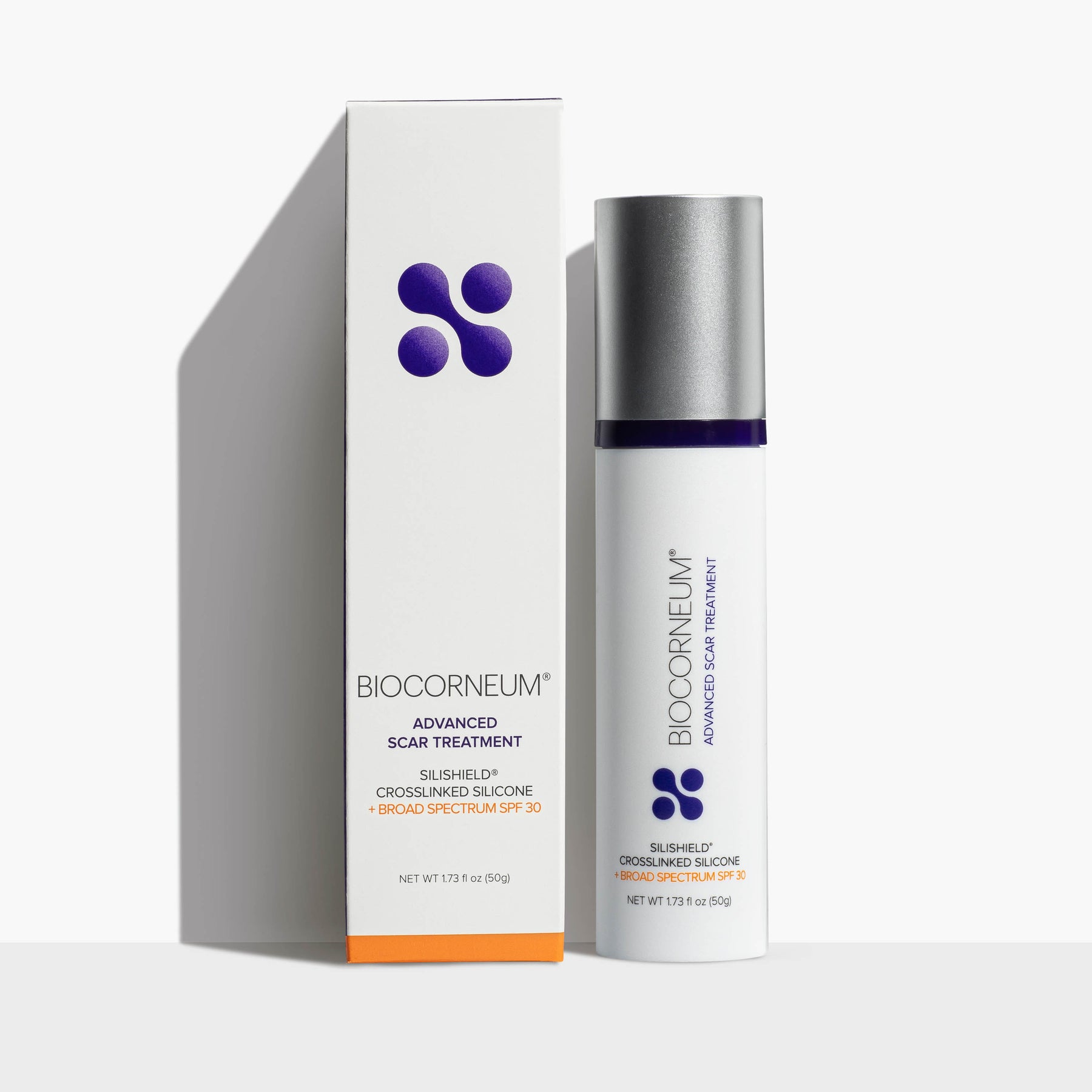 BIOCORNEUM 50g is the value pick for larger treatment areas or longer-term use, even though it has the highest upfront price. If acne scarring extends across the upper back, chest, shoulders, or a broad area of textural change, the larger tube may reduce the stop-start pattern that happens when smaller containers run out quickly.
The product information highlights the same core uses as the other BIOCORNEUM sizes, including large scar areas, irregular surfaces, and skin that flexes a lot. That makes this version especially relevant for body acne scarring, where sheets may feel cumbersome and consistent coverage matters.
- Most practical size for larger body areas
- Listed as ideal for large scar areas and flexible skin
- May reduce frequent repurchasing compared with smaller sizes
- Suitable for both old and new scars, according to product information
- Can fit a longer routine for readers committed to ongoing use
Best for: body acne scars and readers who want the most quantity upfront.
Considerations: $130 is the highest initial spend in this article. It may be more product than needed for a tiny facial area. Larger quantity does not mean stronger scar correction, only more supply.
Pro-Sil 17g
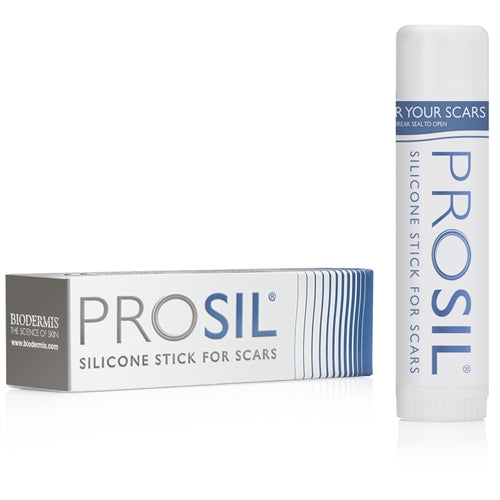
Pro-Sil 17g earns its place because some acne scars are easier to treat with a stick than a tube. If you want targeted glide-on application to a small area, or if you dislike drips and want something you can keep in a pocket or bag, the stick format can be genuinely more usable. The product page is also refreshingly direct that non-surgical products do not remove scars.
This is a professional-grade silicone stick with instructions to apply liberally over the scar several times daily for 8 to 12 weeks or until the scar stops responding. That time frame helps readers build more realistic expectations. Meanwhile, acne scars typically change slowly, and consistency matters.
- Compact stick format for targeted use
- No drips or leaks, according to product information
- Professional grade silicone
- Clear application instructions with a typical 8 to 12 week use period
- Easy fit for visible or small exposed areas
Best for: spot treatment on smaller acne-scar areas, especially if portability and convenience affect adherence.
Considerations: it is not the cheapest targeted option at $76.95. A stick format may be less efficient for wider areas of back or chest scarring. Reapplication several times daily may be hard for some routines.
How to Choose the Best Acne Scar Cream
- Identify the scar pattern first. Flat brown marks and pink marks often respond more favorably to topical routines than deep indented scars. If the skin looks pitted, shadowed, or uneven under side lighting, a cream alone may underdeliver.
- Match the format to the area. A silky gel may suit the face better because it can sit smoothly under sunscreen or makeup. A larger tube may make more sense for chest or back acne scarring. A stick may work best for precise spot use around a few visible scars.
- Think about your real consistency. A product that looks ideal on paper but feels greasy, pills under other products, or is too small for the area may be abandoned quickly. Good scar care usually depends on repeat use over time.
- Separate scar support from scar revision. Silicone products may support the appearance of scars and help maintain a healthier local environment, but they do not replace procedures that address collagen loss more directly. If your goal is smoother contour rather than better camouflage, topical care may be only one part of the plan.
- Factor in sun exposure. Acne marks often look darker or linger longer with ultraviolet exposure. A product that layers well under sunscreen may be more useful in daily life than one that disrupts the rest of your routine.
Readers comparing cream-only approaches with broader options may also want to review our article on acne scar cream for a more general overview of what topicals can and cannot realistically do.
What to Look for When Buying the Best Acne Scar Cream
When shopping, the best acne scar cream is often the one you can actually use consistently. A “perfect” formula that pills, stings, or fights with your sunscreen may end up sitting in a drawer.
A buyer’s checklist for acne scar cream
- Finish and layering: if you wear sunscreen and makeup, pay attention to whether the product dries clear, feels tacky, or pills when layered. A smooth, flexible film is often easier to keep on the face during the day.
- Application frequency: some products are designed for once-daily use, others suggest multiple applications per day. Be honest about what you will maintain for 8 to 12 weeks, not what you might do for three days.
- Area and value: a small tube can be fine for a few facial spots, but it may be frustrating for broad chest or back scarring. Larger areas tend to require larger sizes, otherwise consistency breaks when the product runs out.
- Irritation tolerance: if you are considering retinoids or acids, plan for a slower start. If your skin becomes persistently dry, tight, or red, that can make marks look worse temporarily and can undermine long-term consistency.
- Routine compatibility: if sun exposure influences how long marks linger, a product that works under daily sunscreen often has a practical advantage.
Filters for acne scar cream marketing claims
Be cautious with promises like “scar removal in X weeks.” In practice, topical improvement is usually gradual and variable, and deeper pitted scars may not respond in the way marketing implies. A more credible product description focuses on supportive scar care, daily wear, and realistic time frames.
How to compare common retail options you will see
Many shoppers will come across products like CeraVe Resurfacing Retinol Serum and Mederma Advanced Scar Gel. These sit in different buckets: a retinoid-focused serum is generally positioned around texture and tone support over time, while an onion extract and allantoin scar gel is positioned as a general scar-care topical. Neither category should be expected to “fill” an ice pick or pronounced boxcar scar, but understanding the category can help you choose based on your main goal, tone versus texture versus surface support.
Common Mistakes and Misconceptions About Acne Scar Cream
A frequent mistake is calling every post-acne mark a scar. If the mark is flat and mostly red or brown, that is not the same as a true depressed scar. Therefore, the treatment pathway may be very different.
Another misconception is that a stronger-feeling product must work better. Tingling, stinging, or dryness do not automatically mean better scar improvement. In some cases, an irritated skin barrier can make the area look more inflamed.
People also tend to expect topicals to rebuild missing volume. Creams and silicone products may help the skin surface and appearance, but deeper acne pits often need in-office evaluation if your priority is contour correction.
If you are curious about newer silicone positioning and daily-wear design, Nuance Medical has also published Introducing SiliSilk™: Everyday Silicone Scar Care, Simplified and a news update on BIOCORNEUM® SiliSilk™ Wins NewBeauty Award for Best Scar Gel.
Nuance Medical Perspective on the Best Acne Scar Cream
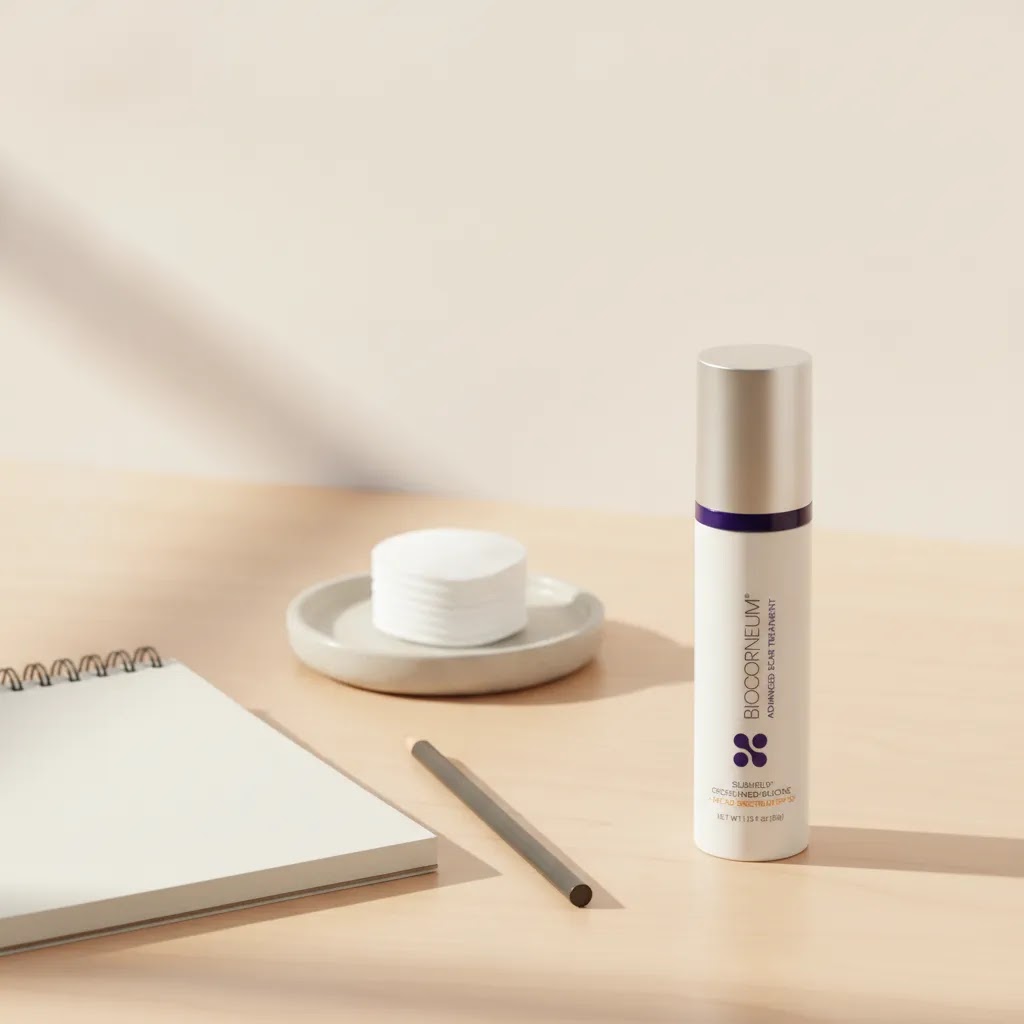
Nuance Medical’s brand approach centers on precision, subtlety, and medically informed care. That makes acne-scar conversations especially important, because expectations around topicals can easily drift beyond what a product is likely to deliver. A careful approach starts with classifying the concern correctly, then choosing the least burdensome option that still matches your goal.
For some readers, that may mean a silicone-based product that supports appearance and daily skin comfort. For others, the more honest answer may be that a cream is only a starting point, not the finish line. If you are weighing topical products against procedural next steps, explore the broader scar-care resources on Nuance Medical and use a professional consultation to decide whether your concern is primarily discoloration, surface irregularity, or deeper textural scarring.
Best Acne Scar Cream Pros and Considerations
Benefits
- Silicone-based options may help support the appearance of superficial scars and post-acne discoloration.
- Gel and stick formats offer flexibility for different treatment areas, from small facial spots to larger body zones.
- Several products in this roundup are designed for practical daily wear, which may improve consistency.
- Readers can choose by size and format rather than buying a one-format product for every scar pattern.
- These products can fit into a broader scar-management plan and, in some cases, may be combined with physician-recommended care.
Considerations
- Topical scar products typically have limited impact on deep atrophic acne scars such as ice pick or pronounced boxcar scars.
- Results vary by scar age, depth, location, skin behavior, and how consistently the product is used.
- Some products are a meaningful financial commitment, especially for larger treatment areas or long-term use.
- Outdoor use may still require separate sunscreen support, especially with SPF-free formulas.
- Any topical product can be unsuitable for an individual user, so patch tolerance and professional guidance may matter.
Frequently Asked Questions
What is the best acne scar cream for pitted scars?
No cream is reliably “best” for deep pitted scars in the sense of filling them back in. Topicals may help the look of discoloration or support superficial scar care, but deeper atrophic scars often respond better to professional assessment and procedure-based options.
Are silicone gels better than regular acne scar creams?
Silicone gels are often discussed differently because they are designed to create a protective film over the scar area rather than simply moisturizing the skin. That may be helpful for some scar concerns, but the right choice still depends on whether you are treating pigment, redness, or true textural loss.
Which product here is best for facial acne scars under makeup?
BIOCORNEUM SiliSilk Advanced Scar Gel, 30g stands out most clearly for under-makeup use because its product information specifically describes a silky, fast-drying finish that works under sunscreen and cosmetics. Individual skin compatibility can still vary.
Which option is best for body acne scars on the chest or back?
BIOCORNEUM 50g may be the most practical fit for larger body areas because it offers the largest quantity in this roundup. A larger tube does not change the mechanism, but it can make consistent use more realistic across broad treatment zones.
Can acne scar cream remove scars completely?
No topical product in this article should be expected to remove scars completely. The most realistic role for a cream or silicone product is support, appearance improvement in some cases, and routine-friendly care, with results varying from person to person.
How long should I use an acne scar cream before judging results?
Topical scar care usually requires patience. Pro-Sil 17g specifically states a typical use period of 8 to 12 weeks or until the scar stops responding, and many readers need a sustained routine before they can judge whether a product is worthwhile.
Which is the best product to remove acne scars?
No single product is “best” for removing acne scars because acne marks and acne scarring are not the same concern. Topicals may help discoloration and mild surface unevenness, while deeper pitted scars often respond better to procedure-based options after an in-office assessment.
What is the best pimple scar removal cream?
The best topical choice depends on what you mean by “pimple scar.” If the spot is flat and brown or pink, a discoloration-focused routine or a cosmetically wearable silicone gel may be reasonable to try. If the area is indented and creates shadowing under side lighting, a cream alone may not meet your goal.
Do acne scar creams actually work?
Acne scar creams can work in the sense that they may improve the look of post-acne marks and support superficial scar appearance with consistent use. They typically do not produce dramatic changes in deep atrophic scarring, because topicals cannot reliably replace lost collagen volume. Results vary based on scar type, skin behavior, and routine consistency.
What is the most effective treatment for acne scarring?
The most effective approach is usually the one matched to your scar type. In many cases, true indented acne scars respond more to clinician-directed treatments such as chemical peels, microneedling, laser resurfacing, dermabrasion, or fillers than to creams alone. A qualified practitioner can help you choose the safest, most appropriate option for your skin and goals.
Can I use numbing cream before injection for acne scar treatment?
Sometimes, but only if your treating clinician approves it. Topical anesthetic cream, including lidocaine-based products, may be used in some in-office settings before certain procedures, but self-applying numbing products before an appointment is something to clear with your provider first.
Is topical anesthetic cream the same as acne scar cream?
No. A topical anesthetic cream is used to numb the skin temporarily, while an acne scar cream is intended for ongoing scar or discoloration care. Products such as lidocaine 4 topical anesthetic cream or prescription numbing creams are serving a different purpose than silicone scar care.
Are old acne scars worth treating with a cream?
They can be, but expectations need to be realistic. Older scars may still benefit from supportive topical care, especially if the concern is mild surface change or lingering discoloration, though established depressed scars often need a different level of treatment discussion.
Key Takeaways
- The best acne scar cream depends on the type of mark, not the strongest marketing claim.
- Topicals may help discoloration and superficial scar appearance more than deep pitted acne scars.
- BIOCORNEUM SiliSilk Advanced Scar Gel, 30g is the best overall pick here for elegant daily wear on visible areas.
- BIOCORNEUM 50g is the strongest value choice for larger body areas, while Pro-Sil 17g suits precise spot treatment.
- If your main concern is true textural indentation, a professional evaluation may be more useful than switching from one cream to another.
Conclusion
The most useful way to shop for the best acne scar cream is to stop asking which product is universally strongest and start asking which one fits your scar pattern, treatment area, and routine. For flat marks, mild surface concerns, and visible areas that need a smooth cosmetic finish, a well-formulated silicone gel may be a reasonable option. For broader body areas, size and consistency may matter just as much as the formula itself. For deeper pitted acne scars, a cream may still play a supportive role, but it is often not the whole answer. Ultimately, Nuance Medical encourages a measured, informed approach: choose products with realistic claims, pay attention to scar type, and seek qualified guidance if your goals go beyond what topical care can usually deliver.
Medical Disclaimer: The information provided in this article is intended for general informational and educational purposes only. It does not constitute medical advice and should not be used as a substitute for a professional consultation with a qualified aesthetic practitioner or healthcare provider. Individual results from aesthetic treatments vary. Always seek the advice of a qualified medical professional before undergoing any cosmetic procedure.