Why cigarette burn scars look different
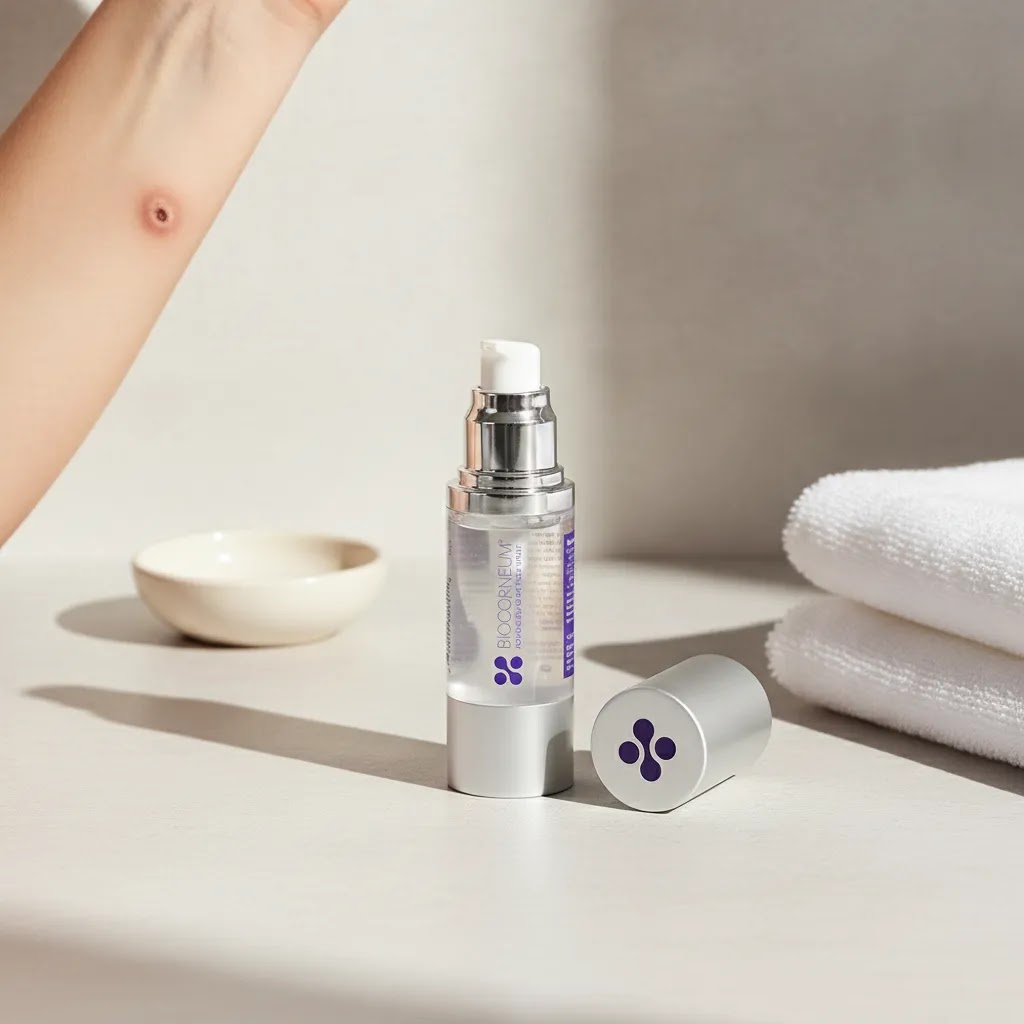
Many scars from blunt injury spread out irregularly. A cigarette burn scar often does the opposite. It tends to stay small, circular, and sharply defined because the heat source is compact and concentrated.
That concentrated contact can injure more tissue than people expect from such a small area. The burn may damage the outer layer of skin, and it may reach deeper structures too. As a result, a cigarette burn scar may heal with a crater-like dip, a tight pale center, darker surrounding pigment, or a mix of color and texture change.
Another reason these scars stand out is contrast. A small round scar on otherwise normal skin can catch the eye quickly, even if it is only a few millimeters wide. In practice, the concern is often less about size and more about definition, shape, and location.
Common visual features
- Round or near-round shape
- Clearly defined border
- Flat, raised, or indented surface
- Lighter or darker pigment than surrounding skin
- Smooth, shiny, or slightly firm texture
Not every mark follows the same pattern. Some cigarette burn scars stay flat and faint. Others heal more noticeably, especially if the original burn was deeper, became irritated during healing, or developed post-inflammatory pigment change.
How to tell if a mark is actually a cigarette burn scar
Here’s the thing: many small round marks can resemble cigarette burn scars in photos. Image searches can make every dot look the same. In reality, many everyday skin injuries can heal in a circular pattern, especially if they start as a small area of inflammation and then settle unevenly.
Common look-alikes people confuse with cigarette burn scars
Without trying to diagnose a spot through a screen, a few common categories tend to create confusion:
- Small contact burns from hot metal, hair tools, or cooking surfaces
- Inflamed insect bite reactions that leave a lingering mark afterward
- Minor skin injuries that heal round because the center scabbed or peeled first
- Post-inflammatory hyperpigmentation, meaning a darker spot left behind after irritation, acne, or a rash, without true scar tissue
Photos online can also mislead you because lighting changes how a surface looks. A shiny spot can look indented from one angle and flat from another. Skin tone, tanning, and flash photography can all make borders look sharper than they are.
Clues that point more toward cigarette burn scar tissue vs pigment change
Scar tissue usually shows a structural change in the skin, not just a color change. For example, you may feel a texture shift, a firm or tight center, an indentation, or a persistent border that catches light differently than the surrounding skin.
Pigment-only change is more likely when the area stays flat and smooth, but the color remains darker, pinker, or lighter than the skin around it. Those cases can still feel frustrating. However, the strategy usually focuses more on blending and on preventing more contrast.
If the spot is changing, keeps getting irritated, or simply seems unclear, use the guidance later in this article about when to get an in-person evaluation. A qualified professional can help you decide whether the main issue is texture, pigment, or a mix of both.
How a cigarette burn scar changes over time
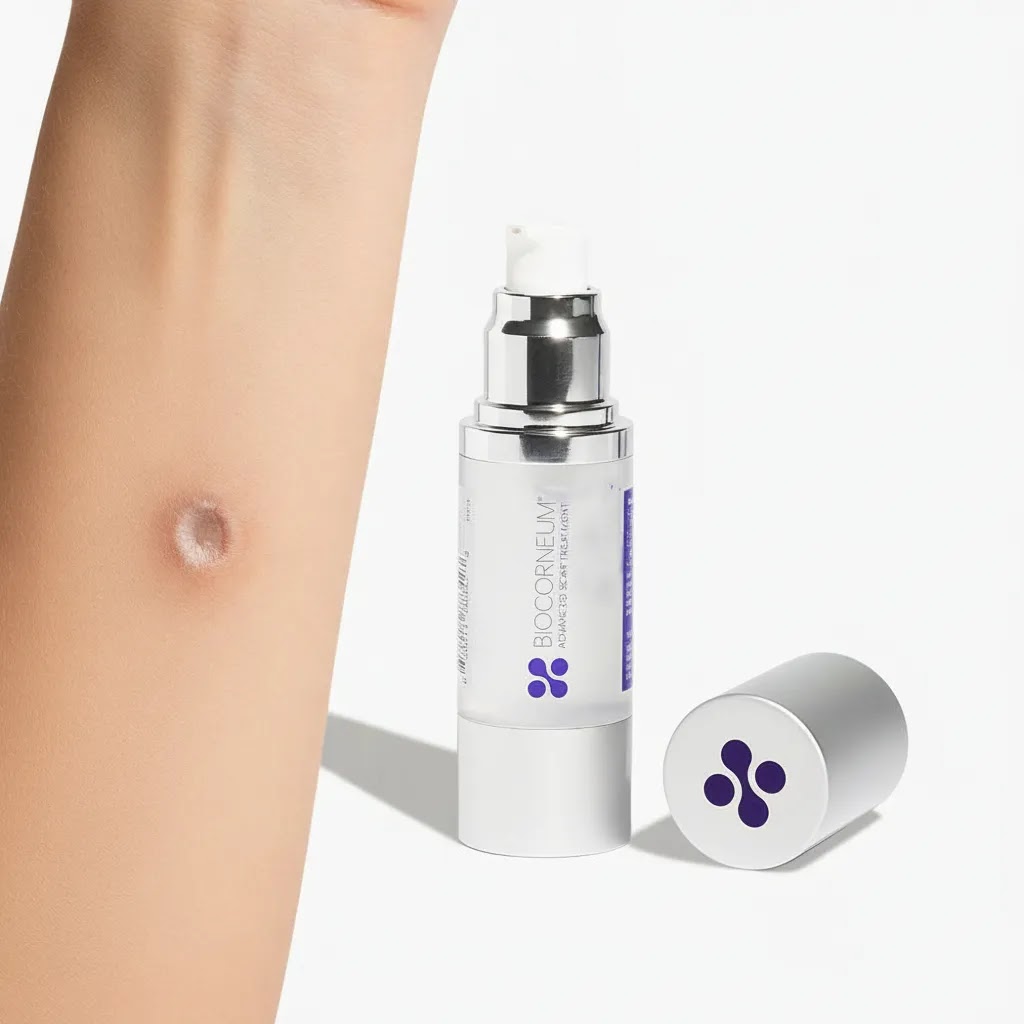
A scar is not fixed the moment the skin closes. Burn scars usually enter a remodeling phase that can continue for months, and sometimes longer. During that time, the mark may slowly flatten, soften, or fade. However, the pace varies by skin type, depth of injury, age of scar, and aftercare.
Early on, a healing burn scar may look red, pink, or darker than the surrounding skin. Later, it may become lighter, smoother, or less inflamed. Some people notice a pale dot that stays visible. Others develop a darker ring around the injury. If you want a broader timeline, see How Long does It Take for Scars to Fade. You can also read our article on healed burn scars for more context on the later stage.
Why small burns can still scar noticeably
People often assume a scar’s future depends mostly on width. Depth matters more. A small burn that reaches deep enough into the skin can disrupt normal collagen repair. Collagen is the structural protein that helps skin stay strong and even. When repair becomes uneven, the final scar may look depressed, thickened, or discolored.
In addition, friction, picking, repeated sun exposure, and delayed healing can make the scar more visible. That does not mean poor care always causes a worse scar. Still, those factors can influence how the area settles.
Cigarette burn healing stages and what they can look like
People often search for healing stages or pictures because the early phase can feel unsettling. It is not always obvious what is normal and what may leave a long-term mark. Even so, burn healing and scar maturation usually follow a few broad phases, and those phases often match what you see in the mirror.
| Phase | Typical timeframe | What it can look like | Why it matters |
|---|---|---|---|
| Early inflammation | the first days | redness, tenderness, swelling, a darker spot, or a raw surface that may crust | Deeper injury at this stage may raise the chance of later texture change. |
| Proliferative healing | roughly weeks 1 to 6 | pink, red, or darker color with firmer, smoother, or slightly raised texture | The mark can look more active before it starts to settle. |
| Remodeling and scar maturation | months to a year, sometimes longer | softening, flattening, fading, or a stable pale, shiny, indented, or firm scar | Most visible change happens in the first year, especially the first several months. |
Early inflammation: the first days
In the earliest phase, the skin reacts to injury. You may see redness, tenderness, swelling, or a darker spot, depending on your skin tone. If the injury goes deeper than a superficial mark, the surface can look raw and may form a crust as it starts to close.
A second-degree style injury often causes blistering, weeping, or a wetter-looking surface instead of a simple dry red mark. That blistering can signal deeper skin involvement. As a result, the risk of lasting texture change may rise after healing.
Proliferative healing: roughly weeks 1 to 6
Once the surface starts to close, the body lays down new tissue and collagen. This is often when the area looks most active. For example, it may appear pink, red, or darker than the surrounding skin. The texture may also feel firmer, smoother, or slightly raised as the skin rebuilds.
What many patients overlook is simple: a mark can look worse before it looks better. Color can intensify during this stage. Meanwhile, the border can look more defined even as the skin is healing.
Cigarette burn scar remodeling and maturation: months to a year, sometimes longer
Over time, collagen reorganizes and the scar gradually settles. This is the phase when some scars soften and become less noticeable. Others reveal their long-term pattern, such as a small indentation, a shiny surface, or a pale center.
Most visible change tends to happen within the first year, especially in the first several months. After that, improvement is usually slower, but it is not always too late. Depending on whether your scar is mainly texture, pigment, or both, you may still have meaningful options to discuss even if the scar is years old.
Ultimately, a realistic consultation helps set expectations. Mature scars often need targeted strategies rather than more waiting.
What people get wrong about home care
Online discussions about burns often blend first aid, pain relief, and scar revision. These topics are related, but they are not the same.
Fresh burn care is different from scar care
If the burn is new, focus on cooling the area, protecting the skin barrier, and knowing when you need medical assessment. If the skin has already healed and a scar remains, the goal shifts to appearance, texture, and long-term remodeling support.
This is where terms like burn gel, over the counter burn cream, and jelly burn create confusion. Many products marketed for minor burns are meant for short-term comfort on an acute injury. They are not automatically scar treatments. For general first-aid guidance on minor burns, the American Academy of Dermatology offers a basic overview.
Lidocaine questions deserve nuance
Searches like can you put lidocaine on a burn or can I put lidocaine on a burn are common because people want quick pain relief. Lidocaine is a numbing ingredient in some topical products. However, whether it fits depends on the condition of the skin, the product directions, and the severity of the burn. It is not a scar-fading ingredient.
People also ask whether lidocaine burns or stings. Some do feel brief stinging with topical products, especially on irritated skin. A lidocaine burn gel, burn spray with lidocaine, or lidocaine burn cream may help short-term discomfort in some situations. Even so, these products do not replace proper wound care or scar management. For more general safety guidance, see the U.S. National Library of Medicine lidocaine topical information.
If the mark you are treating comes from a different kind of skin injury, such as an acid or irritant exposure, the healing pattern may differ. In that case, this resource on chemical burn scar may be more relevant.
Where silicone gel may fit for a cigarette burn scar
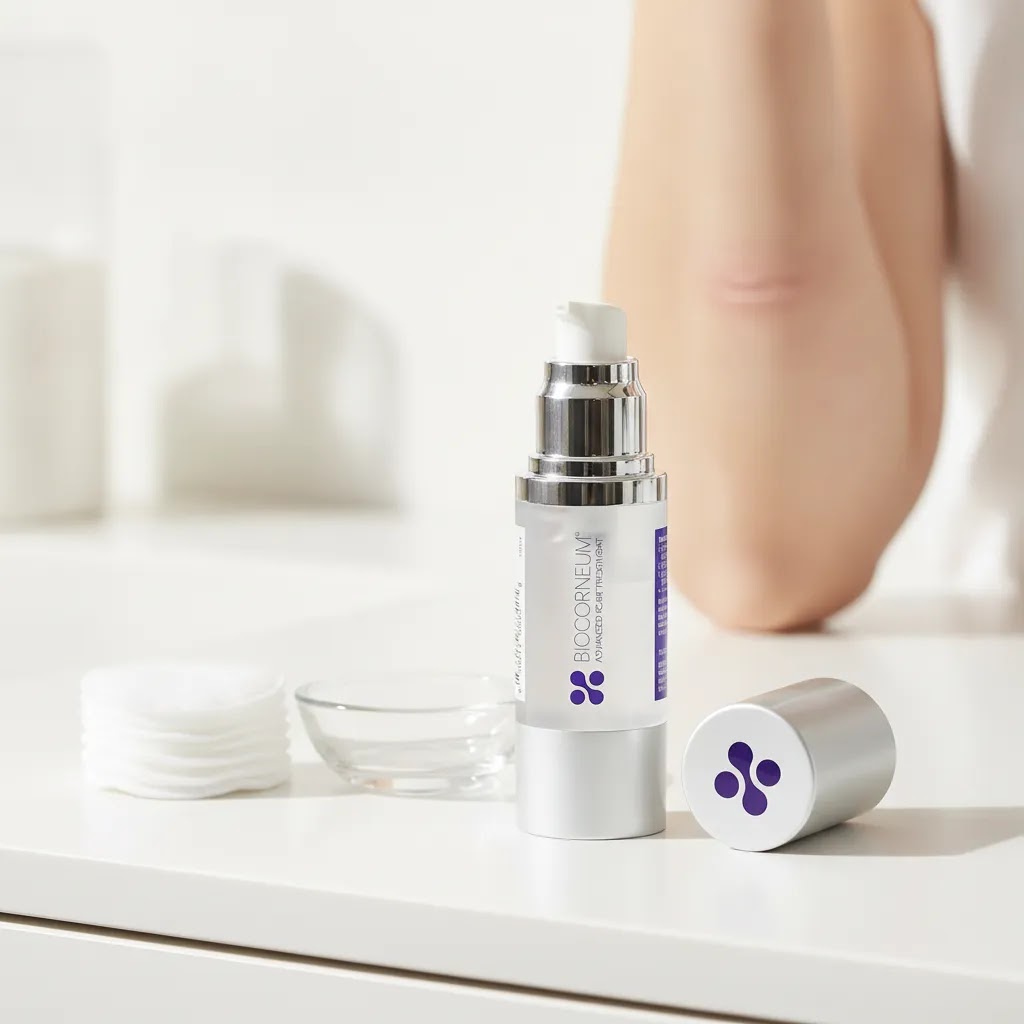
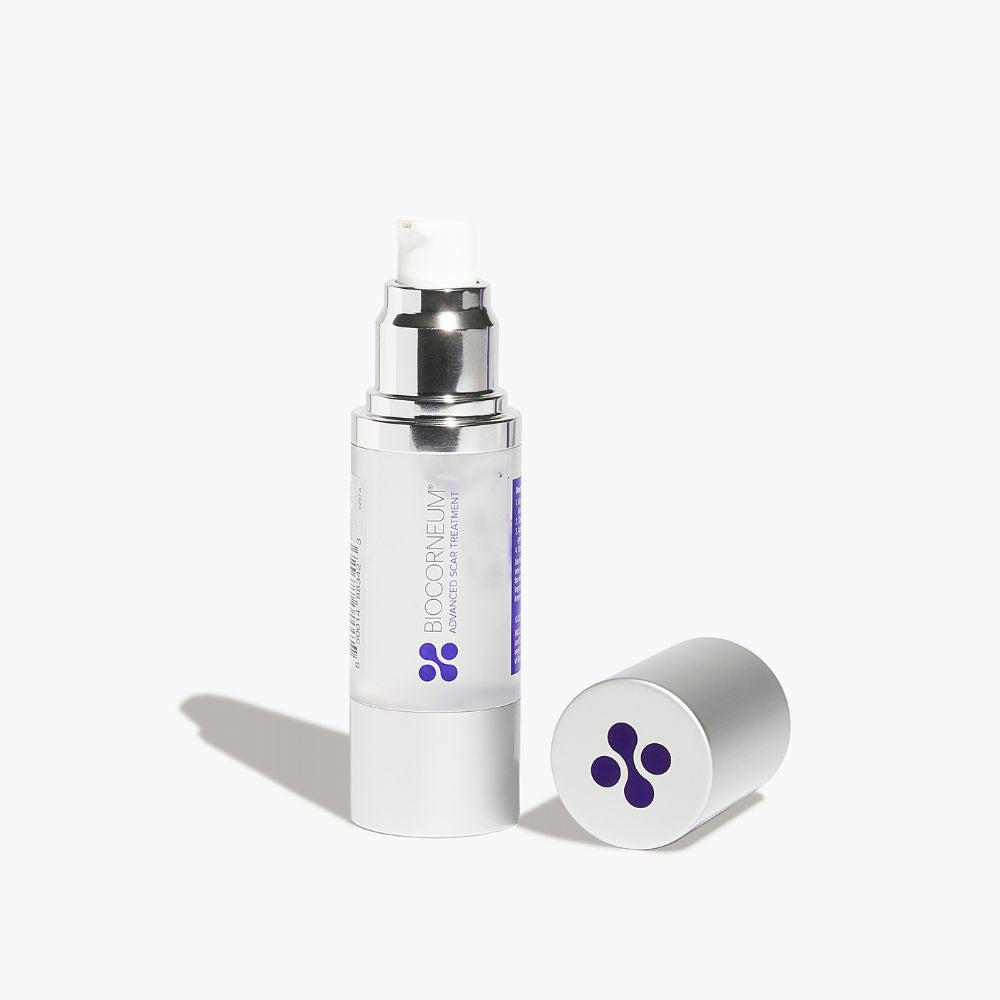
Once the skin surface fully closes, silicone becomes one of the most discussed topical options in scar care. It does not erase tissue that has already formed. However, it may support a better scar environment by creating a protective layer over healed skin. For some scars, that can improve softness, dryness, and overall appearance over time.
A product example is BIOCORNEUM SiliSilk Advanced Scar Gel, 30g, priced at $84.95. The product page describes it as a professional-grade silicone scar gel with an ultra-smooth, silky finish and a clear, fast-drying texture.
Silicone gel often appeals to people with small circular scars because they can apply it more precisely than a larger sheet. That may help on visible areas like the forearm or upper chest, where you want targeted coverage without a bulky dressing.
Nuance Medical often emphasizes practical scar care education, and that point matters here. The best product is not always the one with the longest feature list. Instead, it is the one that fits a healed scar, the skin location, and a routine you can follow consistently. Readers who want more background on daily-use silicone care may find Introducing SiliSilk™: Everyday Silicone Scar Care, Simplified helpful. You can also compare options in Biocorneum Scar Treatment.
Silicone gel vs silicone sheets and other topicals: what matters most
Silicone comes in different formats, and the best choice is usually the one you will use consistently on fully healed skin. For a small round scar, daily practicality often matters more than minor label differences.
Silicone gel vs silicone sheets: practical differences
Silicone gel is painted on and dries into a thin film. That format often works well for small circular marks, areas with hair, or spots where a sheet would lift at the edges. It can also fit into a routine more easily because it is less visible under clothing once dry.
Silicone sheets are physical dressings that provide continuous contact. Some people like them because they are simple to apply and wear, and they cover an area evenly. The challenge is fit and adhesion, especially for tiny scars where the sheet is larger than the mark or on areas that move, sweat, or rub against clothing. If you want more detail, see Biodermis Silicone Scar Sheets.
Consistency is the real deciding factor. A product you can apply or wear reliably, according to its instructions, is more likely to help than a perfect option you cannot keep in place or forget to use.
How silicone differs from common “scar creams” online
Many over-the-counter scar creams focus on ingredients that target dryness, surface smoothing, or uneven color rather than creating the same type of protective barrier silicone provides. You will often see onion extract, allantoin, retinoids, or brightening ingredients marketed for discoloration.
Some of these ingredients can support certain goals, such as surface turnover or blending a lingering dark spot more evenly. Still, topical products have limits, especially for indentation, firmness, or pigment loss. If a scar looks depressed or shiny because deeper structures changed, a cream alone rarely fills in that tissue.
Sun exposure is a bigger variable than most people think
Sun and UV exposure can prolong visible redness and deepen contrast between scar tissue and surrounding skin, especially in the months after an injury. It can also make post-inflammatory hyperpigmentation more persistent in some skin tones. As a result, a small round mark may keep looking new even after it has healed.
For visible areas like arms, shoulders, and hands, daily sun protection is often one of the simplest ways to support a better-looking long-term result. Even after the skin feels normal, protecting the area can help prevent the scar from becoming a high-contrast target that draws the eye.
Professional treatment options for healed scars
If a cigarette burn scar still bothers you after it matures, professional treatment may be worth discussing. The right option depends on whether the main issue is indentation, firmness, texture irregularity, or pigment contrast.
If the scar is indented
A small round depressed scar may respond differently than a raised scar. In-office approaches may focus on stimulating collagen remodeling or on improving how light reflects off the surface so the scar looks less obvious. In some cases, the procedure targets texture more than color.
If the scar is raised or firm
Raised scars need a different strategy than indented ones. Pressure, silicone, and certain office-based treatments may come up depending on the scar’s age and behavior. Because not every raised spot acts the same way, treatment planning should stay individualized.
If the main issue is color
Some cigarette burn scars stay flat but remain darker, pinker, or lighter than surrounding skin. In those cases, pigment management and sun protection often become central parts of the conversation. Treatment can be more challenging when the scar is pale rather than dark, and improvement may be gradual rather than dramatic.
A qualified clinic like Nuance Medical can help identify which feature is really driving your concern. Many people say they want the scar gone. In practice, the true goal is often more specific: softer edges, less contrast, smoother texture, or better blending with nearby skin. If the injury was deeper and involved blistering, our guide to Second Degree Burn Scar may also help.
When to get an in-person evaluation
Some scars are reasonable to watch at home for a while. Others deserve a professional opinion sooner.
- The area is still open, crusted, or repeatedly irritated
- The scar is becoming increasingly raised, itchy, or firm
- You are unsure whether the mark is a scar, pigment change, or another skin issue
- The location makes daily scar care difficult
- You want to discuss treatment options for a visible facial or body scar
This kind of assessment is especially useful if you feel stuck between product advice and procedural advice. Nuance Medical’s educational approach reflects a broader truth in aesthetics and skin recovery: you usually make better decisions when someone evaluates the concern in person rather than treating it as a one-size-fits-all problem.
If you want to browse related options more broadly, the Scar Treatment & Skincare category can help you explore the wider scar-care landscape. Readers interested in product-focused scar gel news may also want to see BIOCORNEUM® SiliSilk™ Wins NewBeauty Award for Best Scar Gel.
Medical Disclaimer: This article is intended for informational and educational purposes only. It does not constitute medical advice and should not be used as a substitute for professional consultation with a qualified medical or aesthetic practitioner. Individual results vary. Always seek the guidance of a licensed healthcare professional before pursuing any aesthetic treatment.
Frequently Asked Questions
Will a cigarette burn scar go away completely on its own?
A cigarette burn scar may fade over time, but complete disappearance is uncommon once true scar tissue has formed. Small scars can become less noticeable as color settles and the tissue softens, though the round shape or texture may remain visible. Deeper burns are more likely to leave a lasting mark. If the scar still bothers you after it has healed and matured, a professional evaluation can help clarify what types of improvement may be realistic.
Why does a cigarette burn scar often look round and sharply outlined?
That circular look usually reflects the shape of the heat source and the concentrated way the skin was injured. Unlike a scrape or diffuse burn, the contact area is compact, so the damage tends to stay well defined. This can leave a small but distinct scar with a border that catches the eye. Even when the mark is tiny, the contrast in shape, color, or depth can make it seem more noticeable than a larger but less defined scar.
Can silicone gel help a cigarette burn scar?
Silicone gel may help support the appearance of some healed scars, especially when the goal is to improve hydration, softness, and surface quality over time. It is most appropriate after the skin has fully closed, not on an open or actively healing burn. Results vary depending on scar age, depth, and location. People often use silicone as part of a broader scar routine rather than expecting it to fully remove an indented or long-standing mark.
What is the difference between burn cream and scar treatment?
Burn cream is usually aimed at the early stage of injury, where comfort, moisture balance, and skin protection matter most. Scar treatment is used later, once the surface has healed, and focuses on how the tissue remodels and looks over time. That distinction matters because a product made for temporary burn discomfort is not automatically designed to improve a mature scar. If you are shopping based on phrases like over the counter burn cream or burn gel, read the intended use carefully.
Can you put lidocaine on a burn?
Sometimes, but it depends on the product, the severity of the burn, and whether the skin is intact. Lidocaine is a numbing ingredient, so it may be used in some topical formulas intended for minor discomfort. It is not appropriate in every situation, especially if the skin is significantly damaged or the injury is more serious than it first appears. If there is any doubt about severity, blistering, or skin breakdown, medical guidance is the safer next step.
Does lidocaine burn or sting when you apply it?
It can. Some people notice brief stinging, warmth, or irritation when topical products are applied to already sensitive skin. That does not always mean something harmful is happening, but it can signal that the skin barrier is irritated or that the product is not well tolerated in that moment. Persistent pain, worsening redness, or signs of an open injury deserve more caution. A numbing product should not be used as a way to push through worsening symptoms.
Are cigarette burn scars usually raised or indented?
They can be either, which is why treatment advice varies so much. Some heal flat with pigment change only. Others become indented because the injury affected deeper skin structure. A smaller number may become raised or firm, especially if the area healed under tension or developed a more active scarring response. The physical shape of the scar matters because a depressed circular scar is often approached differently than a thickened one.
When should I start treating a cigarette burn scar?
You should only start scar-focused treatment after the skin surface is fully closed and no longer behaving like an active wound. Starting too early can irritate the area or confuse the goals of care. Once the skin has healed, consistent scar support may be considered, especially during the months when remodeling is still active. If you are unsure whether the area counts as healed, that uncertainty itself is a good reason to ask a qualified medical professional.
Are older cigarette burn scars harder to improve?
Older scars are often more resistant to change than newer ones, but that does not mean no improvement is possible. Mature scars may still respond to targeted care or office-based treatment, though progress can be slower and more limited. This is especially true for scars with indentation or pigment loss. A realistic consultation is helpful because it shifts the question from “Can it be erased?” to “What aspect of it can be improved most meaningfully?”
Should I see a professional for a small scar if it does not hurt?
It can still be worth it, especially if the scar is visible, changing, or emotionally bothersome. A small scar can have an outsized cosmetic impact when it sits in a high-visibility area or has a very defined shape. You may also benefit from guidance if you are not sure whether your concern is mainly color, texture, or both. Professional input tends to be most useful when self-treatment has plateaued or the scar type is not clear.
How to fix cigarette burns on skin?
Fixing the appearance of a cigarette burn on skin depends on whether you are dealing with an active injury or a healed scar. Once the skin is fully closed, options often focus on scar support and texture or color blending over time, and sometimes professional treatments for more noticeable indentation or contrast. A qualified practitioner can help you understand what type of improvement is realistic for your specific scar.
What is the mark that looks like a cigarette burn?
A mark that looks like a cigarette burn can come from several causes, including other small contact burns, an inflamed bite that left a lingering spot, or post-inflammatory hyperpigmentation after irritation. Scars are more likely when there is a texture change like firmness, indentation, or a shiny surface, while pigment-only marks are often flat and smooth. If the spot is changing or unclear, an in-person evaluation is the safest way to get accurate guidance.
What does a second degree cigarette burn look like?
A second-degree style burn is often associated with blistering and a moist or weeping surface rather than a simple superficial red mark. Because it involves deeper layers of skin, it may be more likely to heal with noticeable texture change or a longer-lasting color shift. If there is any concern about depth, blistering, or skin breakdown, medical guidance is appropriate.
How long does a cigarette burn scar last?
A cigarette burn scar can last for years, and some remain permanent in some form, especially if the injury was deeper. Many scars change most in the first several months, with slower settling up to about a year as the scar matures. After a scar is mature, improvement can still be possible, but it is often more gradual and depends on whether the issue is texture, pigment, or both.
Key Takeaways
- A cigarette burn scar is often small but sharply defined, which can make it look more noticeable than its size suggests.
- Depth matters more than diameter, so even a tiny burn may leave a lasting change in texture or pigment.
- Fresh burn care, pain relief, and scar treatment are related but different topics, and they should not be treated as interchangeable.
- Silicone gel may support some healed scars, but it does not guarantee complete removal and should only be used on fully closed skin.
- If the scar is indented, raised, changing, or simply difficult to assess on your own, an in-person evaluation can help clarify the most appropriate next step.
Conclusion
A cigarette burn scar can feel frustrating because it is often both small and visible. The mark may look simple from a distance, but its behavior depends on depth, healing pattern, skin tone, location, and whether the main issue is color, firmness, or indentation. That is why generic burn advice often falls short once the wound heals and a scar remains.
If you are researching options, start by separating fresh burn care from true scar care. Then look at whether topical support, time, or professional treatment is most relevant to your situation. Improvement may be possible, but it is usually gradual and individualized rather than instant. If you want help understanding what kind of scar you have or which next step may make sense, you can explore Nuance Medical’s scar resources or book a consultation for personalized guidance in a calm, medically informed setting.