
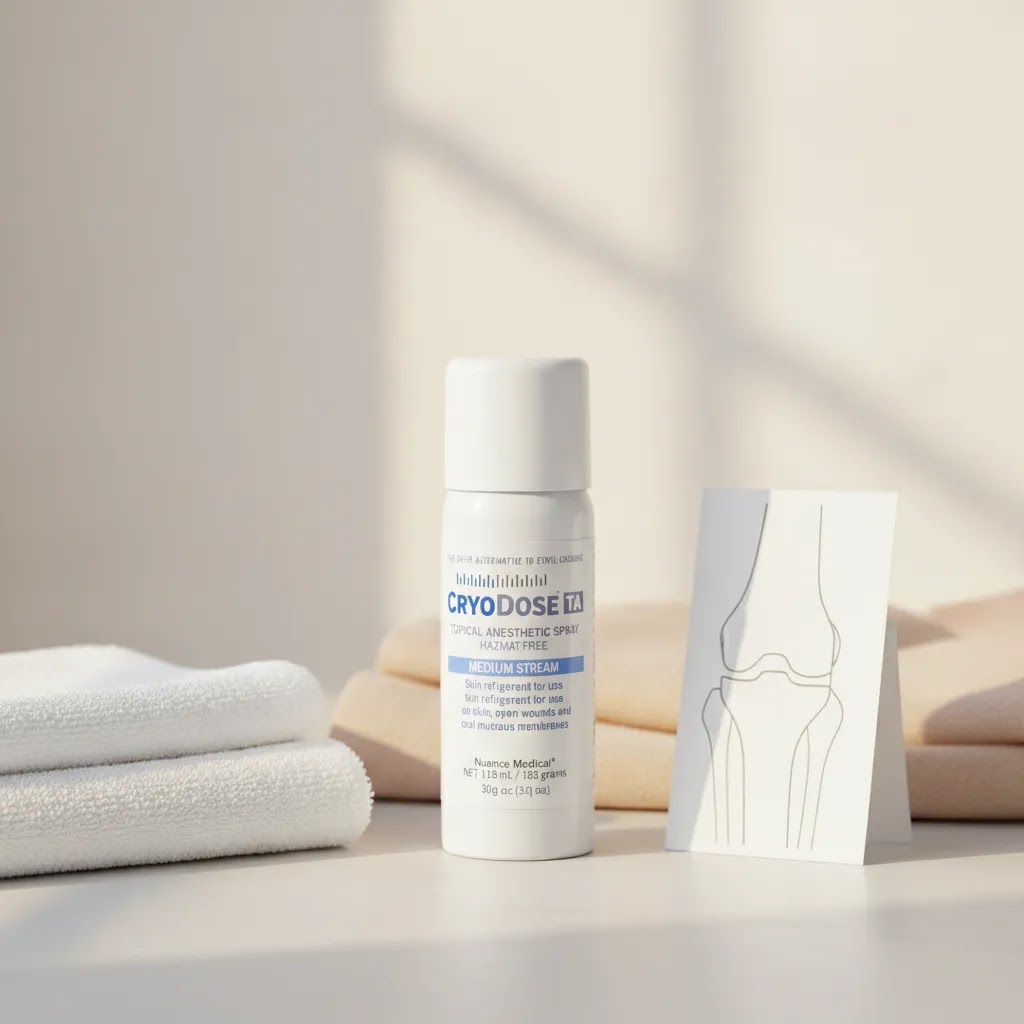
A common scenario is this: you have been diligent with rest and may have finished the early stage of recovery. However, kneeling, stairs, deep bends, or getting up from a chair still feel tight and restricted.
That can be frustrating, especially if you are trying to decide between more stretching, hands-on therapy, or a medical check-in. This guide explains how to break up scar tissue in knee with a close look at physical therapy, manual techniques, and safe home work. You will learn what knee adhesions are, how therapists approach them, what you can safely do at home, and when it is time for a formal evaluation. If you want broader context on scar care, our how to get rid of scars guide covers the bigger picture.
How to Break Up Scar Tissue in Knee: What Adhesions Feel Like
Scar tissue inside or around the knee does not always look like a visible scar on the skin. Many people describe it as a block, a catch, or a band of tightness. The knee may resist motion at the end range, especially when you try to fully straighten it or bend it deeply.
Adhesions form when healing tissue loses normal mobility compared with the tissue around it. This can happen after ligament injury, arthroscopic surgery, joint swelling, or a period of reduced movement. The tissue itself is not always harmful. However, it can disrupt the smooth glide between layers that need to move together.
You may also notice:
- Morning stiffness that eases only partly with movement
- A pulling or tugging feeling around a healed incision
- Discomfort with squatting, stairs, or kneeling
- A sense that the knee feels mechanically blocked rather than simply weak
- Persistent swelling that makes motion harder
Adhesions do not explain every stiff knee. Weakness, inflammation, joint irritation, or altered movement patterns can create a similar feeling. That is why a skilled assessment matters. If your concern started after a procedure or wound, learning how to heal scars properly can support better long-term mobility and comfort.
How to Break Up Scar Tissue in Knee Starts With Knowing the Problem
Scar tissue is part of normal healing. Your body lays down collagen to repair damaged tissue. Over time, that collagen can remodel and become more flexible. Inside a joint like the knee, scar tissue can sometimes build or organize in a way that limits motion more than expected.
One term you may hear is arthrofibrosis. It refers to an overgrowth of scar tissue within the joint (intra-articular scarring) that can significantly restrict range of motion and function. Arthrofibrosis is not the same as the typical stiffness many people feel early in recovery. That distinction matters. Routine post-op tightness often improves with swelling control, gradual mobility, and strengthening, while arthrofibrosis may need more structured rehabilitation and closer medical follow-up.
Common causes and risk factors
Scar-related stiffness usually comes from several factors, not one single cause. Often, inflammation, pain-driven guarding, and reduced movement in the early healing window all play a role. Common risk factors clinicians watch for include:
- Prolonged immobilization or very limited early motion (often due to pain, swelling, or bracing)
- Significant or persistent post-surgical inflammation
- Repeated injury or multiple procedures on the same knee
- Delayed rehab progression, sometimes because people avoid activity for fear of reinjury
Many patients overlook one point. “Lack of movement” does not have to mean complete bed rest. Even small reductions in daily bending and straightening can matter, especially if they continue for weeks. As a result, the knee can start to feel like it is “closing down.” That is why rehab plans often emphasize safe, early range-of-motion work that matches your surgery and your surgeon’s protocol.
Normal stiffness vs stiffness that feels out of proportion
Some stiffness commonly follows an injury or procedure. Early on, you may notice morning tightness, temporary difficulty with deep bending, or soreness and mild swelling after therapy that settles with rest. In addition, it is normal to feel hesitant or guarded as your nervous system regains trust in the movement.
Stiffness may be more concerning when it seems out of proportion to the stage of recovery. For example, you may steadily lose motion instead of gaining it. A “hard stop” may develop and never soften. Or you may fail to reach key functional ranges for your procedure even with consistent rehab. Persistent inability to fully straighten the knee is a common example clinicians take seriously because extension affects gait, stairs, and overall joint loading.
Why Manual Work Matters When Learning How to Break Up Scar Tissue in Knee
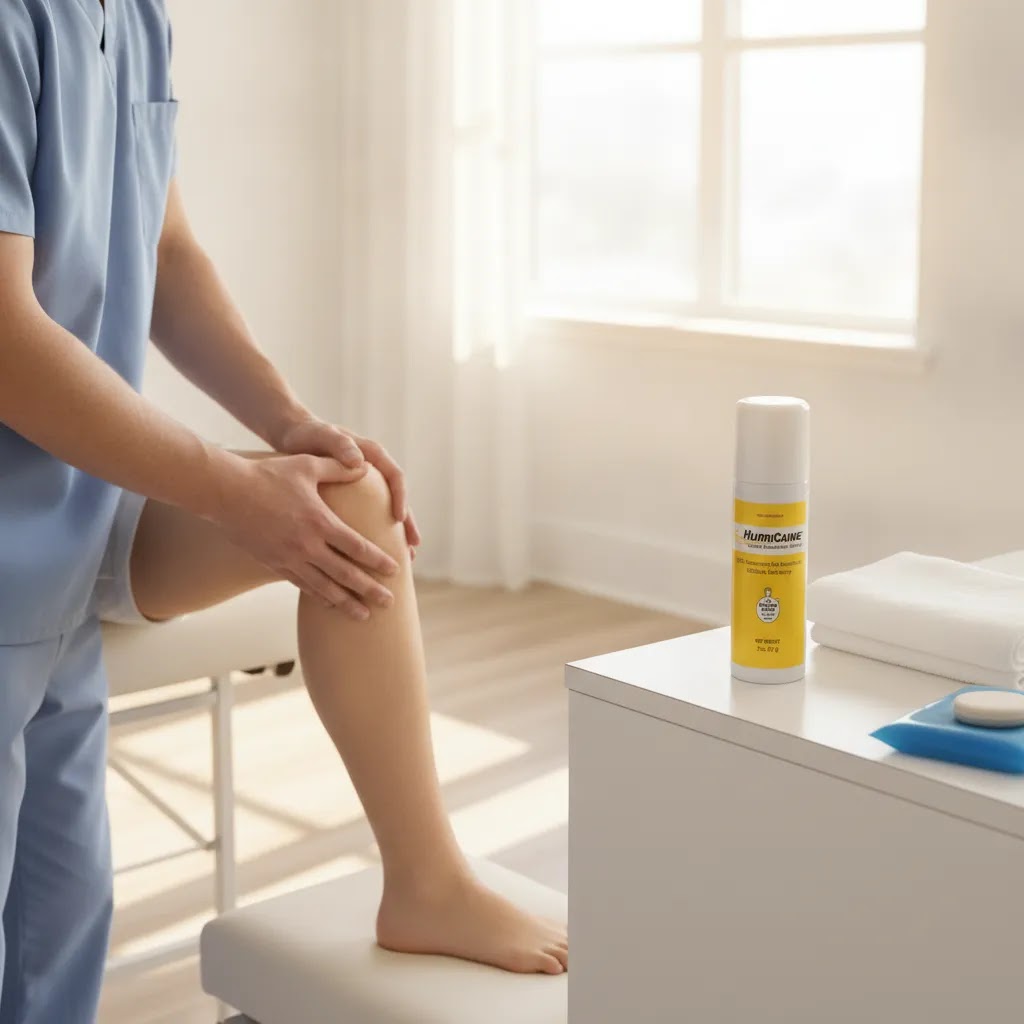
Physical therapy for knee adhesions often goes beyond simple stretching. Therapists use manual techniques because scar tissue problems often involve tissue glide, not just muscle length. If the skin, fascia, tendon, or deeper soft tissue layers do not move well relative to each other, forceful stretching alone may irritate the area without improving motion.
Hands-on treatment can help identify where motion is limited. It can also apply graded pressure that matches your stage of healing. In a clinic, the therapist usually checks how the patella moves, how the scar shifts over the tissue beneath it, whether the quadriceps and hamstrings are guarding, and whether swelling still limits joint mechanics.
This process is usually gradual. Aggressive pressure is not always better. If you push too hard too soon, inflamed tissue may become more reactive. A steady plan with manual therapy, targeted exercise, and patience often works better than trying to force a quick change in one session.
How Physical Therapy Approaches How to Break Up Scar Tissue in Knee
A good physical therapy plan is structured, not random. The goal is to improve mobility while protecting the joint from overload.
Step 1: Assess where the restriction actually is
The first question is simple: where is the limit coming from? It may come from the skin and superficial scar, the joint capsule, swelling, muscle guarding, or a deeper mechanical problem. That answer shapes the hands-on work and the exercise plan.
Step 2: Calm irritation before forcing motion
If the knee is hot, swollen, or highly painful, treatment may start with edema control, gentle motion, and activity changes. Tissue often moves better once irritation decreases.
Step 3: Use manual therapy to restore glide
This can include scar mobilization, soft tissue work, patellar mobilization, and guided range-of-motion techniques. The pressure and intensity should match your tolerance and healing stage.
Step 4: Reinforce the gain with active movement
Any motion you gain manually needs practice right away. Therapists usually follow hands-on treatment with bending, straightening, gait drills, or strengthening so your body learns to keep the new movement.
Step 5: Build strength around the new range
Improved mobility helps, but the surrounding muscles also need to support it. Quadriceps control, hip strength, and balance work often become part of the plan.
This is one reason early wound and scar care matter. A smoother healing process may reduce later tissue restriction. For that reason, resources on how to prevent scarring can be useful after procedures or injuries.
Manual Techniques for How to Break Up Scar Tissue in Knee
Different techniques serve different problems. A therapist may combine several in the same visit, but each one has a clear purpose.
Scar mobilization
This is used when the scar itself feels stuck to the tissue beneath it. The therapist may move the scar in small circles, side-to-side motions, or gentle lifting patterns. For surface scars, the aim is to improve mobility between the skin and deeper layers.
Myofascial release or soft tissue mobilization
These techniques target tight areas in the quadriceps, hamstrings, calf, or tissue around the patella. If the tissues around the knee are guarding, the joint may feel more restricted than it really is.
Patellar mobilization
After knee surgery, the kneecap can lose some of its normal glide. Gentle patellar mobilization may help with flexion, extension, and comfort during walking or stairs. Clinicians teach this carefully because it requires proper hand placement and the right amount of force.
Joint mobilization
Some limits come from the joint itself rather than the scar alone. A licensed therapist may use graded mobilization to improve how the tibia, femur, and patella move relative to one another.
Instrument-assisted soft tissue work
Some clinicians use tools to apply controlled pressure along restricted tissue. This is not automatically better than hands-only treatment. However, in some cases it can help identify and address dense areas more precisely.
For skin-level scar support, some people also explore the broader Scar Treatment & Skincare category to learn how topical scar care fits into healing. If you are comparing options, you can also review Biocorneum Scar Gel: SPF 30, Results, and Comparisons and best scar cream after surgery for related scar-care education. At Nuance Medical, patient education around scar support emphasizes realistic expectations, consistency, and matching the approach to the stage of healing rather than chasing a quick fix.
How to Break Up Scar Tissue in Knee at Home
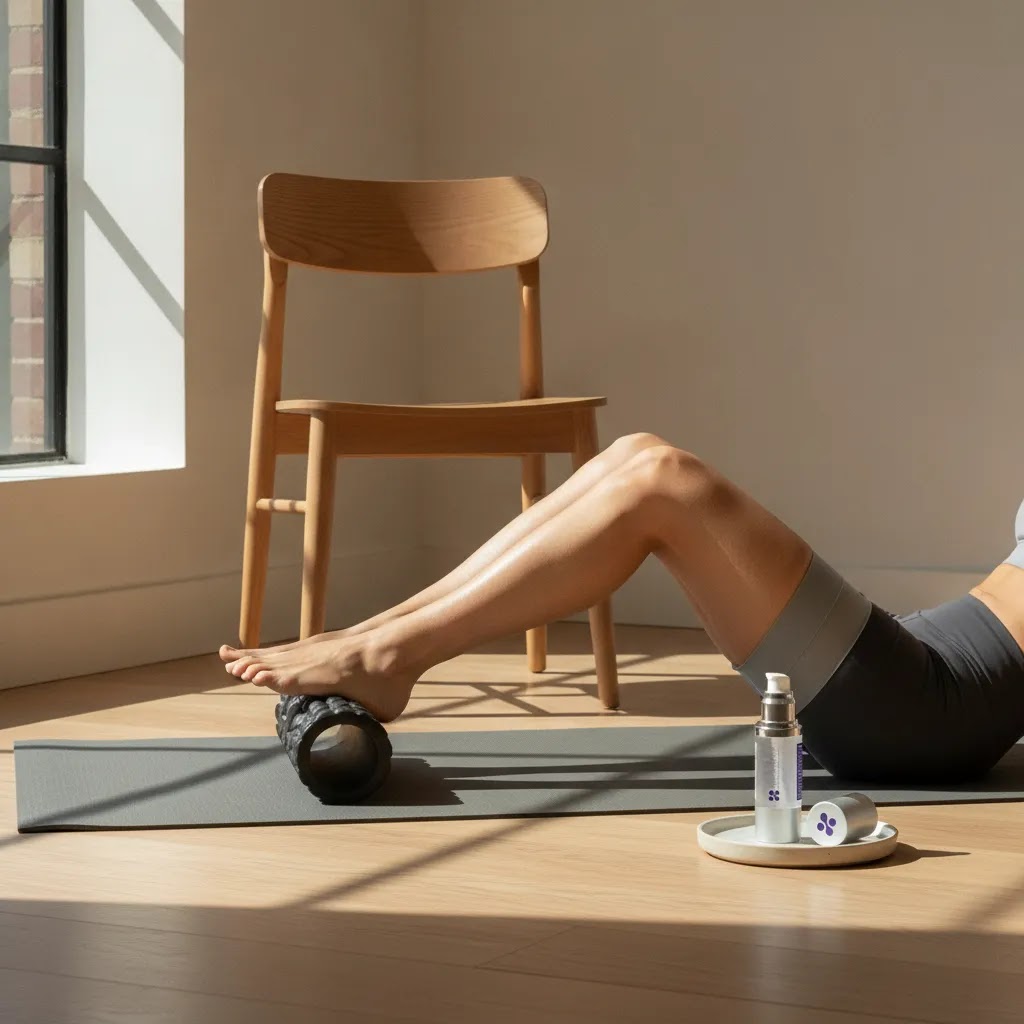
Home work should support the tissue, not aggravate it. Mild discomfort can happen. However, sharp pain, increasing swelling, or a knee that feels worse the next day usually means the intensity is too high.
Gentle scar massage
If your incision is fully closed and your clinician has cleared it, you may be shown how to move the scar in small directions instead of rubbing aggressively. Sessions are usually short and consistent rather than hard and infrequent.
Heel slides and extension work
These are common because they restore the two motions people lose most often: bending and straightening. Slow, repeated movement may help the nervous system tolerate motion while also improving tissue mobility.
Low-load prolonged stretching
Sometimes a longer, gentler stretch is more useful than repeated forceful pushing. This may be done with props, towels, or positioning under the guidance of a therapist.
Walking and functional movement
Normal gait, sit-to-stand practice, and carefully graded stair work help turn improved range into usable movement. That matters because scar tissue complaints are rarely only about flexibility. They affect real daily tasks.
If you are dealing with a similar issue lower in the leg, the same principles may also help with ankle scar stiffness. Still, the exact exercises and manual techniques can differ because ankle mechanics differ from knee mechanics. For example, you may want to review related scar-care topics like Biodermis silicone scar sheets when a healed surface scar is also part of the recovery picture.
How to Break Up Scar Tissue in Knee Safely at Home, Step by Step
If you are searching for the best exercise for scar tissue in the knee, the answer is rarely a single exercise. In practice, most people do better when they pair gentle range-of-motion work with light strengthening and then watch how the knee responds over the next 24 hours. The routine below offers one practical way to structure home sessions. However, you should adapt it to your surgery type, healing stage, and clinician’s guidance.
Before you start: keep the goal simple
The goal is not to force motion. The goal is to improve movement quality, reduce stiffness, and build tolerance over time. Importantly, a repeatable routine works better than an aggressive one that flares symptoms.
- Warm up (5 to 10 minutes)Choose a low-impact warm-up that increases circulation without provoking swelling, such as easy stationary cycling with a comfortable seat height, a short walk on flat ground, or a warm shower. The goal is to reduce the “cold start” stiffness that makes everything feel tighter.
- Gentle range of motion: flexion and extension first (5 to 10 minutes)Start with heel slides for bending (flexion) and a focused effort on straightening (extension), such as a heel prop with the knee relaxed or a gentle quad set. Move slowly. Stay just shy of sharp pain. Think “repeatable” rather than “max effort.” If you feel a hard stop that does not change, do not force through it.
- Brief scar mobilization (only if cleared) (2 to 5 minutes)If your incision is fully healed and your clinician has told you it is appropriate, use light, controlled scar movement such as small circles, side-to-side motion, or gentle lifting. Avoid aggressive rubbing. Stop if the skin becomes irritated, the area feels hot, or swelling increases afterward. If you have redness, warmth, or drainage, wait and get assessed first.
- Strength to “hold” the range you just practiced (5 to 15 minutes)Choose 1 to 3 exercises that match your stage, such as straight leg raises, sit-to-stand from a higher chair, mini-squats in a comfortable range, step-ups on a low step, or hip strengthening. Strengthening supports the mobility work because it helps your body use the range instead of tightening back down after the session.
- Re-check and cool down (2 minutes)Repeat a few easy heel slides or extension holds, then note how the knee feels. If you tend to swell after sessions, a brief period of elevation and cooling may help comfort.
Simple stop or modify rules
Some discomfort is common, but certain signs tell you to reduce intensity or seek guidance. Stop or modify if you notice sharp pain, a sudden increase in swelling later that day or the next morning, new heat or redness, a meaningful limp that was not there before, or worsening function. For example, stairs may feel harder for several days in a row after you increase your exercises. If you are unsure, a qualified clinician can help you sort out normal post-exercise soreness from a sign that you are pushing too far.
What to track at home so you know if you are improving
Progress is easier to see when you measure it the same way each week. Consider tracking:
- Extension gap: how close you are to fully straight, compared with your other knee, using the same position each time
- Flexion tolerance: how far you can comfortably bend, such as how close your heel gets to your glute during a heel slide
- Swelling pattern: whether the knee looks or feels fuller after activity, and how long it takes to settle
- Functional markers: sit-to-stand ease, stair tolerance, walking distance, or how long it takes to “warm up” in the morning
These markers do not replace a clinical exam. However, they can help you and your therapist make more informed adjustments.
| Approach | Main purpose | Example from this article | Key caution |
|---|---|---|---|
| Scar mobilization | Improve mobility between the scar and underlying tissue | Small circles, side-to-side motion, gentle lifting | Only after the incision is fully healed and cleared by a clinician |
| Range-of-motion work | Restore bending and straightening | Heel slides and extension work | Do not force through a hard stop or sharp pain |
| Low-load stretching | Improve tolerance to motion with less irritation | Longer, gentler stretch with props or towels | Avoid repeated forceful pushing |
| Strengthening | Help the body keep the new range | Straight leg raises, sit-to-stand, mini-squats, step-ups | Scale back if swelling or function worsens the next day |
Pain Relief and Topicals While Working on How to Break Up Scar Tissue in Knee
Some people ask whether numbing products can make scar massage or therapy easier. Temporary pain control may improve comfort during a procedure or brief intervention, but it does not treat the adhesion itself. It also should not mask significant pain and push you to work harder than your tissue can tolerate.
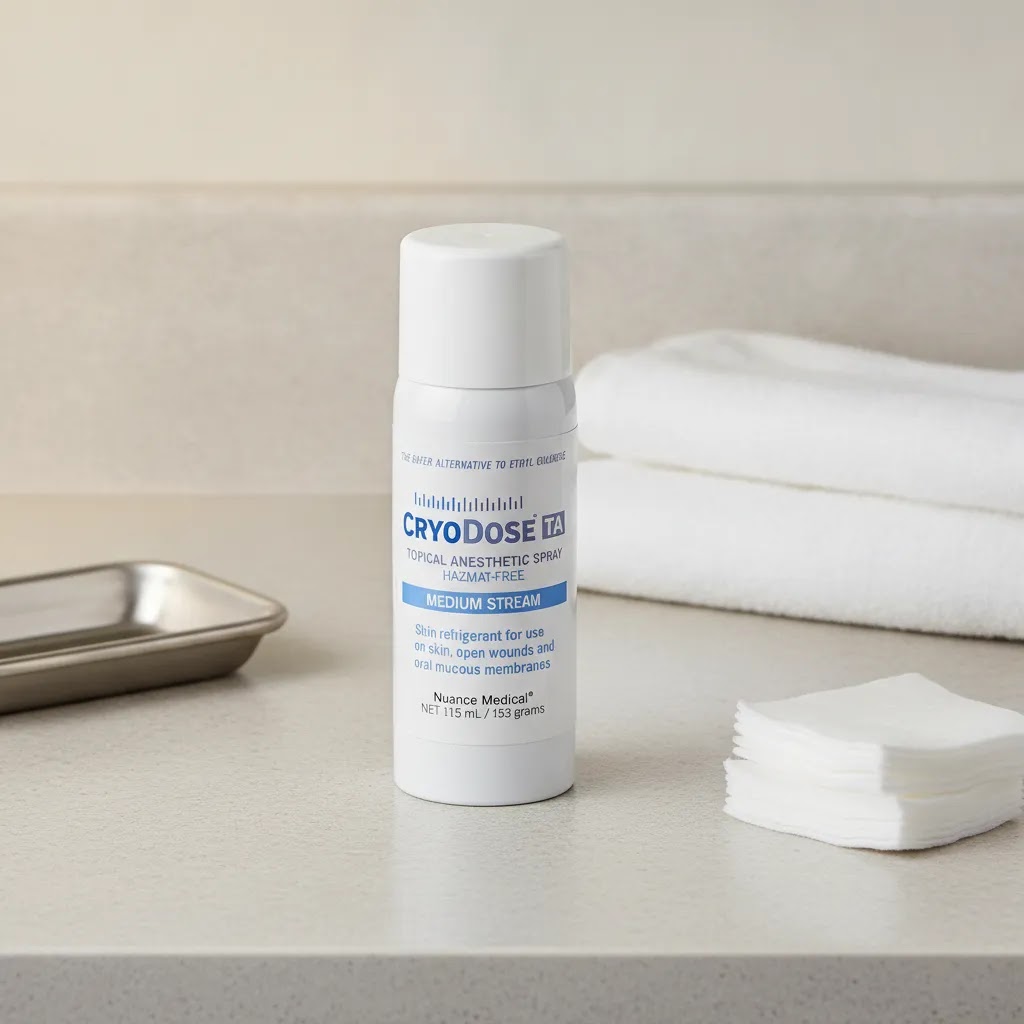
Nuance Medical offers a Topical Pain Relief category that includes products designed for temporary numbing in medical settings, such as CryoDose™ TA, which is a topical anesthetic spray intended for short-term pain control during minor procedures. The company has also shared updates on clinical pain-control innovation in New Innovation in Pain Relief and Sustainability.
For readers comparing common numbing ingredients, benzocaine and lidocaine are not interchangeable in dose, onset, or duration. Questions like how much topical lidocaine is safe, how much topical lidocaine is too much, how fast does topical lidocaine work, how long does topical anesthetic last, how long does benzocaine spray last, and how long does topical benzocaine last all depend on the exact product, concentration, treatment area, and medical context.
Dental examples can add to the confusion. Products such as HurriCaine® Topical Anesthetic Spray are used for temporary oral pain relief and topical anesthesia in dentistry, which is very different from self-treating a knee adhesion at home. The same goes for questions like why are topical anesthetics used in dentistry or topical lidocaine time to onset. Those answers do not automatically translate to orthopedic recovery. If you are considering a numbing product for scar work, ask a qualified clinician which product, if any, is appropriate for your situation.
For general medication safety, authoritative guidance from the FDA on topical benzocaine products and the MedlinePlus lidocaine topical reference can help you review labeling and cautions.
When How to Break Up Scar Tissue in Knee Needs Medical Guidance
A stiff knee does not always need invasive treatment, but some situations deserve prompt evaluation. If your range of motion is plateauing despite regular exercise, if your knee swells after light activity, or if you feel a hard stop that never changes, a professional assessment makes sense.
You should also check in with a qualified clinician if you have:
- Redness, warmth, or drainage around a scar
- Pain that is increasing rather than gradually improving
- A new limp or inability to fully bear weight
- Persistent loss of extension, especially after surgery
- Uncertainty about whether the incision is healed enough for massage
At a medically oriented company like Nuance Medical, educational resources around scar care are meant to support informed decisions, not replace individual assessment. If you are dealing with a healing incision and want more context on topical scar care, Introducing SiliSilk™: Everyday Silicone Scar Care, Simplified offers a helpful overview of one commonly discussed scar-care approach.
What to Expect if How to Break Up Scar Tissue in Knee Is Not Working
If you are worried that you have “deep scar tissue” in your knee, a medical evaluation is usually less dramatic than people expect. The goal is to identify what is limiting motion, then match the next step to your anatomy, your procedure, and how your knee behaves under load.
What an evaluation may include
A physical therapist, orthopedic clinician, or post-op surgical team will typically start by looking at objective motion and signs of ongoing irritation. Depending on your situation, that may include:
- Range-of-motion measurement for both bending (flexion) and straightening (extension), sometimes compared to the other side
- Swelling, warmth, and skin changes, especially if inflammation may be limiting motion
- Scar mobility and patellar (kneecap) movement, particularly after surgical procedures
- Gait assessment to see whether limping or avoidance patterns are reinforcing stiffness
- Strength and control testing of the quadriceps and hips, because weakness can mimic restriction
In some cases, imaging may be considered. Or your clinician may recommend following up with your surgeon if your recovery timeline looks out of step with what is typical for that procedure. The point is not to label everything as scar tissue. It is to rule out other contributors that need a different plan.
How treatment can progress if home work and basic PT are not enough
Many people improve with a structured, progressive rehab plan. If progress stalls, clinicians may adjust frequency, intensity, or the focus of therapy. For example, they may prioritize extension earlier, increase swelling management, or add targeted strengthening to reduce guarding.
In select cases, escalation options may be discussed. Depending on the procedure, timing, and exam findings, an orthopedic surgeon may consider manipulation under anesthesia (MUA) or arthroscopic lysis of adhesions for persistent motion loss that does not respond to rehab. These are not first-line steps, and they are not appropriate for everyone. If they are considered, the conversation usually includes realistic expectations, potential risks, and the need for dedicated post-procedure rehabilitation to help maintain the gains.
A safety note about “scar tissue symptoms”
Symptoms that people blame on scar tissue can sometimes reflect other issues, such as ongoing joint irritation, a pain sensitization pattern, or a recovery complication that needs attention. As with any medical concern, persistent or worsening swelling, increasing warmth or redness, drainage, fever, or a sudden decline in function should be assessed promptly rather than self-treated at home.
Medical Disclaimer: This article is intended for informational and educational purposes only. It does not constitute medical advice and should not be used as a substitute for professional consultation with a qualified medical or aesthetic practitioner. Individual results vary. Always seek the guidance of a licensed healthcare professional before pursuing any aesthetic treatment.
Frequently Asked Questions About How to Break Up Scar Tissue in Knee
Can scar tissue in the knee go away on its own?
Sometimes mild post-injury stiffness improves as swelling settles and normal movement returns, but established adhesions do not always fully resolve without targeted work. Scar tissue often becomes more manageable when you combine guided mobility, strengthening, and time. If the knee remains blocked, tight, or difficult to straighten or bend after several weeks, a physical therapist or orthopedic clinician can help determine whether the issue is true adhesion, inflammation, weakness, or something else affecting joint motion.
What is the best manual technique for knee adhesions?
There is no single best technique for everyone because the right approach depends on where the restriction is coming from. Some people benefit most from scar mobilization at the skin level, while others need patellar mobilization, joint mobilization, or soft tissue work around the quadriceps and hamstrings. The most useful technique is usually the one matched to your exam findings, symptoms, and stage of healing. A therapist should also pair hands-on work with movement retraining so the gains are easier to keep.
How often should you massage scar tissue around the knee?
Many people are advised to do short, gentle sessions more consistently rather than using heavy pressure once in a while. Frequency depends on the age of the scar, skin sensitivity, swelling, and whether your clinician has cleared the area for direct contact. If massage leaves the area more inflamed, more swollen, or significantly more painful the next day, the intensity may be too high. Consistency matters, but tissue tolerance matters just as much.
Can you break up knee scar tissue by stretching harder?
Not usually, and pushing harder can sometimes make the knee more irritated. A restricted knee may involve tissue adhesions, swelling, guarding, joint stiffness, or pain sensitivity, so more force is not always more effective. Gentle repeated motion, low-load stretching, and well-timed manual therapy often work better than aggressive stretching. If you feel a sharp pinch, a hard block, or increasing swelling after stretching, it is wise to reassess the approach instead of forcing through it.
How do you know if your knee is stiff from scar tissue or swelling?
Scar-related restriction often feels like a tight band, a tugging scar, or a specific end-range block, while swelling tends to create a fuller, pressure-like stiffness throughout the joint. In real life, the two often overlap. A swollen knee can limit motion and make surrounding tissue guard, which then adds to the sense of restriction. If you are not sure which is driving the problem, a clinician can assess joint fullness, scar mobility, patellar motion, and how the knee responds during active and passive movement.
Is heat or ice better before scar tissue work?
It depends on how the knee is behaving. Gentle heat may help some people feel looser before mobility work, especially if the tissue feels stiff without much swelling. Ice may be more useful after exercise or manual work if the knee becomes sore or puffy. Neither heat nor ice breaks up adhesions on its own, but they can change comfort enough to make movement easier. If your knee is warm and visibly swollen, cooling strategies are often better tolerated than added heat.
Can scar tissue form after arthroscopic knee surgery?
Yes, it can. Even small incisions and minimally invasive procedures still trigger healing, and the joint itself may stiffen if swelling, pain, or reduced movement persists. Some patients develop only mild tightness, while others notice more meaningful restrictions in bending, straightening, or kneeling. Early range-of-motion work, swelling control, and proper follow-up can help reduce the risk of long-term stiffness. If motion stalls after surgery, it is worth discussing whether adhesions, inflammation, or another recovery issue may be contributing.
Can the same approach be used for scar tissue in the ankle?
The basic principles are similar, but the exact treatment is not identical. Ankle adhesions may involve skin, tendons, fascia, or joint restrictions that affect walking, squatting, and balance in different ways than knee adhesions do. Manual therapy and exercise still matter, but the movement patterns and tissue demands are different. If you are searching for how to break up scar tissue in ankle, it helps to think in terms of the same recovery framework, adapted to a different joint.
Are topical anesthetics a good idea before scar massage?
Sometimes temporary numbing may improve comfort, but it is not automatically a good fit for home scar work. Pain is also feedback, and reducing it too much may make it easier to press harder than the tissue can tolerate. Product choice, ingredient, concentration, and treatment area all matter, especially with lidocaine or benzocaine products. Because safety varies by formula and use case, a clinician should guide you before using a topical anesthetic to support orthopedic scar work.
How do you break up scar tissue in your knee at home?
You can support scar tissue mobility at home with a consistent routine that includes gentle range-of-motion work, light strengthening, and short scar mobilization if your incision is fully healed and you have been cleared by a clinician. The goal is not to force through pain, it is to build tolerance and movement quality over time. If you notice sharp pain, increased swelling the next day, new warmth or redness, or worsening function, it is safer to scale back and get guidance.
What breaks up deep scar tissue?
“Deep scar tissue” in the knee is often less about a single lump you can massage and more about joint stiffness, capsular tightness, or intra-articular scarring that needs structured rehab. Physical therapy can help by combining manual techniques with progressive exercise to restore motion and control. In select cases where motion loss persists despite appropriate rehab, an orthopedic surgeon may discuss options like manipulation under anesthesia or arthroscopic release based on your individual situation.
What is the best exercise for scar tissue in the knee?
The best exercise is typically the one that targets your most limited motion and that you can repeat without causing a flare. For many people, that includes heel slides for bending and focused extension work to improve straightening, followed by simple strengthening to hold the gains. A physical therapist can confirm which movement is the priority for your knee, especially after surgery where protocols can differ.
How long does it take to break up scar tissue in the knee?
Timelines vary based on your surgery or injury, how long the stiffness has been present, and how your knee responds to swelling control and progressive loading. Some people notice meaningful changes in a few weeks of consistent, well-structured rehab, while more established restrictions can take longer and may require closer medical follow-up. If you are not seeing measurable improvement over time, an evaluation can help clarify whether it is adhesions, ongoing inflammation, or another factor limiting your recovery.
Key Takeaways
- Knee scar tissue often responds best to a combination of manual therapy, guided mobility work, and strengthening, not forceful stretching alone.
- Adhesions can affect tissue glide, joint motion, and comfort, but not every stiff knee is caused by scar tissue.
- Scar mobilization, patellar mobilization, and soft tissue techniques are commonly used based on where the restriction is located.
- Home exercises should be gentle and consistent, with attention to swelling, pain response, and proper timing in healing.
- If your knee remains blocked, increasingly painful, or persistently swollen, a qualified medical evaluation is the safest next step.
Conclusion
If you have been trying to figure out how to break up scar tissue in knee, the biggest shift is to stop thinking only in terms of force. Instead, think about mobility, tissue glide, timing, and function. Adhesions often improve through a layered plan that includes assessment, manual techniques, movement practice, and strength work that supports the range you regain. That process can take patience, and results vary based on the original injury, surgery, swelling, and how long the restriction has been present.
You do not need to guess your way through it. A qualified therapist or clinician can help you decide whether you are dealing with superficial scar restriction, joint stiffness, or another issue that needs a different plan. If you are also exploring the skin-healing side of recovery, you can browse Nuance Medical’s scar education resources or book a consultation to discuss scar-support options in a calm, informed setting. Ultimately, the goal is not perfection. It is helping your knee, and your healing process, move more comfortably and confidently.