| Option | Format | Environmental or workflow consideration |
|---|---|---|
| Hurri-Freeze | HFO spray | GWP 99% lower than HFC-based topical anesthetic sprays |
| HurriCaine ONE® Benzocaine | Single-use, non-aerosol applicator | Controlled dosing may reduce cross-contamination and medication waste |
| HurriCaine ONE® Lidocaine | Single-dose, non-aerosol spray | Controlled single-use administration may help reduce cross-contamination and medication waste |
Sustainable medical anesthesia in short procedures
It is broader than choosing a “green” product
Sustainable medical anesthesia reduces unnecessary environmental impact while maintaining appropriate clinical care. In operating rooms, this can include decisions about anesthetic gases, energy use, waste, and supplies. In outpatient, dental, aesthetic, and minor-procedure settings, the conversation may look different. It often centers on topical anesthetics, vapocoolant sprays, applicators, packaging, and how consistently clinicians follow product instructions.
A sustainable protocol does not mean using less pain relief by default. It means selecting the right product for the intended use, applying it precisely, and avoiding avoidable waste. Comfort remains a meaningful part of patient-centered care. A person who is nervous about an IV start or a minor procedure deserves a clinical team that considers both their experience and the systems behind that care.
Published discussions of sustainable anesthesia emphasize that environmental responsibility belongs within clinical quality improvement, rather than outside it. For topical products, this means asking practical questions: What is the propellant? Is the product appropriate for the procedure? Does the delivery format support controlled application? How does the facility manage unused or empty units under its policy?
Topical anesthesia and general anesthesia are not interchangeable
“Anesthesia” can describe several distinct forms of pain control. General anesthesia produces unconsciousness for selected procedures. Regional anesthesia blocks sensation in a larger area. Local anesthetics numb a targeted site. Clinicians apply topical anesthetics to skin or mucous membranes for superficial, temporary relief or preparation before certain minor procedures.
Consider two products sitting side by side in a clinical supply room: an instant-acting cooling spray and a lidocaine-based cream. Though both aim to ease discomfort at the skin’s surface, they get there through entirely different mechanisms, one through rapid physical cooling, the other through localized pharmacological action. Benzocaine and lidocaine formulations carry their own onset windows, duration profiles, contraindications, and usage instructions. Clinicians cannot swap them for a vapocoolant spray without careful consideration. Any facility building out a sustainability strategy needs to account for these distinctions, rather than lumping all surface-level pain relief options into a single category.
Sustainable medical anesthesia in facility-wide practice
Topical anesthesia is one part of a larger healthcare sustainability program. In operating rooms, anesthesia teams may review the environmental impact of inhaled anesthetic gases, central nitrous oxide systems, fresh gas flow practices, equipment use, and procedure-room energy consumption. These areas involve different clinical systems, monitoring requirements, and professional responsibilities than outpatient topical pain-relief workflows.
Clinical teams should not apply general-anesthesia measures, such as low-flow anesthesia or changes to inhaled gas selection, to topical-anesthesia processes without appropriate oversight. A topical spray, a unit-dose oral anesthetic, and an inhaled anesthetic agent have different mechanisms, indications, risks, and administration requirements. Teams should assess each within the relevant clinical protocol.
Anesthesia professionals generally evaluate general anesthesia practices. Procedure-room teams can contribute by reviewing topical product selection, following labeled application directions, using controlled doses where appropriate, and reducing expired inventory or avoidable packaging waste. Clear role assignment helps sustainability efforts support patient care rather than creating uncertainty about who manages a particular decision.
Why propellants matter in sustainable medical anesthesia
Global warming potential in plain language
Global warming potential, often shortened to GWP, is a way of comparing how much heat a gas may trap in the atmosphere relative to carbon dioxide over a defined period. It does not determine whether a product is clinically appropriate. It does help purchasers and sustainability teams understand one part of a product’s environmental profile. The U.S. Environmental Protection Agency explains global warming potential in more detail.
Historically, some medical aerosol products have used hydrofluorocarbon, or HFC, propellants. Hydrofluoroolefin, or HFO, propellants are a newer class that may offer substantially lower GWP in appropriate applications. The propellant sits behind the spray mechanism, so patients may not see it, but a clinic can include it in product review criteria.
Why sustainable medical anesthesia choices still need clinical review
A lower-GWP propellant is a meaningful consideration, but it is not the only one. A product must still match the anatomical site, procedure type, patient population, staff training, and facility safety policy. Clinicians should review labeled indications and instructions before use, particularly where skin integrity, mucosal tissue, flammability considerations, or medication sensitivities are relevant.
For a detailed discussion of the differences between the two propellant categories, read HFC vs HFO propellants. Understanding the distinction can help teams avoid a common procurement mistake: assuming that an environmental improvement automatically makes every product suitable for every workflow.
Why ethyl chloride belongs in the conversation
Clinical settings have used ethyl chloride for rapid cooling, but product choice requires close attention to safety characteristics, intended use, and facility protocols. Some alternatives offer a different safety and environmental profile while still supporting superficial pain relief for specific minor procedures. The right comparison starts with the clinical use case, not with marketing language.
Teams reviewing legacy cooling sprays can explore Nuance Medical’s educational resource on ethyl chloride to better understand why ingredient and propellant review should be part of product governance.
Sustainable medical anesthesia protocols beyond the canister
Use the smallest appropriate amount
Waste reduction begins with correct technique. Staff should follow the manufacturer’s directions for preparation, application distance, duration, site selection, and disposal. Overapplication can increase product waste and may introduce unnecessary safety concerns. Underapplication may leave a patient uncomfortable or lead to repeated attempts.
Written protocols can support consistency, especially in busy environments where injections, venipuncture, oral care, and minor procedures occur throughout the day. A useful protocol identifies the approved products, the clinical scenarios in which each may be used, contraindications or precautions to screen for, and the documentation expected after administration.
Build environmental review into existing quality processes
A sustainability initiative does not need to create a separate, burdensome system. Many facilities can add a few questions to an existing product committee, infection-prevention meeting, or annual vendor review. This keeps environmental goals connected to patient safety and operational reality.
- Review the product’s labeled use and safety information.
- Compare propellant type and available environmental information.
- Assess whether dosing format may reduce avoidable waste.
- Confirm storage, disposal, and staff-training requirements.
- Track whether the change affects workflow, patient comfort, or supply usage.
Hospital sustainability is most effective when teams can measure what changes in practice. A switch that looks favorable on paper may need protocol adjustments to deliver its intended value. For ideas that extend beyond topical anesthesia, see these practical hospital green initiatives.
Single-use formats require a balanced view
Single-use products can support infection-control procedures and reduce the risk of cross-contamination associated with multi-use formats. They may also reduce medication waste when a small, controlled dose matches a short procedure. At the same time, every disposable product creates material that must be managed appropriately after use.
That is why sustainability decisions should not rely on packaging volume alone. A more useful evaluation considers the full clinical picture: whether a product prevents avoidable waste, supports correct dosing, reduces rework, and fits the facility’s waste-stream policy. There is no universal answer for every department or procedure room.
Sustainable medical anesthesia purchasing decisions
Start with the actual clinical scenario
Aesthetic and medical practices often serve patients who want a calm, efficient experience. A person preparing for an injectable treatment may care most about comfort and confidence in the clinician. The practice also has responsibilities that are less visible to the patient, including inventory oversight, infection prevention, and responsible use of supplies.
Before changing a topical anesthesia product, define where it will be used. An oral procedure has different requirements from an IV start or minor skin procedure. A clinician should also consider whether the product is intended for intact skin, minor open wounds, or oral mucous membranes. These distinctions guide safe selection far more reliably than broad labels such as “eco-friendly.”
Questions a purchasing team can ask
Green hospital procurement works best when clinical leaders, purchasing staff, and sustainability personnel use the same evaluation framework. The goal is not to choose a product based on a single claim. It is to select a product that supports the whole care process.
- What is the product’s approved or cleared intended use?
- What active ingredient or cooling mechanism does it use?
- Does the product use an HFO, HFC, or another propellant system?
- Is the format reusable, multi-use, or single-use?
- How does staff administer the product accurately?
- What training, documentation, and disposal procedures are needed?
- Can the supplier provide clear product and safety information for review?
Keep patient communication simple and honest
Patients generally do not need a technical lecture about propellant chemistry before a routine procedure. They do deserve clear answers if they ask about comfort measures or a clinic’s sustainability practices. A clinician can explain that the product was chosen for the procedure and used according to established instructions, while the facility also considers safer, lower-impact options where appropriate.
Nuance Medical supports this kind of practical decision-making by providing topical pain-management options with clearly defined formats and use information. A qualified clinical team should determine suitability for each patient and procedure.
Verifying sustainable medical anesthesia claims before purchasing
Environmental claims should be reviewed with the same care as clinical claims. Purchasing teams can request current product labeling, FDA clearance information where applicable, Safety Data Sheets, and manufacturer documentation identifying the propellant system and reported GWP. These records help teams confirm that the product information under review matches the item being considered for purchase. Teams can also consult the FDA 510(k) Premarket Notification database when clearance information applies.
A lower-GWP propellant claim addresses one part of environmental impact. It is not the same as a full life-cycle assessment, which may also consider raw materials, manufacturing, transportation, packaging, product use, and disposal. A facility may not have life-cycle data for every product, but recognizing the difference prevents a single metric from being presented as a complete environmental assessment.
Teams should document the basis for a purchasing decision, including the clinical use case, safety review, environmental information reviewed, expected waste pathway, and training requirements. This gives clinical, purchasing, infection-prevention, and sustainability personnel a consistent record to revisit if protocols, supply availability, or regulatory guidance change.
Sustainable medical anesthesia product spotlights
The products below illustrate how propellant selection and controlled-dose formats can fit into a broader sustainability conversation. They are not interchangeable, and each should be used only according to its product information and a facility’s clinical protocols. Pricing is not published for these products.
Hurri-Freeze
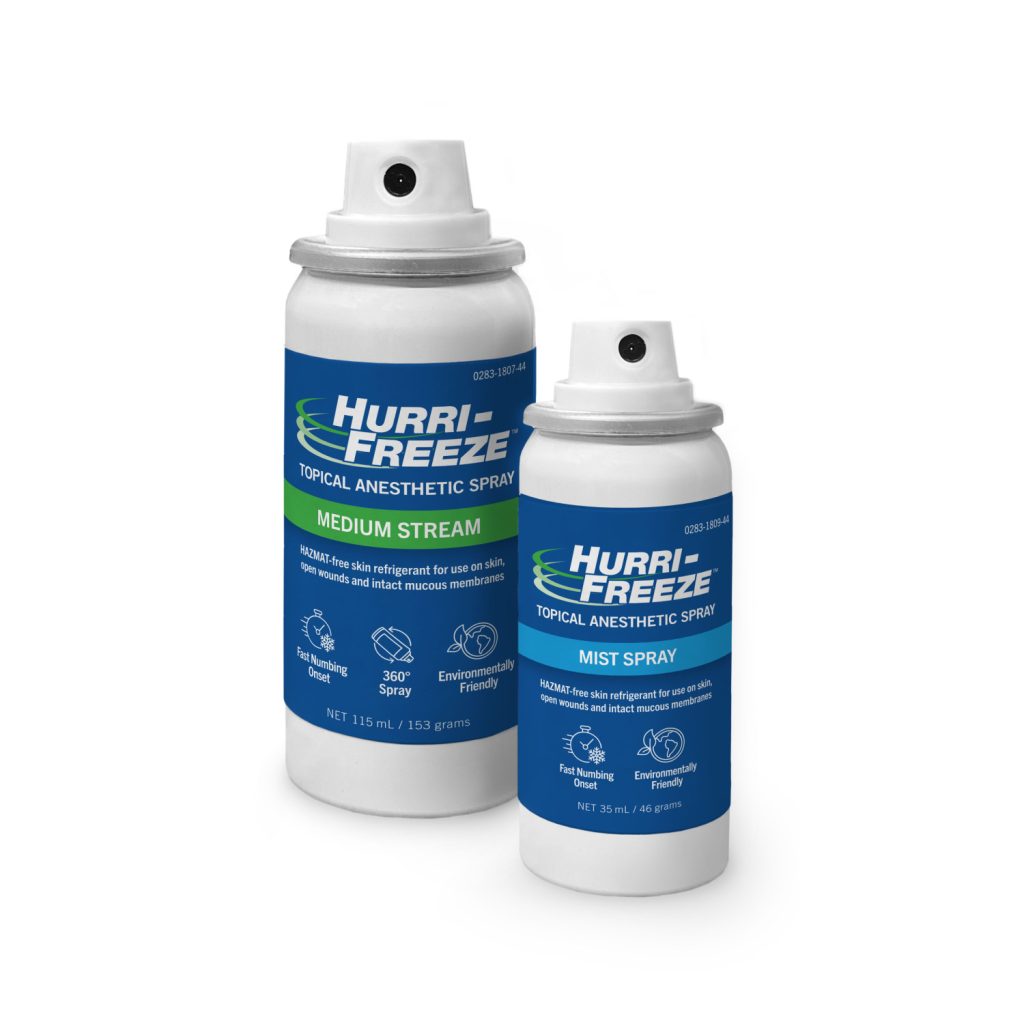
Price: Not published. Clinicians reach for Hurri-Freeze when a patient needs fast, numbing relief before an injection, IV start, or venipuncture, the spray’s HFO formula cools skin, minor open wounds, and intact oral mucous membranes on contact. Beyond routine needle sticks, it’s also cleared by the FDA for use during minor surgical and cosmetic procedures, as well as for easing the discomfort of minor athletic injuries.
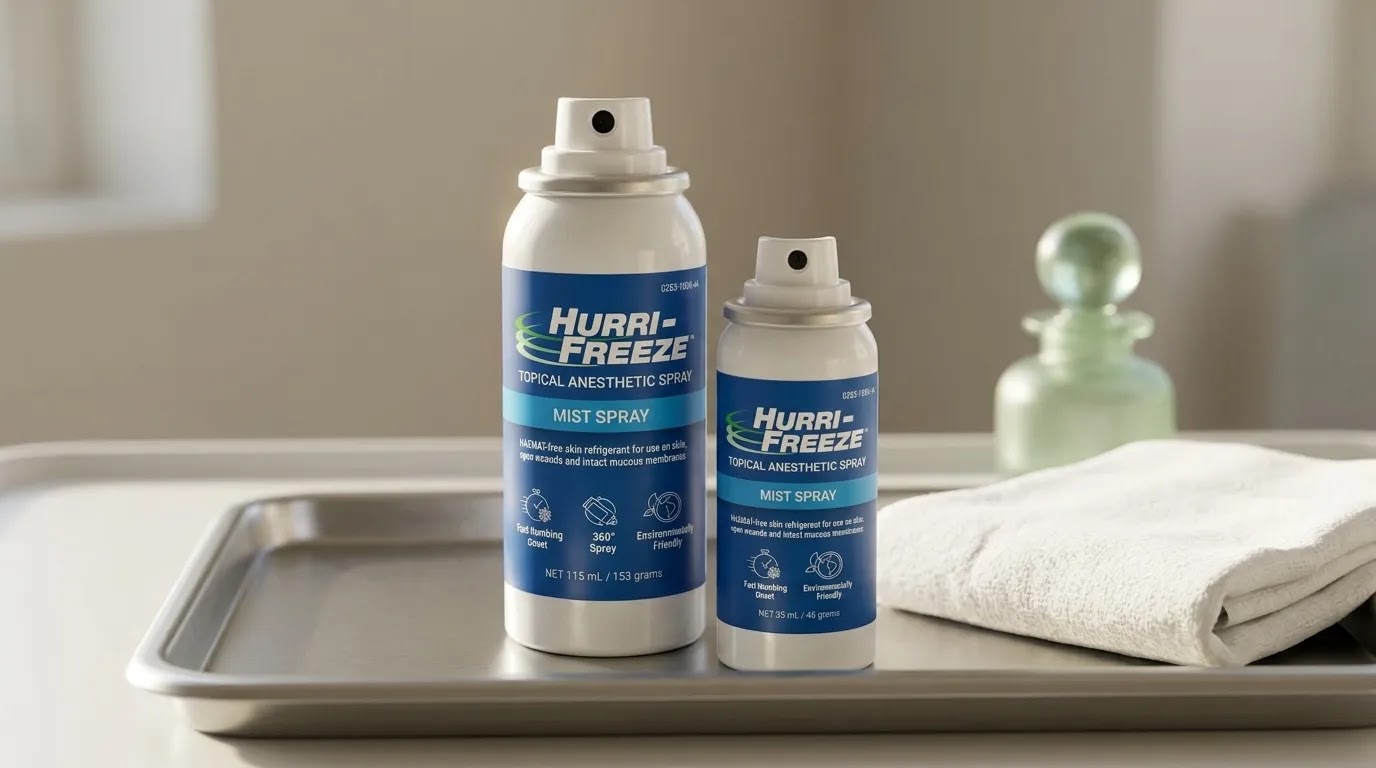
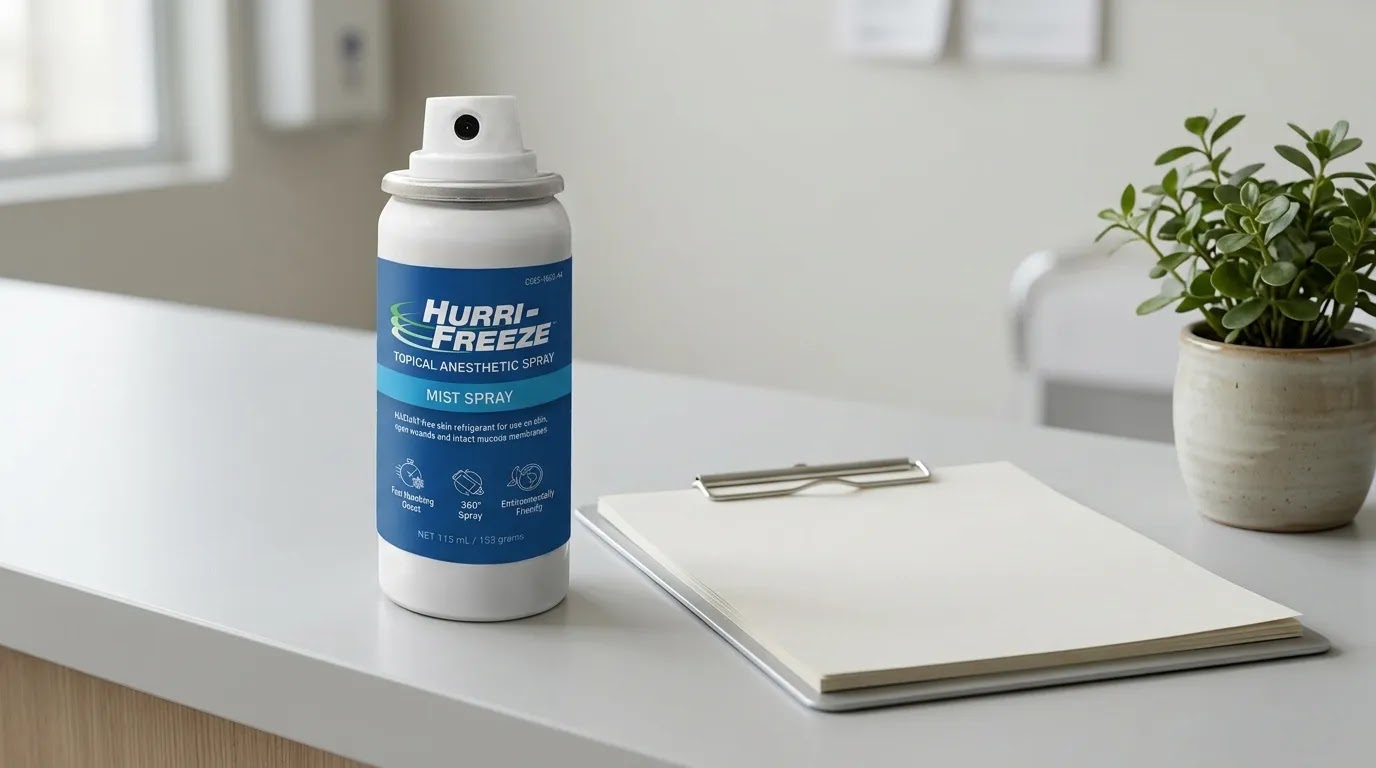
It is available in Mist Spray in 115 mL and 35 mL sizes, uses a 360-degree spray format, and is non-toxic, non-flammable, HAZMAT-free, and designed to 100% evaporate. Hurri-Freeze has colder performance than HFC blends and a GWP 99% lower than HFC-based topical anesthetic sprays. For facilities reviewing medical aerosol propellants, this makes it a relevant option to assess alongside clinical-use requirements.
HurriCaine ONE® Benzocaine
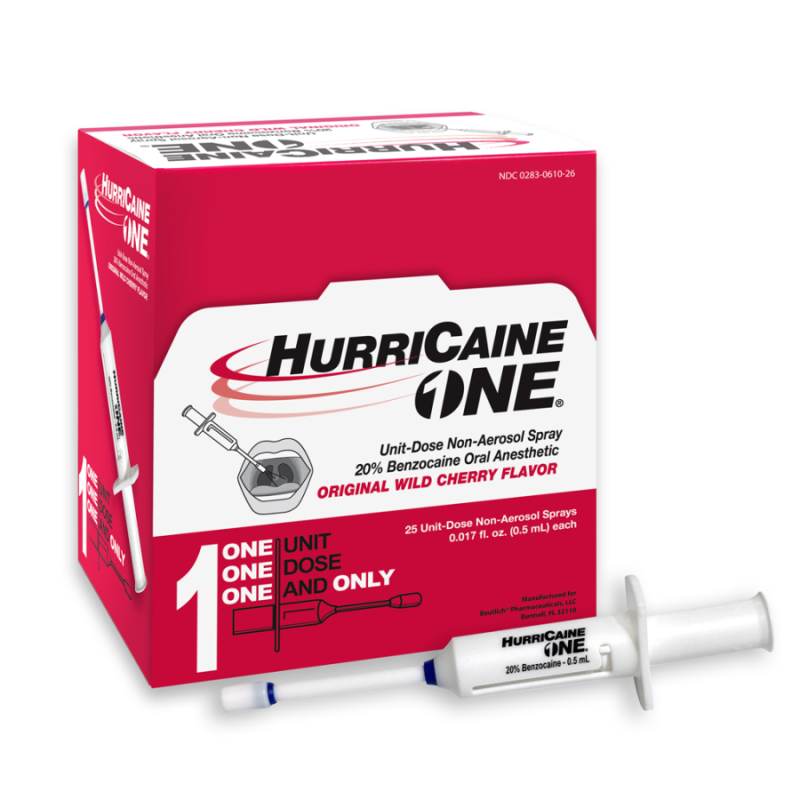
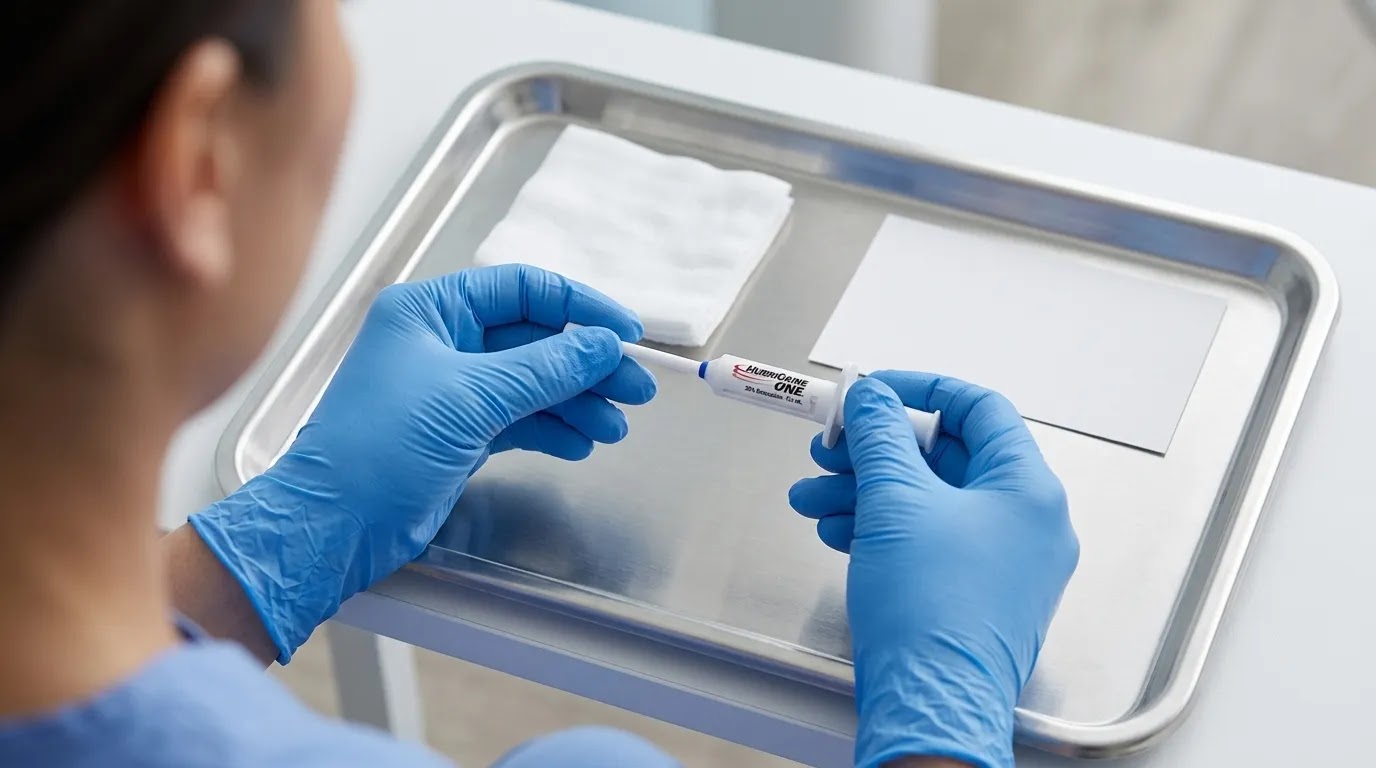
Pricing for HurriCaine ONE® Benzocaine has not been made public. Delivered via a single-use, non-aerosol applicator, each unit dispenses 0.5 mL of 20% benzocaine for one-time application. Clinicians turn to it for temporary numbing during oral exams and scoping procedures, where it typically starts working within about 10 seconds. That said, labeling also notes a broader onset window of 15 to 30 seconds, and its effects taper off after roughly 15 minutes.
Its controlled 360-degree area spray and single-use packaging are designed to reduce cross-contamination, medication waste, and overspray. Controlled dosing may also reduce the risk of methemoglobinemia associated with over-application. It fits this discussion because waste prevention and infection-control considerations are part of responsible procurement, even though it is not an aerosol propellant product.
HurriCaine ONE® Lidocaine
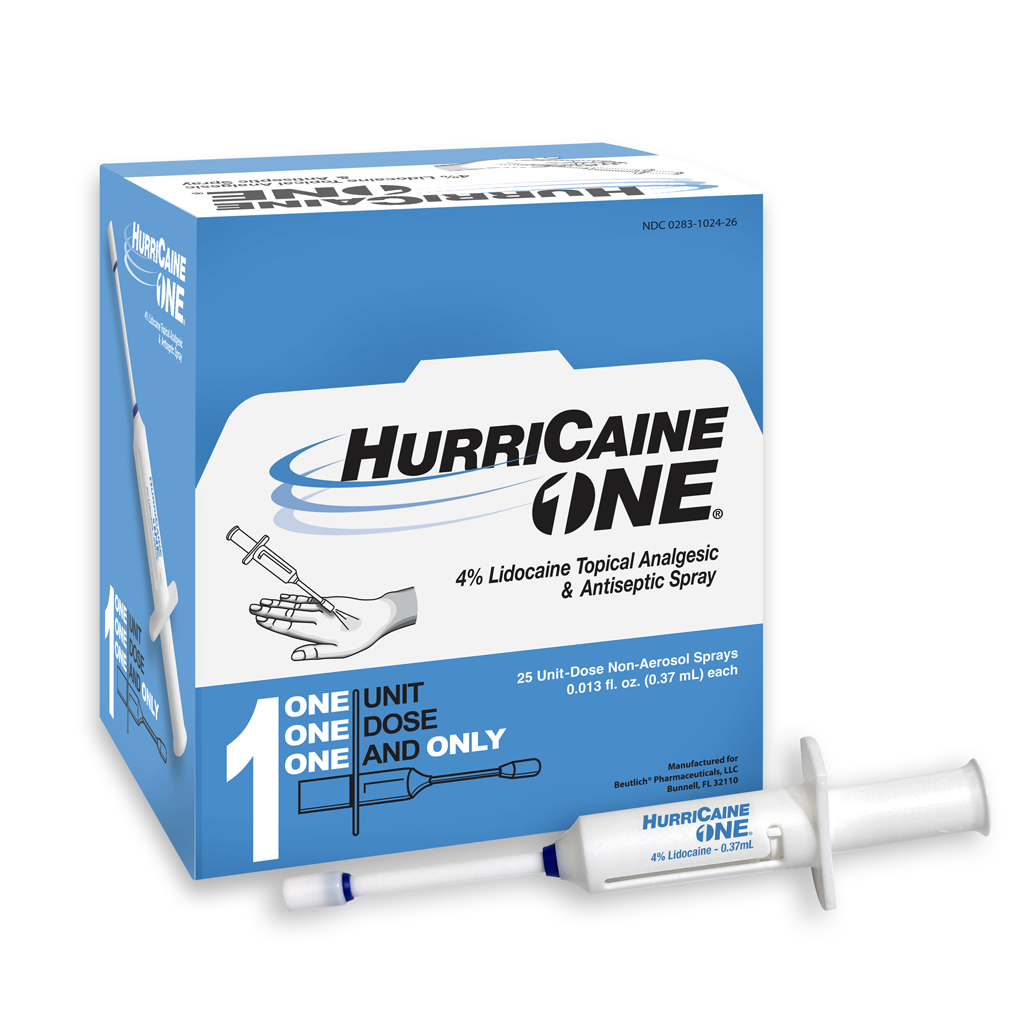
Cost details for HurriCaine ONE® Lidocaine aren’t publicly listed. This product comes in a single-dose, non-aerosol spray format, formulated with 4% lidocaine alongside BZK and alcohol. Clinicians reach for it to provide short-term numbing before minor procedures and injections, it typically starts working within five minutes and keeps discomfort at bay for 10 minutes or longer afterward.
The ready-to-administer format provides a 360-degree area spray, controlled dosing, and barcode tracking for documentation and point-of-care use. Its controlled single-use administration reduces bacteria in the application area and may help reduce cross-contamination and medication waste. This format may be relevant where a facility seeks consistency in both infection-prevention and supply-use practices.
Common mistakes in sustainable medical anesthesia planning
Focusing on one environmental metric
GWP matters for aerosol products, but it is only one part of the decision. A product may have a lower-impact propellant yet be inappropriate for a particular anatomical site or procedure. Another product may avoid aerosols but create a different packaging or waste-management consideration. Clinical suitability must lead the process.
Assuming a product switch needs no training
Even a familiar product format can require staff education. Teams need to know the intended use, application method, precautions, documentation expectations, and response plan for patient concerns. Training helps prevent overuse, inconsistent application, and unnecessary product loss.
Confusing sustainability claims with patient-specific advice
Environmental responsibility does not replace individual assessment. Allergies, medication history, tissue condition, planned procedure, and patient preferences may affect whether a topical product is appropriate. A clinician should make that judgment within the scope of their training and applicable protocols.
Ignoring the disposal pathway
A greener purchasing decision can lose value if staff do not know how to manage empty containers, unused units, or packaging. Facilities should confirm their local waste requirements and coordinate with environmental services or safety personnel. Clear disposal instructions also reduce the chance that staff place materials into the wrong waste stream.
Next steps for sustainable medical anesthesia teams
Start with one defined workflow, such as IV starts, oral procedures, or minor aesthetic procedures. Map the current topical pain-relief product, how it is used, how much is typically discarded, and which staff members handle it. Then review alternatives through a combined clinical, environmental, and operational lens.
A short pilot can be more informative than a broad purchasing change. Gather feedback from clinicians on ease of use and protocol fit, while also tracking consumption and waste. Patient feedback can be useful too, especially when the change affects the comfort-preparation process.
Nuance Medical’s New Innovation in Pain Relief and Sustainability offers further perspective on how product innovation can connect care delivery with environmental goals. Practices seeking topical and cryotherapy-related options can also review the Cryotherapy & Freeze Products category.
Measuring a sustainable medical anesthesia pilot

A defined pilot gives a facility a practical way to assess whether a protocol change is working. Before the pilot begins, establish the procedure type, participating staff, start and end dates, approved product, and baseline supply use. This makes it easier to compare the new process with the workflow it replaces.
Useful measures may include units used per procedure, expired stock, repeat applications, unused product, and packaging volume. Staff adherence to the protocol should also be reviewed, since a product cannot be fairly evaluated if application steps vary widely between users or shifts.
Environmental measures should be considered alongside patient care and workflow indicators. Teams can track preparation time, application consistency, reported patient concerns, and clinician feedback about comfort preparation. After a defined review period, the group can use its findings to refine training, adjust inventory levels, or reconsider product selection. A pilot should support better decision-making, not create pressure to retain a change that does not meet clinical or operational needs.
Glossary
Aerosol propellant
A gas or liquefied gas used to move a product out of a pressurized container as a spray.
Global warming potential
A comparative measure used to describe how much heat a gas may trap in the atmosphere relative to carbon dioxide over a stated time period.
HFC
Hydrofluorocarbon, a category of fluorinated gas used in some aerosol and refrigeration applications.
HFO
Hydrofluoroolefin, a category of fluorinated gas that may offer lower GWP than HFC alternatives in relevant applications.
Topical anesthetic
A product applied to skin or mucous membranes to provide temporary, superficial pain relief or numbness before selected procedures.
Vapocoolant
A rapidly evaporating spray that cools the surface of the skin and may temporarily reduce sensation during minor procedures.
Frequently Asked Questions About Sustainable Medical Anesthesia
What is sustainable medical anesthesia?
Sustainable medical anesthesia describes efforts to reduce the environmental impact associated with anesthesia and pain-management practices while protecting patient safety and appropriate clinical care. In short outpatient procedures, this may include reviewing topical anesthetic formats, aerosol propellants, product waste, packaging, and staff protocols. It does not mean withholding suitable comfort measures. Instead, it encourages clinicians and purchasing teams to compare clinically appropriate options and select products that align with facility safety requirements and environmental objectives.
Why are HFO propellants relevant to topical anesthesia?
HFO propellants are relevant because they may have lower global warming potential than HFC propellants used in some aerosol products. For a clinical team, this can make propellant type a reasonable question during product review. It is still only one decision factor. The product’s intended use, application site, safety profile, staff training needs, and facility policy remain essential. A lower-GWP propellant should support, not override, the clinical judgment behind topical pain-relief selection.
Does a low-GWP propellant make a product safe for every procedure?
No. Global warming potential relates to environmental impact, not universal clinical suitability. A product may have a favorable propellant profile and still be unsuitable for a particular procedure, body area, or patient. Clinicians should review the manufacturer’s directions, screen for relevant precautions, and follow facility protocols. A product used on intact skin may have different clearance or labeling than one intended for minor open wounds or oral mucous membranes. Proper product selection always comes before environmental preference.
Are single-use topical anesthetic products more sustainable?
Consider a short outpatient procedure where staff need one precise dose and nothing left over to track or store. That’s the kind of scenario where single-use formats tend to earn their keep, even though they come with a real cost: more packaging waste overall. In exchange, facilities often see less risk of cross-contamination, less product wasted per use, and clearer certainty about exactly how much was administered. Rather than asking whether single-use is inherently more or less sustainable, the better question is whether the format actually fits how the workflow operates day to day. Infection control, how efficiently the product gets used, how waste is managed, and the quality of patient care all deserve a place in that evaluation. Sustainability shouldn’t be judged in isolation.
How can a medical aesthetic practice reduce waste from topical pain relief?
A practice can begin by standardizing which approved product is used for each type of procedure, training staff on proper application, and avoiding unnecessary repeat applications. Inventory review can identify expired stock or products that do not match actual procedure volume. Staff should also understand how to dispose of containers and applicators according to facility and local requirements. These steps may reduce avoidable waste while preserving a thoughtful comfort process for patients receiving minor aesthetic treatments.
Does sustainable anesthesia affect patient comfort?
It should not require a patient to accept avoidable discomfort. A responsible sustainability program aims to preserve clinically appropriate pain management while reducing unnecessary environmental impact. Patient comfort depends on factors such as the procedure, anxiety level, application technique, tissue sensitivity, and the topical product selected. Clinicians should explain what comfort measures may be appropriate and invite patients to share concerns. If a topical option is not suitable, the clinician can discuss other clinically appropriate approaches for the planned procedure.
What should a hospital include in green procurement criteria?
Green procurement criteria should combine environmental and clinical questions. A review can include the product’s intended use, safety information, active ingredient or cooling mechanism, propellant type where relevant, packaging format, storage needs, waste pathway, and training requirements. Teams may also assess whether controlled dosing could reduce unused product or repeat applications. Procurement staff should involve clinical leaders and safety personnel so that the chosen option supports patient care, workflow, and the facility’s documented sustainability goals.
Can patients ask about the environmental impact of products used during treatment?
Yes. Asking about a practice’s sustainability efforts is reasonable, especially if environmental responsibility is important to you. A clinician may be able to explain how the practice considers product waste, single-use items, aerosol propellants, or purchasing standards. The answer may vary by procedure and product availability. Patients should also remember that environmental considerations are only one part of safe care. Your clinician must select products based on your procedure, health history, and the product’s appropriate use.
How does Hurri-Freeze fit into a sustainable healthcare discussion?
Consider a clinic weighing greener alternatives for its aerosol supplies: Hurri-Freeze fits that conversation because its HFO propellant carries a GWP claimed to be 99% lower than comparable HFC-based topical sprays. The product itself holds FDA clearance for use on skin, minor open wounds, and intact oral mucous membranes. Whether it’s the right fit for a given procedure still comes down to clinical judgment and professional evaluation. For organizations assessing their aerosol product choices, Hurri-Freeze offers a useful reference point for weighing lower-GWP propellants against practical concerns like safety, handling, and everyday workflow.
What is the first step toward a greener topical anesthesia protocol?
Choose one common procedure and document the current process from product storage through disposal. Identify the topical product used, the amount typically applied, any repeat applications, the staff responsible, and the waste generated. Then ask whether the product remains the best fit for that use and whether technique or purchasing changes could reduce avoidable waste. A small, well-documented review often produces more useful information than attempting to overhaul every anesthesia-related supply at once.
Is there an alternative to anesthesia for surgery?
Surgery generally requires an appropriate form of anesthesia or analgesia to support patient safety and comfort. The alternative is usually not avoiding anesthesia altogether, but selecting among general anesthesia, regional anesthesia, local anesthesia, sedation, or another clinically appropriate plan. The procedure, anticipated discomfort, medical history, and surgical setting all affect that decision. Topical anesthetics may support comfort for selected superficial minor procedures, but they are not a replacement for surgical anesthesia when deeper pain control or unconsciousness is required.
What is the 2-4-6 rule for anesthesia?
The 2-4-6 rule commonly refers to preoperative fasting guidance used in some anesthesia settings: clear liquids may be allowed up to two hours before anesthesia, breast milk up to four hours before, and a light meal up to six hours before. Exact fasting instructions can differ based on the patient’s age, health history, procedure, anesthesia plan, and facility protocol. Patients should follow the instructions provided by their surgical or anesthesia team rather than relying on a general rule.
Is it true that scientists do not know why anesthesia works?
No. Scientists understand many important mechanisms of anesthesia, including how anesthetic medications affect signaling in the brain, spinal cord, and nerves to reduce awareness, sensation, memory, or movement during a procedure. Research continues because different anesthetic drugs act through different pathways, and not every aspect of unconsciousness is fully explained. This ongoing research does not mean anesthesia is mysterious or unstudied. Modern anesthesia practice relies on extensive clinical evidence, monitoring standards, and trained professionals.
Can you smell anesthesia gas?
Some inhaled anesthetic gases may have a noticeable odor, although patients receiving general anesthesia are usually quickly asleep and closely monitored by an anesthesia professional. A chemical smell in a procedure area should not be ignored by staff, as it may indicate a need to check equipment, ventilation, or scavenging systems. Patients should not intentionally inhale anesthetic gases or attempt to identify them by smell. Any concern about an odor in a clinical setting should be reported to the care team.
Sustainable Medical Anesthesia: Key Takeaways
- Sustainable medical anesthesia combines environmental responsibility with appropriate, patient-centered pain management.
- For aerosol topical anesthetics, propellant choice can affect environmental impact, and HFO options may offer lower GWP than HFC-based alternatives.
- Clinical suitability, product labeling, patient assessment, and staff training must guide every topical anesthetic decision.
- Single-use formats can reduce cross-contamination and medication waste, but their packaging should be evaluated within the full care process.
- Small protocol reviews, accurate application, and clear disposal practices can support meaningful progress in sustainable healthcare.
Conclusion: Sustainable Medical Anesthesia
More sustainable topical anesthesia begins with careful questions, not broad promises. What is appropriate for the procedure? How is the product delivered? Does the format support accurate use and infection prevention? What environmental impact does the propellant or packaging introduce? By considering these issues together, clinicians can make decisions that respect both patient comfort and responsible resource use.
Low-GWP HFO propellants offer one practical path forward for selected aerosol products, while controlled-dose, non-aerosol formats may address different workflow and waste concerns. Neither approach is automatically right for every situation. The strongest green protocols are clinically grounded, clearly documented, and reviewed over time. If your practice is evaluating topical pain-relief options, explore Nuance Medical’s products and speak with your clinical team about choices that may fit your procedures, safety standards, and sustainability goals.
Sources
- [Sustainable anesthesia], Chirurgie (Heidelberg, Germany), 2026