Acne Scar Products Landscape
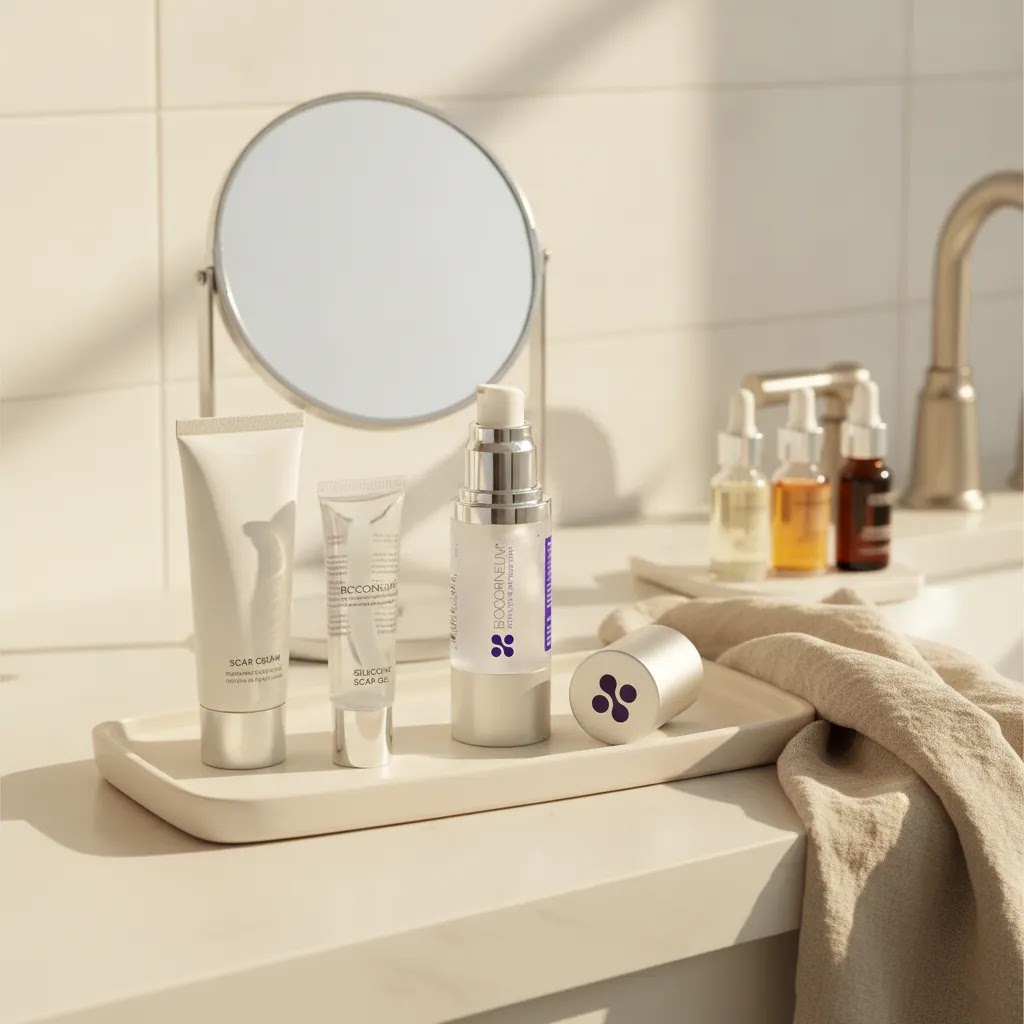
The phrase acne scar products covers a wide range of formulas. That is where confusion starts. Search results may show a resurfacing serum, a rich scar cream, a wash-off mask, and a silicone scar gel side by side, even though each one does a different job. Some formulas focus on pigment left after acne inflammation. Others help mild roughness at the skin surface. Another group supports healed scars, where barrier support and scar management matter most.
For many adults, the real question is not which product is “best.” Instead, it is which product category fits the mark you actually see in the mirror. Flat brown marks, lingering redness, shallow uneven texture, and indented scars may each need a different plan. If your concern goes beyond products alone, our article on best acne scar treatment looks at how topicals compare with in-office options.
Commercially, products often cluster into 5 practical categories: leave-on serums, treatment creams, wash-off masks, silicone-based scar care, and specialist adjuncts used around procedures or healing routines. Therefore, a full category survey is more useful than chasing a single “miracle” item.
Matching Acne Scar Products to Scar Type
Before choosing a product, it helps to separate 3 common post-acne concerns.
- Post-inflammatory discoloration: These are red, pink, tan, or brown marks left after a breakout. Topical products may be most helpful here.
- Surface texture change: Skin may feel rough or uneven, even if the scar does not look deeply indented. Some creams and serums may support a smoother appearance over time.
- Indented or pitted scars: Ice pick, boxcar, and rolling scars involve structural change in the dermis. Topical products may offer limited visible improvement, and many people eventually consider procedural care.
This is why a product can earn glowing reviews and still disappoint you. The formula may help one scar category very well while doing very little for another. Readers comparing product-only solutions often also explore acne scar cream options, especially for pigment and mild textural concerns. You can also review different types of acne scars if you want a clearer picture of what you are treating.
Acne Scar Products by Category
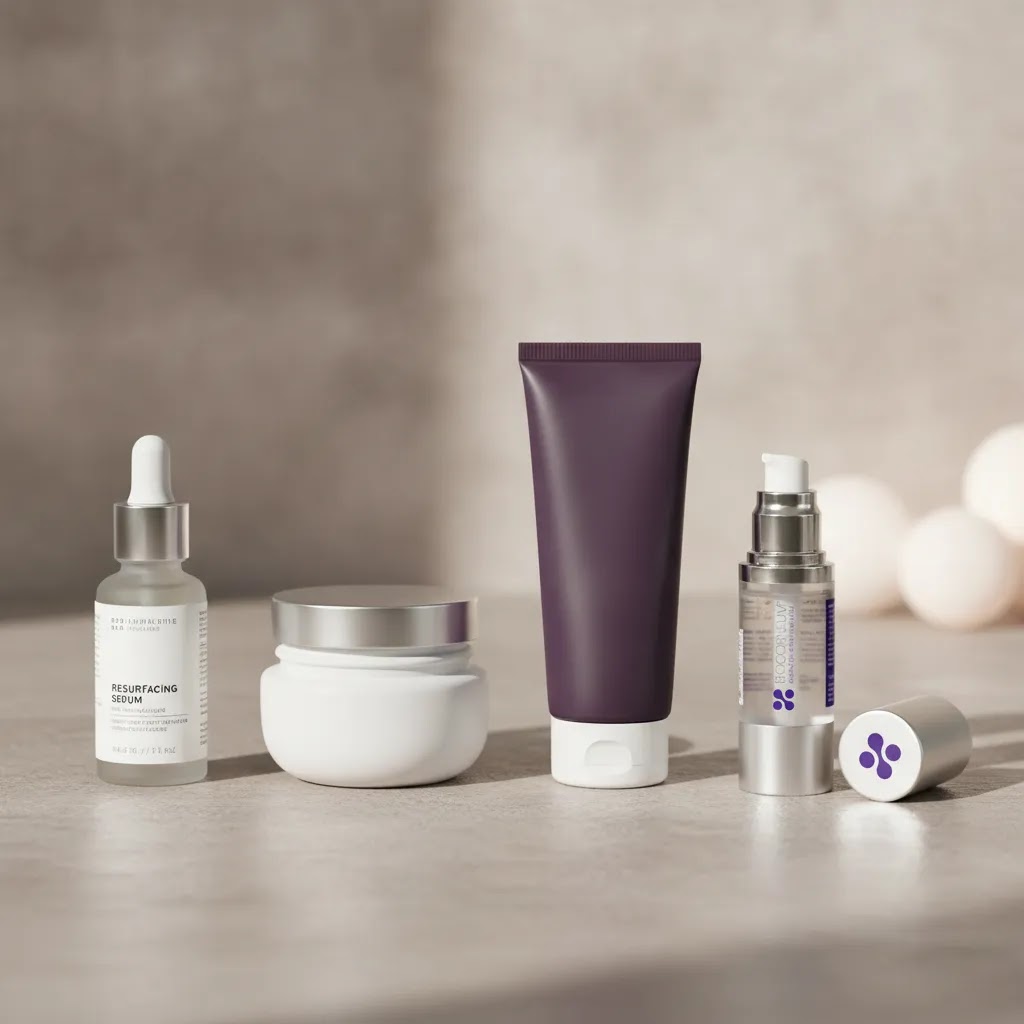
A full survey from masks to serums makes the market easier to navigate. Each category has a role. Each category also has limits.
| Category | What the article says it may help | Main limitation noted |
|---|---|---|
| Serums | Post-acne marks and daily treatment layering | Usually does not do much for deeper contour change |
| Creams | Dry or irritated skin that needs more emollient support | Rich texture can feel too occlusive for some acne-prone skin types |
| Masks | Short-term support for brightness or surface smoothness | Not usually the main tool for true acne scar remodeling |
| Silicone scar gels | Healed scars and scar-management support | Not a universal answer for active breakouts or all scar types |
| Procedure-adjacent products | Healing routines linked to microneedling, resurfacing, or scar revision | Should be guided by the treating practitioner |
1. Acne Scar Product Serums
Serums are usually lightweight, leave-on formulas designed for regular use. Many people choose them for post-acne marks because they layer easily under moisturizer or sunscreen. In practice, they may suit people who want daily treatment without a heavy finish. However, they usually do not do much for deeper contour change.
2. Acne Scar Product Creams
Creams tend to provide more emollient support and can feel more comforting on dry or irritated skin. A cream can work well if your skin barrier is sensitive or if you use other active ingredients. On the other hand, a rich texture can feel too occlusive for some acne-prone skin types, especially in humid weather or under makeup.
3. Acne Scar Product Masks
People usually use masks as periodic support, not as primary scar treatment. Clay, gel, or cream masks may temporarily improve the look of congestion, brightness, or surface smoothness. They can make skin look more polished for a short window. Still, they are not usually the main tool for true acne scar remodeling.
4. Acne Scar Products With Silicone Gel
Silicone occupies a different category from cosmetic brightening products. Clinicians more often discuss it in scar-management settings, especially for healed scars. Rather than acting like a classic exfoliating serum, silicone forms a film over the skin surface. As a result, it may support a healthier scar environment. It can be a reasonable category to consider if your acne-related marks include healed scars from extractions, cystic lesions, or procedures.
5. Acne Scar Treatment Products Used Around Procedures
Some adults researching acne scar treatment products also compare professional grade products linked to healing routines, clinic use, or patient safety products. These products matter more when you combine home care with procedures such as microneedling, resurfacing, or scar revision. In those settings, the treating practitioner should guide product selection because timing and skin tolerance matter.
If you want to browse the broader category, Nuance Medical groups related options under Scar Treatment & Skincare.
Ingredients That Matter in Acne Scar Products
Here’s the thing: categories like “serum” or “cream” describe texture and format, not what the product is actually doing. Acne scar products are easier to compare when you match ingredients to the concern you want to improve. Then you can set realistic expectations for what topicals can and cannot change.
A flat brown mark is a color problem. Lingering redness is often a vascular or post-inflammation problem. Roughness is a surface texture problem. Indented scars are a structural problem deeper in the skin. Many products help most with the first three. They help only modestly, if at all, with the last one.
Ingredient map for acne scar products by concern
Post-inflammatory hyperpigmentation (brown or tan marks): These marks often look like “stains” left behind after a breakout. Ingredients that support more even tone, gentle turnover, and daily UV protection tend to matter most. Retinoids (including over-the-counter retinol or prescription-strength options) can support cell turnover. Vitamin C can help brighten the look of uneven tone. Niacinamide can support the barrier while improving the look of discoloration over time.
Post-inflammatory erythema (red or pink marks): Redness often lingers after inflammation even when acne is quiet. Barrier-supportive ingredients like niacinamide can help some people, and the overall routine matters just as much as the hero ingredient. Importantly, irritation can keep redness looking more obvious. So gentler routines and consistent sunscreen use are often more productive than chasing the highest-percentage active. For more on this specific concern, see our guide to red acne scars.
Surface texture (roughness, uneven feel, dullness): Chemical exfoliants can improve the way skin feels and reflects light. That is why people often describe skin as looking more “polished.” Glycolic acid (an alpha hydroxy acid) is commonly used for surface smoothing. Salicylic acid (a beta hydroxy acid) is oil-soluble and often suits acne-prone skin types. Retinoids can also support smoother-looking texture over time by encouraging turnover and supporting collagen in a gradual way.
Indented or pitted scars (ice pick, boxcar, rolling): These scars involve tethering or volume loss in the dermis. Topical products may improve surrounding skin quality, which can make scars less noticeable in certain lighting. However, skincare alone does not realistically “fill in” these scars. In consultations, these scars often lead to a discussion about procedures, with topicals used as supportive care rather than the main tool.
A clinician-style shortlist of common actives
Retinoids (retinol, retinal, tretinoin, adapalene): Retinoids support cell turnover and, over time, can support collagen and smoother texture. Adapalene is a retinoid commonly used for acne and can be part of a plan for post-acne marks and texture, but it is not a fast “scar eraser.” Irritation is the main limitation, especially early on.
Vitamin C: Vitamin C is used for brightening and antioxidant support, which can be useful when discoloration is the focus. Formulation matters because some forms of vitamin C are less stable. Sensitive skin may do better with gentler derivatives.
Niacinamide: Niacinamide is often chosen because it supports the skin barrier and can help the look of uneven tone, especially when the skin is easily reactive. It is a practical option when you want improvement without a high risk of peeling or stinging.
Chemical exfoliants (glycolic acid, lactic acid, salicylic acid): These ingredients help lift dull surface cells, which can support smoother-looking skin and more even tone. Overuse is a common reason people end up red, flaky, and more focused on their marks. So frequency and concentration matter.
Peptides: Peptides are often included as supportive ingredients, with the goal of improving the feel and resilience of skin. They are not typically the main driver of scar change. Still, they may complement a routine that focuses on tolerance and consistency.
Silicone: Silicone works differently from the ingredients above. Instead of changing pigment or resurfacing, it forms a thin occlusive film that can help maintain an optimal hydration environment for scar management. This is why silicone gels are most often discussed for healed scars rather than active acne.
Tolerance, safety, and the sunscreen factor
Many patients overlook one key point: irritation can make post-acne marks look worse, not better. A product that stings, peels aggressively, or keeps your skin inflamed can prolong the cycle you are trying to break. In practice, introduce one active at a time. Start slowly. Then give your skin time to adjust before adding a second treatment step.
Sunscreen is also a practical non-negotiable if discoloration is part of your concern. UV exposure can deepen the look of hyperpigmentation and make it harder to judge whether a product is helping. In addition, the American Academy of Dermatology notes that acne scar treatment depends on scar type, and the U.S. National Library of Medicine’s MedlinePlus offers general acne care guidance. If you are unsure how to balance active ingredients with tolerance, a qualified practitioner can help you choose a plan that respects both your goals and your barrier health.
Acne Scar Products Spotlight
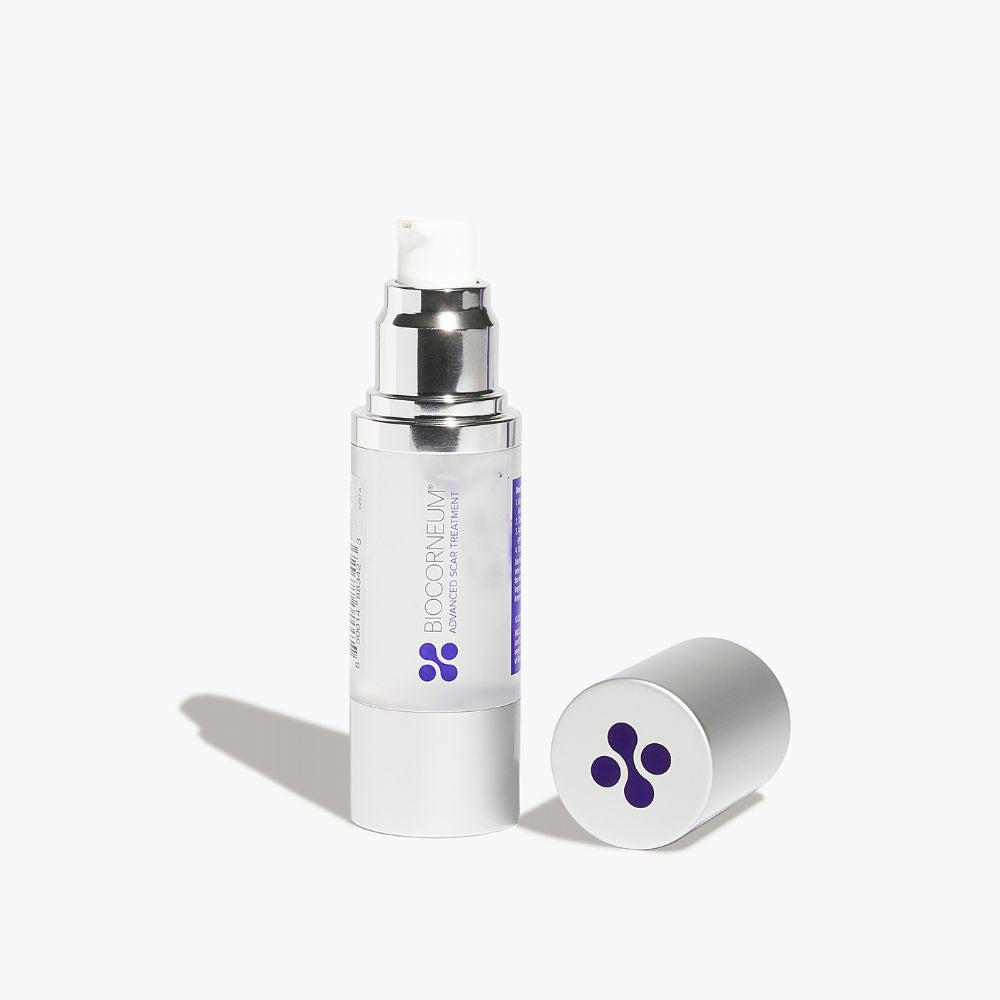
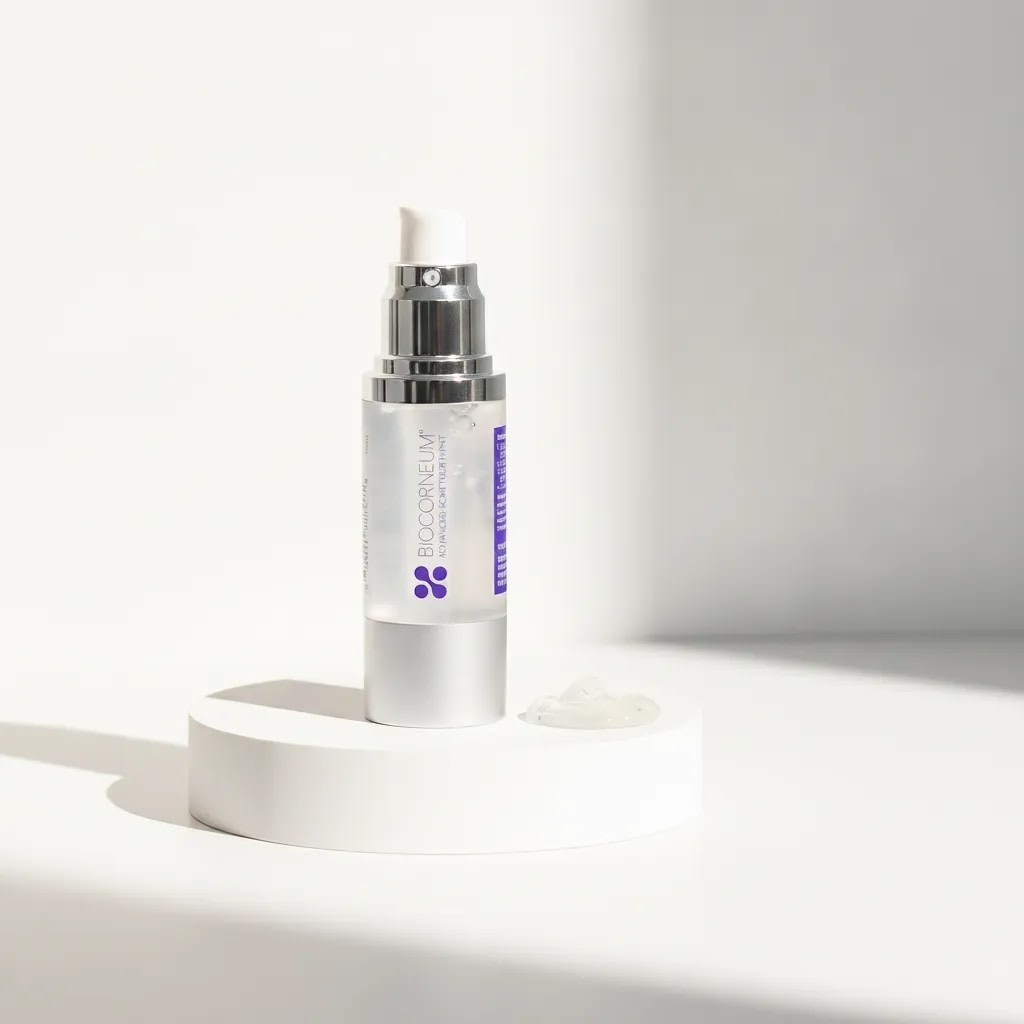
One professional-grade option in this space is BIOCORNEUM SiliSilk Advanced Scar Gel, 30g, listed at $84.95. It is described as an SPF-free silicone scar gel with an ultra-smooth, silky finish and a clear, fast-drying texture.
This kind of product is most relevant once the skin is healed and the concern has shifted from active acne management to scar care. The silky finish may appeal to adults who want a clear film product that feels cosmetically elegant enough for everyday wear. That said, a silicone gel should not be viewed as a universal answer for all acne scars. If the issue is mainly pitted scarring or persistent discoloration from ongoing breakouts, a different category may be more appropriate.
Nuance Medical has also published related updates on BIOCORNEUM SiliSilk winning a NewBeauty award and introducing SiliSilk for everyday scar care, which may help if you are researching how this product line is positioned within scar care. If you want a direct comparison, you can also review Biocorneum vs Mederma.
Common Mistakes With Acne Scar Products
Online discussions around acne scar products often blur different problems into one. That creates unrealistic expectations.
- Using “scar” to describe both dark marks and deep indentations, even though they respond differently.
- Assuming the strongest-feeling product will produce the fastest visible result.
- Switching products too quickly, before the skin has had time to respond.
- Layering too many actives at once and ending up with irritation that makes marks look more noticeable.
- Expecting a mask to do the job of a long-term leave-on treatment.
- Assuming professional grade products are automatically better for every skin type, even when the barrier is compromised.
A calmer approach usually works better. First, identify the mark type. Next, choose one category with a plausible role. Then reassess over time. If your scars are textural and long-standing, a product may be just one part of a bigger plan.
Routine Build: How to Use Acne Scar Products (Step-by-Step)
Results often depend more on the routine than on the single product you feel most excited about. A consistent, tolerable plan gives your skin the best chance to gradually look more even. It also reduces the risk of irritation that can keep marks looking active.
A simple AM framework
- Cleanser: Use a gentle cleanser that leaves skin comfortable, not tight. Over-cleansing can make redness and roughness more noticeable.
- Treatment step (optional): If discoloration is your main concern, this is where a brightening or tone-supporting serum often sits. If your skin is easily reactive, keep this step simple.
- Moisturizer: A basic moisturizer supports barrier function, which helps you tolerate your active steps more consistently.
- Sunscreen: Daily sunscreen is the anchor for discoloration-focused routines. It also makes your progress easier to assess because new UV exposure can keep marks looking darker.
A simple PM framework
- Cleanser: Remove sunscreen and makeup without scrubbing.
- Treatment step: Retinoids are commonly used at night because they can be drying and may increase sensitivity. If you are using a chemical exfoliant, many people do better alternating nights rather than stacking both early on.
- Moisturizer: Apply moisturizer after the treatment step, or use a “moisturizer sandwich” approach if you are prone to irritation, meaning moisturizer, then retinoid, then another light layer of moisturizer.
What to prioritize by concern type
If flat discoloration is the priority: Consistent sunscreen plus a tolerable brightening or turnover-supporting step is usually more meaningful than adding multiple new products at once. Progress often looks like marks becoming less obvious at a normal conversational distance, even if they are still visible up close.
If surface texture is the priority: A gentle exfoliant schedule or a retinoid routine can support a smoother feel. Progress often looks like makeup sitting more evenly, light reflecting more smoothly, and less “sandpaper” sensation when you run fingers across the area.
If indented scars are the priority: A routine can support overall skin quality, but expect improvement to be subtle. Progress may show up more as improved surrounding tone and texture rather than a clear change in depth.
Timeframes, switching, and what “fast” really means
Topical progress is gradual. Some people notice early changes in hydration or smoothness within weeks. Visible fading of flat marks often takes longer and varies by skin tone, inflammation history, and sun exposure. Pitted scars typically change the least with products alone. Therefore, it is reasonable to set a trial period, reassess calmly, and consider professional guidance if the concern is significant.
If you are not seeing any improvement, it is tempting to swap products every couple of weeks. However, that can backfire. A more practical approach is to use one active consistently long enough to judge tolerance and trend, then adjust. If you develop persistent stinging, peeling, or worsening redness, stop and seek professional guidance sooner rather than pushing through.
Common incompatibilities and when to be more conservative
Many patients overlook how quickly routines become too aggressive. Stacking multiple exfoliants, combining a strong retinoid with frequent acids right away, or adding several brightening products at once often leads to irritation. If your skin is sensitized, recently treated in-office, or recovering from a procedure, be more conservative. Then let the treating practitioner guide what should be used during healing.
Pros and Considerations of Acne Scar Products
Benefits
- Acne scar products offer a non-surgical starting point for people who want to explore home care before considering procedures.
- Different categories allow more personalized matching, such as serums for daily pigment support or silicone gel for healed scar care.
- Topical options can fit easily into an existing skin routine, which may make long-term consistency more realistic.
- Some professional-grade products are designed with cosmetic elegance in mind, which may improve adherence for adults who dislike heavy or sticky textures.
- Products can be useful alongside practitioner-guided care, especially when the goal is maintenance, barrier support, or scar management between visits.
Considerations
- Results vary widely by scar type, skin tone, inflammation history, and how consistently the product is used.
- Indented acne scars usually involve deeper structural change, so topical products may have limited impact on visible depth.
- Some formulas can irritate sensitive or acne-prone skin, especially if multiple active products are layered without guidance.
- Silicone scar care is generally most relevant for healed scars, not active acne lesions.
- Price does not always predict suitability, and a higher-cost product can still be the wrong category for your concern.
Nuance Medical Perspective on Acne Scar Products
Nuance Medical’s educational approach fits this topic well because acne scar care rarely comes down to a single product decision. A precise plan starts with recognizing whether you are dealing with pigment, texture, healed scar tissue, or a mix of all 3. That is especially helpful for adults who want subtle, credible improvement rather than exaggerated claims.
If you are browsing products while also thinking about non-surgical next steps, Nuance Medical’s content library can help you compare home care with procedure-based options in a more realistic way. You can explore the wider B2B Medical Supply and scar-care categories, or use a consultation to discuss whether a product-only approach makes sense for your skin goals. Ultimately, the most useful plan respects skin biology, tolerance, and your day-to-day routine rather than chasing a dramatic promise.
Shopping Checklist for Acne Scar Products
If you are comparing acne scar treatment products, these 5 criteria can keep the process grounded.
- Match the category to the concern. A serum, cream, mask, and silicone gel are not interchangeable. Decide whether the main issue is discoloration, surface roughness, or a healed scar.
- Check whether the skin is active or healed. Products aimed at scar care may be poorly matched to skin that is still breaking out or inflamed.
- Look at real-world wearability. Texture matters. A fast-drying clear gel may fit better into a morning routine, while a heavier cream may work better at night or on drier skin.
- Consider whether home care is enough. If scars are pitted, tethered, or years old, product shopping may need to happen alongside a conversation about procedural treatment.
- Prioritize safety and oversight. If you are combining products with resurfacing, microneedling, or other office-based care, ask a qualified practitioner what should and should not be used during healing.
For readers who want a broader treatment map before choosing a product, reviewing the best acne scar treatment options can make the shopping process far more efficient.
Product Buying Guide: Claims, Formulation, and Red Flags
Shopping for acne scar products often means shopping for claims. The most helpful filter is not the most confident headline. Instead, ask whether the formula, packaging, and language match the scar type you are trying to improve.
What to look for when buying
Concentration transparency: If a brand highlights an ingredient, it should be clear enough for you to understand whether it is a meaningful part of the formula. Not every effective product lists exact percentages. However, vague “infused with” language can signal that the featured ingredient is present at a low level.
Packaging that protects the formula: Some active ingredients are less stable when exposed to air and light. Opaque, airtight, or airless packaging can help protect certain brightening ingredients. Open jars can also make consistent dosing harder and may shorten shelf life.
Realistic labeling: “Post-acne marks” and “uneven tone” language is often more realistic for topical products than dramatic “scar remodeling” promises. True remodeling of indented scars is a higher bar. While skincare can support overall skin quality, it is not the same as changing tethered scar structure.
How to interpret common marketing phrases
“Dermatologist-developed”: This can be reassuring, but it is not a guarantee of suitability for your skin. The more useful question is whether the product explains who it is for, how to use it, and what to expect, including limitations.
“Medical-grade”: There is no single universal definition used consistently across skincare. Some professional grade products are formulated for specific routines or clinical contexts. Still, “medical-grade” on a label should not replace ingredient review and tolerance planning.
“Clinically shown”: This phrase can refer to many different levels of evidence. More credible support usually includes details such as what was measured, how long the product was used, how many participants were involved, and whether outcomes were assessed objectively rather than based only on subjective self-report.
Red flags that often lead to disappointment
- “Erase scars fast” promises: Fast timelines are a common reason people overspend or over-treat. Flat marks may fade gradually, but structural pitted scars rarely change quickly with topical products.
- Overly complex multi-active formulas for reactive skin: The more actives stacked into a single product, the harder it can be to troubleshoot irritation. If your skin is prone to redness, burning, or flaking, simpler routines often perform better over time.
- Products that ignore scar type matching: A product that markets itself to “all acne scars” without clarifying whether it is aimed at discoloration, texture, or healed scar care is more likely to be mismatched to your goals.
If you feel stuck between options, it can help to bring your current routine and a clear description of your marks into a consultation. A qualified practitioner can assess whether your focus should be discoloration, barrier stability, texture refinement, or procedural options. As a result, you can spend more wisely.
Frequently Asked Questions
Do acne scar products actually work?
Acne scar products can help in some cases, especially for discoloration and mild surface unevenness, but they do not work equally well for every scar type. Deeper indented scars usually respond less to topical care alone. Results vary based on the scar’s depth, age, and whether acne is still active.
What product category is usually best for dark acne marks?
For flat post-acne marks, leave-on products such as serums or creams are often the most practical category because they are designed for regular use. Masks may offer short-term cosmetic improvement, but they are rarely the main long-term strategy. Consistency and sun protection often affect how visible these marks remain.
Can silicone gel help acne scars?
Silicone gel may help certain healed acne-related scars, particularly where scar management rather than active breakout treatment is the focus. It is not usually the first category people choose for active acne. Suitability depends on whether the skin surface is fully healed and what kind of scar you are treating.
Are masks useful for acne scars?
Masks can be useful for brightness, surface smoothness, or comfort, but they are usually supportive rather than central for scar improvement. They may make skin look fresher after use, yet that is different from changing scar structure. For long-standing scars, leave-on treatment categories are usually more relevant.
How long should I try a product before deciding it is not helping?
Most topical products need a fair trial period because visible skin change is gradual. The right timeframe varies with the product type and the concern being treated, but very early judgment can be misleading. If irritation is developing or the scar is worsening, stop and seek professional guidance sooner.
Do professional grade products always outperform over-the-counter products?
Not always. Professional grade products may offer a more specialized formulation or a better fit for scar-care routines, but that does not mean every product suits every skin type. A well-matched simpler product can be more useful than an expensive formula that irritates your skin or targets the wrong issue.
Can products remove pitted acne scars?
Products rarely remove pitted acne scars because these scars reflect structural change below the surface. Some topicals may improve the overall look of skin, but deep contour change often requires in-office treatment. A consultation is the best way to understand whether a product should be your main plan or a supporting one.
Should I use acne scar products while still getting breakouts?
You can sometimes use them, but the answer depends on the product category and how inflamed your skin is. Healed-scar products and active-acne care are not always the same thing. If breakouts are ongoing, controlling inflammation first may improve the skin environment before focusing heavily on scar care.
Are more expensive scar products worth it?
They can be worth it if the formula suits your exact concern, your skin tolerates it well, and you will use it consistently. Higher cost alone does not guarantee better visible change. The strongest value usually comes from matching product type to scar type and using it in a realistic routine.
What is the best remover for acne scars?
The best “remover” depends on what you mean by acne scars. Topicals are often most helpful for flat post-acne discoloration and mild surface texture, while indented scars usually need a procedural conversation for meaningful change. A qualified practitioner can help you identify the scar type first, which keeps product decisions realistic.
What fades acne scars fast?
There is no universally fast option for all acne-related marks, and quick-fix claims are usually where people waste money or irritate their skin. Flat marks may fade faster when inflammation is controlled and sunscreen is used daily, while harsh over-treatment can slow progress by triggering irritation. If speed is the priority, it is worth discussing in-office options alongside a safe home routine.
Which is most effective for acne scars?
The most effective approach depends on whether the concern is discoloration, surface texture, or indented scarring. Leave-on actives such as retinoids and exfoliating acids may help with tone and texture over time, while silicone gels are typically more relevant for healed scar management. For pitted scars, in-office treatments often provide more visible change than products alone.
Will adapalene help with acne scars?
Adapalene may help the appearance of post-acne marks and uneven texture over time by supporting cell turnover, and it can be useful if breakouts are still part of the picture. It is less likely to significantly change deep indented scars on its own. Because irritation is a common early side effect, it is usually introduced gradually and paired with moisturizer and daily sunscreen.
Key Takeaways
- Acne scar products work best when matched to the specific scar type, not just the word “scar” on the label.
- Serums, creams, masks, and silicone gels each serve different purposes and should not be treated as interchangeable.
- Topicals may help discoloration and mild surface texture more than deep indented scars.
- Professional-grade options such as BIOCORNEUM SiliSilk Advanced Scar Gel may be worth considering for healed scar care, but they are not a universal solution for all acne scars.
- A qualified consultation can help you decide whether a product-only approach is reasonable or whether procedural care should be part of the conversation.
Conclusion
The best acne scar products usually fit both the biology of your scar and the reality of your routine. A full category view, from masks to serums to silicone-based scar care, makes it easier to filter out broad marketing claims and focus on what may genuinely help. If your concern is mostly discoloration, topical care may play a meaningful role. If scars are indented or long-standing, products may still support the skin, but they are often only one piece of the plan. Nuance Medical’s approach aligns with that measured perspective: informed choices, realistic expectations, and subtle improvement over hype. If you want help weighing product care against professional treatment options, exploring the scar-care resources or booking a consultation can be a practical next step.
Medical Disclaimer: The information provided in this article is intended for general informational and educational purposes only. It does not constitute medical advice and should not be used as a substitute for a professional consultation with a qualified aesthetic practitioner or healthcare provider. Individual results from aesthetic treatments vary. Always seek the advice of a qualified medical professional before undergoing any cosmetic procedure.