
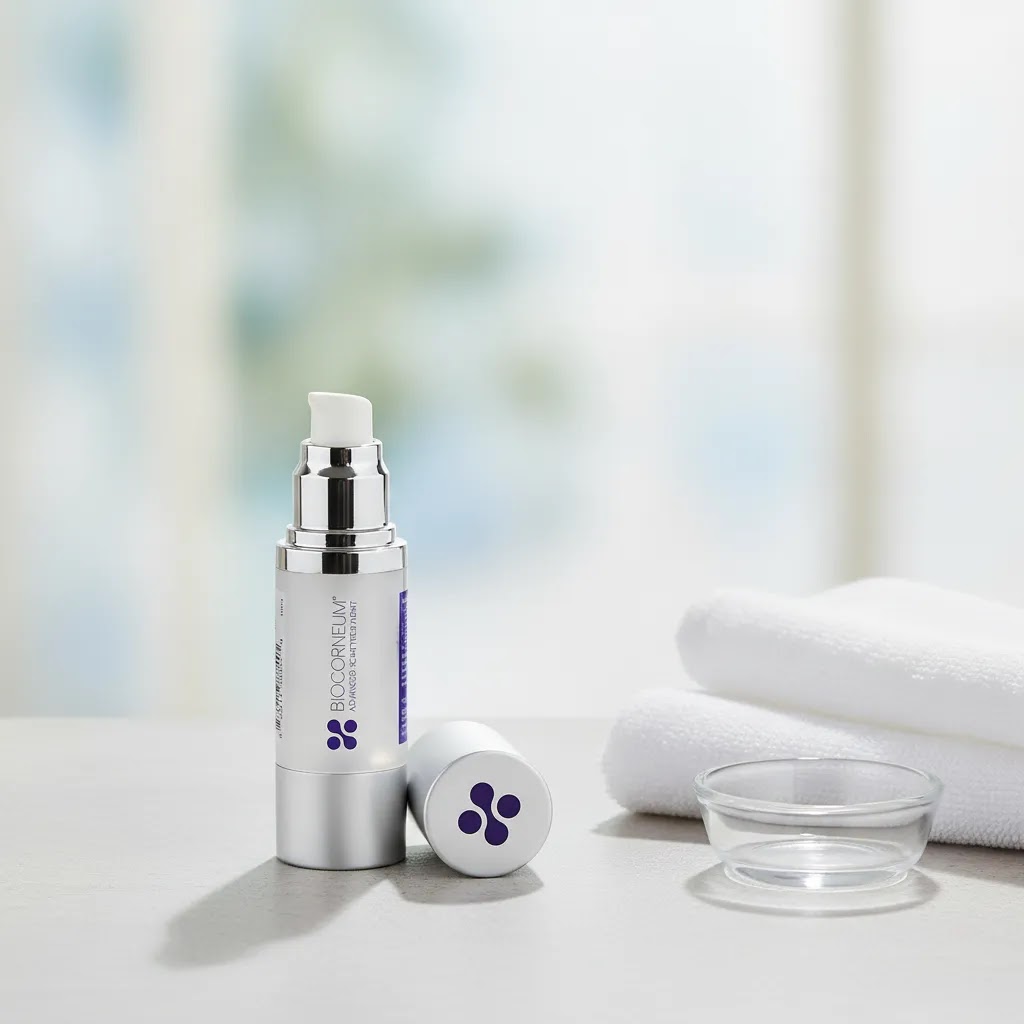
Biocorneum vs Mederma Quick Verdict
If your priority is a silicone-based scar product, Biocorneum is the clearer comparison point. It gives you a defined formula type and a more clinical positioning. The product data available here also confirms that BIOCORNEUM SiliSilk Advanced Scar Gel, 30g is SPF-free. Therefore, outdoor use may require a separate sunscreen once your practitioner says the area can tolerate it.
Mederma may appeal to shoppers who want a familiar over-the-counter option. However, the product details available for this article do not confirm a matching silicone formula, SPF inclusion, or direct feature parity. As a result, this biocorneum vs mederma review is strongest where the facts are clear: Biocorneum’s ingredient category, finish, and routine fit versus the more general market position Mederma tends to occupy.
Biocorneum vs Mederma Comparison Basics
The core issue in biocorneum vs mederma goes beyond brand recognition. The bigger question is how each formula approaches scar care. Topical scar products may support hydration, protect the skin barrier, reduce transepidermal water loss, or create an occlusive film that helps a scar mature more favorably over time.
Silicone remains one of the most established topical categories in scar management discussions, especially for raised scars or scars that may become more noticeable during remodeling. A silicone gel forms a flexible film over the skin. In turn, that film may help maintain hydration and reduce environmental stress on healing skin.
Sun protection also matters because ultraviolet exposure can prolong discoloration in a newer scar. That does not mean every scar product needs built-in SPF. Still, SPF becomes part of the buying decision. If you want more detail on timing, application, and real-world routine planning, our article on biocorneum scar treatment expands on those practical points.
Scar Timeline and When Topicals Matter Most
Most people discuss scar products during scar remodeling. This is the long phase when a scar’s collagen structure and appearance keep changing. In practical terms, “new” scars usually sit inside that active remodeling window. They may still look pink, red, or darker. They may also feel firm, itchy, or raised. By contrast, “old” scars usually look more stable, even when they remain visible.
When to start a scar product
Many patients miss one key point. Topical scar routines matter most after the skin fully closes and your treating clinician clears you to start. Starting too early can irritate healing tissue or disrupt wound care. Starting later is not pointless. However, expectations often change because the scar may have already done much of its natural settling.
What topicals may realistically help
Most people hope to improve redness, lingering pinkness, uneven texture, thickness, tightness, or discoloration. Over time, consistent topical care may help a scar look calmer and blend more easily with nearby skin. That said, topical products usually cannot erase a scar, fully normalize pigment in every case, or correct deeper tethering or contracture. If the main issue is pronounced thickness, tight pulling, or persistent reactivity, talk with a qualified practitioner instead of relying on product switching alone.
Why consistency matters over time
Silicone routines work best when people use them consistently over a meaningful window, not just a few days. Many people see guidance framed around 8 to 12 or more weeks of steady use, and sometimes 60 to 90 days, especially for newer scars that are still changing. The exact timeline can vary by scar location, tension on the area, sun exposure, skin behavior, and daily adherence. If you want more timeline context, see our guide on How Long does It Take for Scars to Fade.
As a practical starting point, apply silicone gel only after the area fully closes, active scabbing or drainage stops, and your clinician says topical scar care is appropriate. Once you begin, consistency often matters more than almost anything else. A product that feels comfortable and fits your lifestyle is the one you are more likely to use as directed.
Biocorneum vs Mederma Side-by-Side Table
| Attribute | Biocorneum | Mederma |
|---|---|---|
| Main topical category | Verified here as silicone scar gel for BIOCORNEUM SiliSilk Advanced Scar Gel, 30g | Product information not specified in the available data for this article |
| SPF status | Verified SPF-free for BIOCORNEUM SiliSilk Advanced Scar Gel, 30g | Product information not specified in the available data for this article |
| Texture and finish | Clear, fast-drying, silky, lightweight, non-greasy | Product information not specified in the available data for this article |
| Use under sunscreen or makeup | Verified compatible under sunscreen and makeup | Product information not specified in the available data for this article |
| Water and sweat resistance | Verified water- and sweat-resistant | Product information not specified in the available data for this article |
| Price confirmed here | $84.95 for 30g | Price not confirmed in the available data for this article |
| Best for | Readers specifically seeking a silicone-based scar routine with a cosmetically elegant finish | Readers comparing mainstream scar-care options, pending full ingredient and SPF review |
Biocorneum vs Mederma Ingredients and Mechanisms
Because “Mederma” can refer to multiple products, the smartest way to compare biocorneum vs mederma is to focus on ingredient themes first. Biocorneum, in the version reviewed here, is clearly positioned as a silicone scar gel. Mederma products are often discussed around onion extract (Allium cepa) as a featured ingredient, with other supportive ingredients that can vary by version.
Silicone gels usually create a protective, semi-occlusive film on healed skin. That film can help reduce transepidermal water loss and support a more stable hydration environment. In many routines, silicone’s value comes less from a medicated feel and more from daily barrier support in a format people can stick with.
Onion extract based gels are often marketed for scar appearance support. They are sometimes paired with massage and regular application instructions. Depending on the product, you may also see ingredients such as allantoin, panthenol, and hyaluronic acid. These ingredients may improve feel, moisturization, and comfort. As a result, some people find the routine easier to maintain. However, the expected scar mechanism is not the same as a silicone film.
If you are deciding between a silicone gel and a non-silicone topical, confirm what you are actually buying. Labels and formulas can change. Likewise, “scar gel” is not one standardized category across brands. For broader scar care context, the American Academy of Dermatology notes that scar care depends on scar type and healing stage.
Biocorneum vs Mederma: What to look for on the label
Use this quick checklist when you are comparing products in-store or online:
- Identify the featured category: does it explicitly say silicone, and does it list silicone ingredients high on the ingredient list, or is it positioned around onion extract or a different system?
- Confirm whether it is intended for healed, closed skin only, and whether there are any instructions about timing after surgery or injury.
- Check application frequency and dry-down: a gel that dries quickly and wears comfortably tends to be easier to use consistently.
- Look for any added SPF claim, but treat it as version-specific. Do not assume every product in a brand line has the same sun protection.
- Review irritation cautions, especially if you have sensitive skin or you are treating an area that tends to react easily.
In practice, this approach helps you compare biocorneum vs mederma more accurately without leaning on brand reputation alone. If you are uncertain about scar stage or skin sensitivity, a qualified practitioner can help you choose a product type and routine that fits your healing timeline.
Biocorneum Review
BIOCORNEUM SiliSilk Advanced Scar Gel, 30g
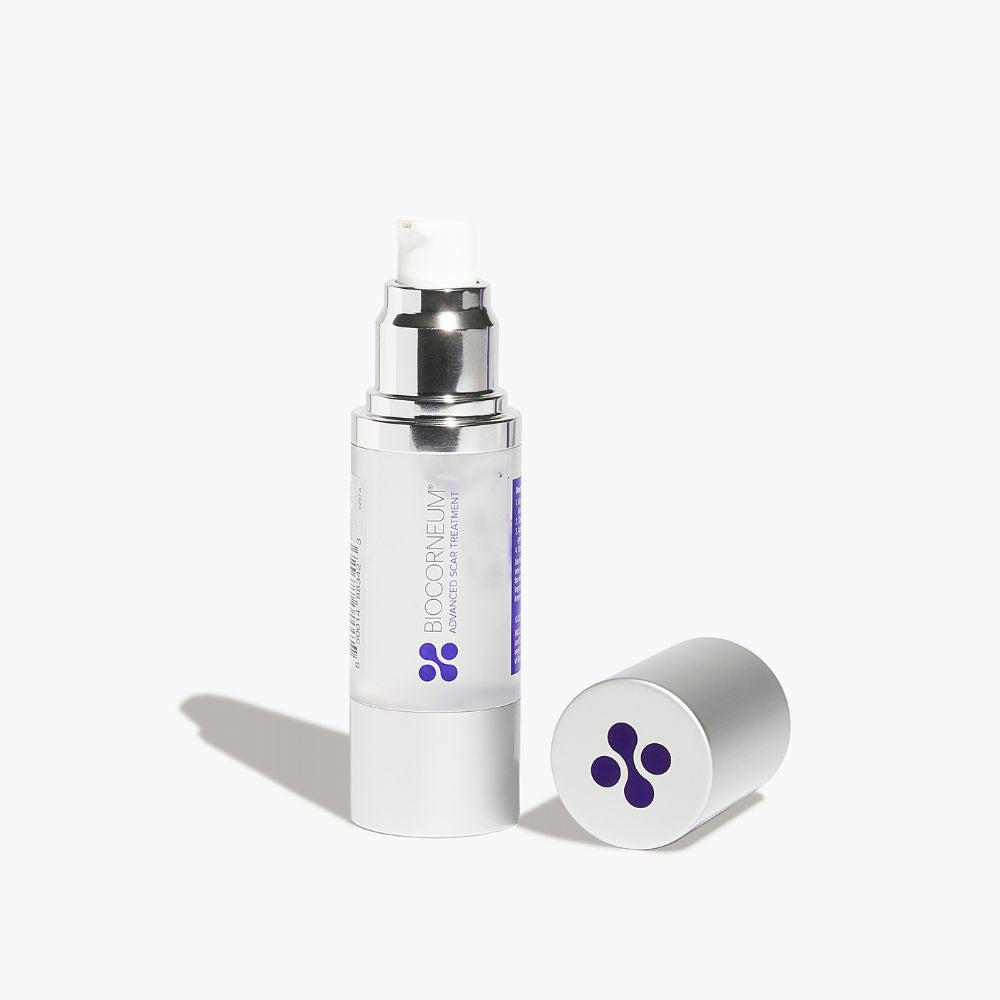
BIOCORNEUM SiliSilk Advanced Scar Gel, 30g is a professional-grade silicone scar gel with a clear, fast-drying finish and an SPF-free formula. It fits easily into many daily routines, including wear under sunscreen, skincare, or makeup.
The ingredient story here is straightforward. This is a silicone gel product. That matters because silicone is widely used in scar management to create a protective, semi-occlusive layer over healed skin. According to the product details available, the gel is lightweight, non-greasy, transfer-resistant, and water- and sweat-resistant. Therefore, some people may find it easier to use consistently.
On SPF, the available product information is equally clear: this version is SPF-free. For some people, that is a strength rather than a drawback. An SPF-free scar gel may work well at night, indoors, or as a base layer when a separate sunscreen is preferred. It may also suit readers who want more control over which sunscreen they use on top. Still, daytime scar care may require separate sun protection once the skin is ready for it. For sun safety guidance, the Skin Cancer Foundation offers practical sunscreen basics.
On results, the product page states that silicone is clinically proven to help minimize the appearance of scars and hyperpigmentation while supporting smoother, healthier-looking skin. Results still vary by scar age, location, tension on the wound, skin behavior, sun exposure, and how consistently the product is used over time. If you want a more visual discussion of progress expectations, our piece on biocorneum scar gel before and after is a helpful next read. You can also compare it with other silicone options in our Biodermis Scar Gel guide.
Mederma Review
Mederma
Mederma appears in many scar-care searches because the brand is familiar and widely sold. For this article, however, the available product information does not provide a ground-truth feature set for one specific Mederma item. Because of that, a careful comparison should not assume a particular ingredient system, SPF level, or wear profile.
That limitation matters because Mederma does not come in one single formula across all retail settings. A shopper may think they are comparing two equivalent products when they are really comparing different mechanisms, different application experiences, or a day formula versus a night formula. Therefore, label details matter even more.
Before choosing it over a silicone gel, check four basics on the package or official product page: the active or featured ingredient category, whether SPF is included, whether it is intended for healed skin only, and how often it is meant to be applied. Those details can change both convenience and expectations. A product can be popular and still not be the closest match for the type of scar support you want.
Key Differences in Biocorneum vs Mederma
The clearest difference in this comparison is ingredient category certainty. Biocorneum, in the specific product reviewed here, is confirmed as a silicone scar gel. That gives readers a defined mechanism to evaluate. With Mederma, the available data for this article does not verify one equivalent formula, so direct ingredient parity should not be assumed.
The second major difference is SPF positioning. BIOCORNEUM SiliSilk Advanced Scar Gel, 30g is specifically described as SPF-free. That can work well for nighttime routines, indoor wear, or daytime layering when a separate sunscreen is preferred. For Mederma, SPF status is not confirmed in the available information here, so this comparison stays cautious.
The third difference is cosmetic elegance, meaning how the product behaves in real life. Biocorneum is described as clear, silky, fast-drying, and compatible under makeup and sunscreen. Those details often matter more than people expect because a pleasant product is easier to use consistently. Product information for Mederma’s wear profile is not specified here.
Finally, there is a difference in how confidently anyone can frame results. With Biocorneum, the available product description explicitly supports scar appearance and hyperpigmentation claims tied to silicone use. With Mederma, the safest conclusion is that results depend on the exact formula being considered.
Biocorneum vs Mederma and Other Cross-Shopped Options
If you searched biocorneum vs mederma, you are probably also seeing other silicone gels and silicone dressings in the same shopping session. That is normal. Many scar-care decisions come down to format preference, skin sensitivity, and whether you will realistically use the product as directed.
Other silicone scar products people often compare in the same category include Kelo-cote Advanced Formula Scar Gel, ScarAway Silicone Scar Gel, NewGel+ Silicone Gel, Mepiform Silicone Dressing, and Silagen. People usually consider these options for practical reasons such as budget, sensitivity, brand availability, or a preference for a sheet-style dressing rather than a gel. If you are comparing silicone brands, our Silagen vs Biocorneum guide may also help.
Silicone gel vs silicone sheets or dressings
The format differences are simple but important. Silicone gels dry down on the skin and are often chosen for visible areas where you want something that layers under sunscreen or makeup. Silicone sheets or dressings can help when you want continuous contact and you are comfortable wearing a dressing, especially in areas that clothing can cover.
In practice, this often becomes a discussion about adherence. If you will not tolerate a sheet during the day, or if you know it will not stay in place on a high-movement area, a gel may fit better. On the other hand, if you dislike applying gel twice daily, a dressing format may feel easier to keep consistent.
Cross-shopping can help, but it can also distract you from the basics: scar age, tension and movement at the site, sun exposure, and skin reactivity. A qualified clinician can match the product type to those factors, especially if you have a history of raised scars, prolonged discoloration, or sensitive skin. If you want another format comparison, see our guide to Biodermis Silicone Scar Sheets.
Which One Should You Choose?
Your best choice depends less on brand familiarity and more on the kind of scar-care routine you want to build.
If you want a verified silicone formula
Biocorneum is the stronger option in this article because the formula category is confirmed. If you specifically want a silicone gel and value a smooth, lightweight finish, that clarity has real value.
If you want built-in SPF
Do not assume either product has it without checking the exact version. The Biocorneum product reviewed here is SPF-free. That is not a problem, but it does mean daytime sun protection may need to come from a separate sunscreen.
If you care about layering with makeup or sunscreen
Biocorneum has the clearer advantage based on the available product details. It is specifically described as suitable under sunscreen and makeup and as fast-drying with no residue.
If you are watching cost alone
Price should be weighed against formulation, texture, and consistency of use. The confirmed price available here is $84.95 for BIOCORNEUM SiliSilk Advanced Scar Gel, 30g. Mederma pricing is not confirmed in the available data for this article, so a value comparison would be incomplete.
If you are unsure what your scar actually needs
This is where self-selection becomes less reliable. Newer surgical scars, scars in sun-exposed areas, raised scars, and scars that stay very reactive may each need a different strategy. A qualified practitioner can help you decide whether the priority is silicone, sun protection, color management, or simply time and observation.
Pros and Considerations
Benefits
- Biocorneum offers a verified silicone gel format, which gives readers a defined scar-care mechanism to evaluate.
- The available Biocorneum product details clearly describe texture and wear, including a clear, silky, fast-drying finish that may support daily adherence.
- Its SPF-free design may be helpful for readers who prefer separate control over sunscreen choice or who want a nighttime scar routine.
- Biocorneum is confirmed as compatible with sunscreen, skincare, and cosmetics, which can make layering easier in many routines.
- The product is described as water- and sweat-resistant and transfer-resistant, which may be useful for active days or warmer climates.
Considerations
- Mederma cannot be compared feature-for-feature here because a specific formula and full product data were not available for verification.
- SPF-free does not mean sun protection is unnecessary. Daytime scar care may still require a separate sunscreen if the skin is fully healed and your practitioner approves it.
- No topical scar product works instantly. Scar remodeling usually takes time, and visible results may vary by scar type, age, location, and consistency of use.
- Not every scar concern responds the same way to topical care alone, especially if the issue is pronounced thickness, contracture, or persistent pigment change.
Nuance Medical Perspective
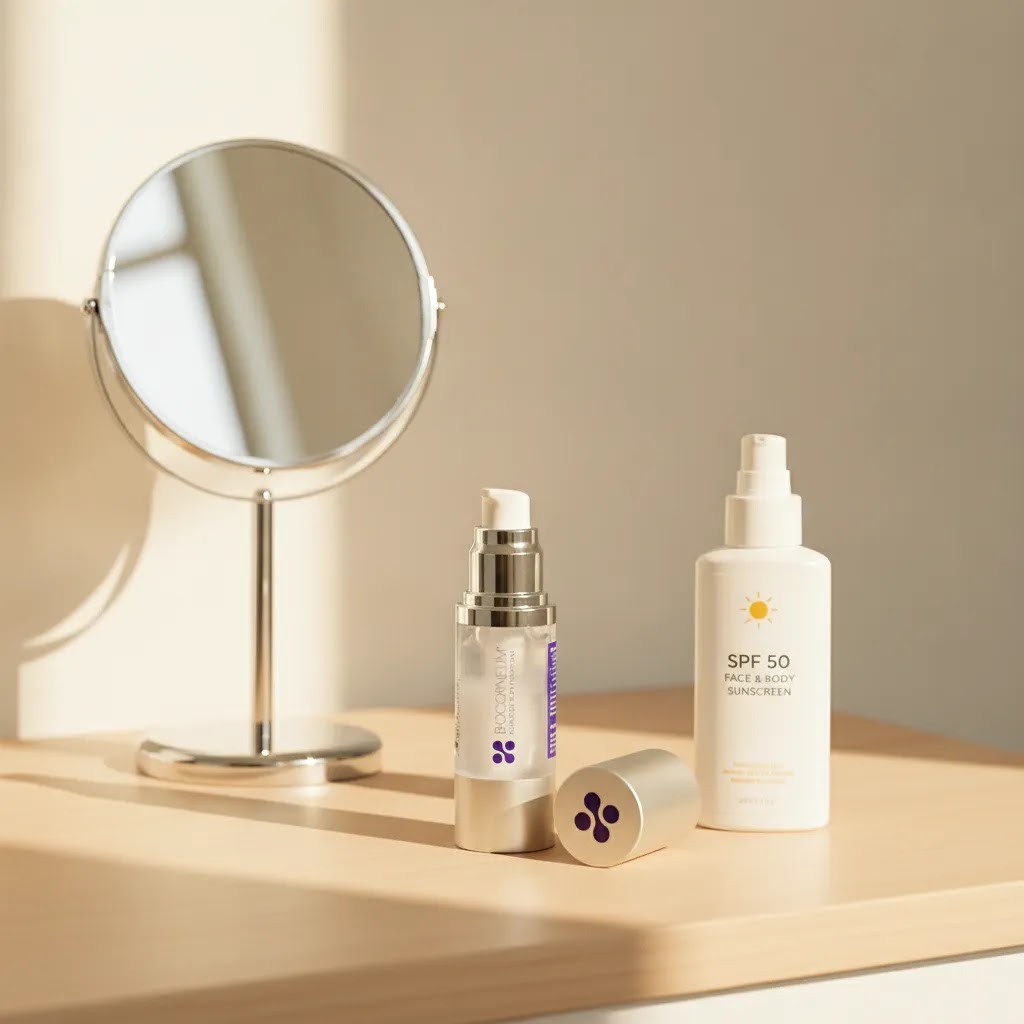
At Nuance Medical, we evaluate products with the same principles that guide aesthetic care more broadly: precision, realistic expectations, and respect for individual variation. Scar care is rarely about choosing the loudest marketing claim. Instead, it is about matching the product format to the scar’s stage, the skin’s tolerance, the amount of sun exposure, and the routine you can actually maintain.
If you want to explore scar products more deeply, the broader BIOCORNEUM SiliSilk award coverage and Introducing SiliSilk article offer more context on why silicone-based scar care remains such a common part of these conversations. You can also browse more resources within the Scar Treatment & Skincare category. Ultimately, if you want guidance that accounts for scar history, healing stage, and daily routine, a no-pressure consultation with the Nuance Medical team is the most reliable next step.
Frequently Asked Questions
Is Biocorneum better than Mederma?
Biocorneum may be the better choice if you specifically want a verified silicone scar gel and a product that layers easily under sunscreen or makeup. Mederma may still suit some shoppers, but the exact formula matters, and the available information for this article does not confirm a directly comparable version.
Does Biocorneum have SPF?
The Biocorneum product reviewed here, BIOCORNEUM SiliSilk Advanced Scar Gel, 30g, is SPF-free. That means it may fit well into an indoor or nighttime routine, or under a separate sunscreen during the day if the skin is fully healed and your practitioner says sun protection can be applied safely.
Why does SPF matter in scar care?
SPF matters because ultraviolet exposure can prolong discoloration in healing skin and may make a scar stay darker for longer. Built-in SPF can be convenient, but it is not the only way to protect a scar. In many cases, the question is whether sun protection is present somewhere in the routine, not necessarily inside the scar gel itself.
What ingredient difference matters most in biocorneum vs mederma?
The biggest difference in biocorneum vs mederma is whether you are comparing a confirmed silicone gel against another type of topical scar product. Silicone has a recognized role in topical scar management because it forms a protective film over healed skin. If a product is not silicone-based, expectations and use cases may differ.
Can I use Biocorneum under makeup?
Yes, the available product details state that BIOCORNEUM SiliSilk Advanced Scar Gel, 30g can be used under makeup, sunscreen, and skincare. That may make it easier to incorporate into a daily routine, especially for visible scars. Skin response can still vary, so patch tolerance and timing after healing matter.
How long does it take to see scar improvement?
Scar improvement from topical care usually takes weeks to months rather than days. Results depend on factors such as scar age, tension, location, sun exposure, skin reactivity, and how steadily the product is used. A topical product may support the process, but it does not override normal scar biology.
Can I start scar gel right after surgery?
Not usually. Scar gels are generally used only after the skin is fully closed and your treating professional says topical scar care is appropriate. Starting too early can irritate healing tissue or interfere with wound care, which is why timing should be confirmed rather than guessed.
Is a more expensive scar product always more effective?
No, price alone does not determine results. The better question is whether the product matches your scar type, your tolerance, and your ability to use it consistently. Formula category, wearability, and healing stage often matter more than price in isolation.
Is Biocorneum worth it?
Biocorneum may be worth it if you are specifically looking for a verified silicone scar gel with a lightweight finish that is described as easy to layer under sunscreen or makeup. Value still depends on your scar stage, expectations, and whether you will use it consistently over weeks to months.
What is the best scar cream on the market?
The best scar topical is the one that matches your scar type and stage and that you can use consistently. Many clinicians consider silicone gels or silicone sheets a common first-line category for topical scar management, but individual suitability varies, especially for sensitive or reactive skin.
Is there anything better than Mederma?
There may be a better fit than Mederma depending on the specific formula you are considering and what your scar needs most. If your goal is a silicone-based routine, a verified silicone gel or silicone dressing may be the closer comparison point. A clinician can help you choose based on scar location, reactivity, and timing.
Does Biocorneum work on old scars?
Biocorneum may still support the appearance and feel of an older scar, but expectations are usually more modest than with a newer scar that is still actively remodeling. Older scars often change more slowly, and some characteristics, such as deeper texture changes or tethering, may not fully respond to topical care alone.
Where can I learn more about Biocorneum before choosing?
If you want a broader overview, start with our educational resources on Biocorneum and scar-care routines. For readers comparing expectations over time, our related content on application timing and before-and-after context can help frame what topical scar support may and may not do.
Key Takeaways
- Biocorneum and Mederma are not always equal like-for-like comparisons, especially if the exact Mederma formula is unclear.
- BIOCORNEUM SiliSilk Advanced Scar Gel, 30g is a verified silicone scar gel with an SPF-free formula and a fast-drying, lightweight finish.
- SPF status is a major decision point in scar care because sun exposure can affect discoloration during healing.
- Silicone-based scar care may support scar appearance over time, but results vary and depend on consistent use and scar biology.
- If your scar is new, visible, reactive, or surgically related, professional guidance can be more useful than choosing by brand name alone.
Conclusion
Biocorneum vs Mederma works best as a comparison of ingredients, SPF, and expectations rather than a popularity contest. Based on the product details available here, Biocorneum offers the clearer clinical profile: a silicone scar gel, an SPF-free formula, and a wear experience designed to fit daily life. Mederma may still belong in the discussion, but the exact version matters, and broad assumptions can create an uneven comparison. If you are deciding what belongs in your routine, anchor the choice in healing stage, sun exposure, and the result you realistically hope to support. Nuance Medical encourages a measured, informed approach. If you would like help sorting through your options, a consultation can provide individualized guidance without pressure.
Medical Disclaimer: The information provided in this article is intended for general informational and educational purposes only. It does not constitute medical advice and should not be used as a substitute for a professional consultation with a qualified aesthetic practitioner or healthcare provider. Individual results from aesthetic treatments vary. Always seek the advice of a qualified medical professional before undergoing any cosmetic procedure.