
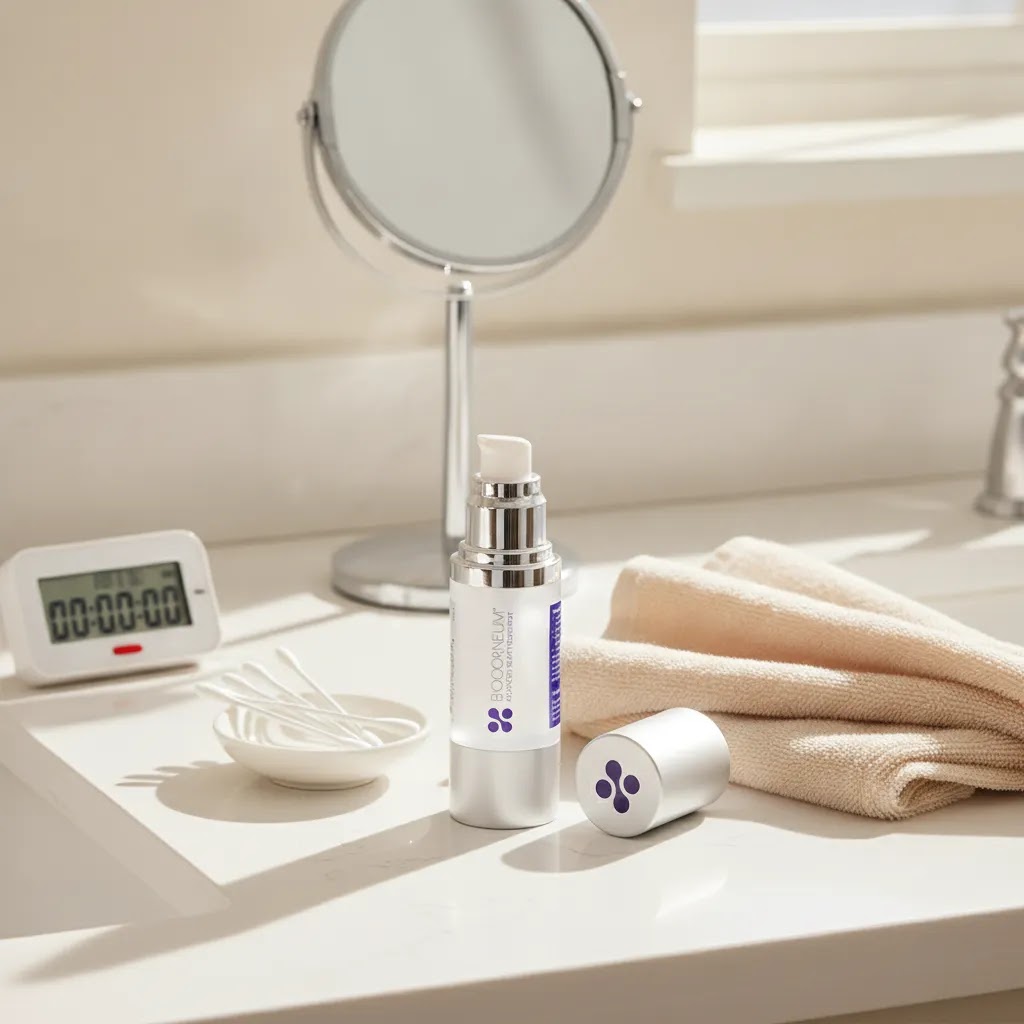
What biocorneum scar treatment means
In patient conversations, biocorneum scar treatment usually means a silicone-based topical scar routine. People start it after the skin surface closes and the treating clinician says it is safe. Silicone has long been part of scar-management discussions because it may support hydration and a better healing environment while the scar matures.
That matters because scars do not finish healing when stitches come out. Instead, a scar keeps remodeling for months. During that time, it may look pink, feel firm, or seem more visible than expected. A structured routine can help. It will not erase a scar, but it may support a better-looking result over time.
For readers comparing options, the real question is not whether scar care exists. The question is how to use it well after a procedure and what level of change is realistic. If you are also reviewing outcome images, this article on biocorneum scar gel before and after can help frame expectations more carefully.
Biocorneum scar treatment timing after a procedure
Why biocorneum scar treatment timing matters
Even the best scar product can be the wrong choice if you start too early. A freshly treated area may still be vulnerable. This is especially true if you see open skin, drainage, crusting, or active irritation. If you start topical scar care before the skin is ready, you may make the area less comfortable.
Most clinicians want the incision or treatment site fully closed before they add silicone gel to the routine. Here, “closed” does not just mean less tender. It usually means the outer skin barrier has re-formed well enough for a topical product to sit on top of it, not inside a healing wound.
What a typical start window may look like
A common real-world scenario is simple. You return for a follow-up visit after a procedure. Your clinician checks the area. Then the clinician tells you whether to continue basic wound care or move into scar management. That transition point varies by procedure and by how your skin is healing.
For example, one person may be ready sooner after a small facial excision. Someone recovering from a larger surgical incision under more tension may need more time. If your provider tells you to wait, scar care has not failed. It just means your healing phase has not changed yet.
Biocorneum scar treatment and sun protection
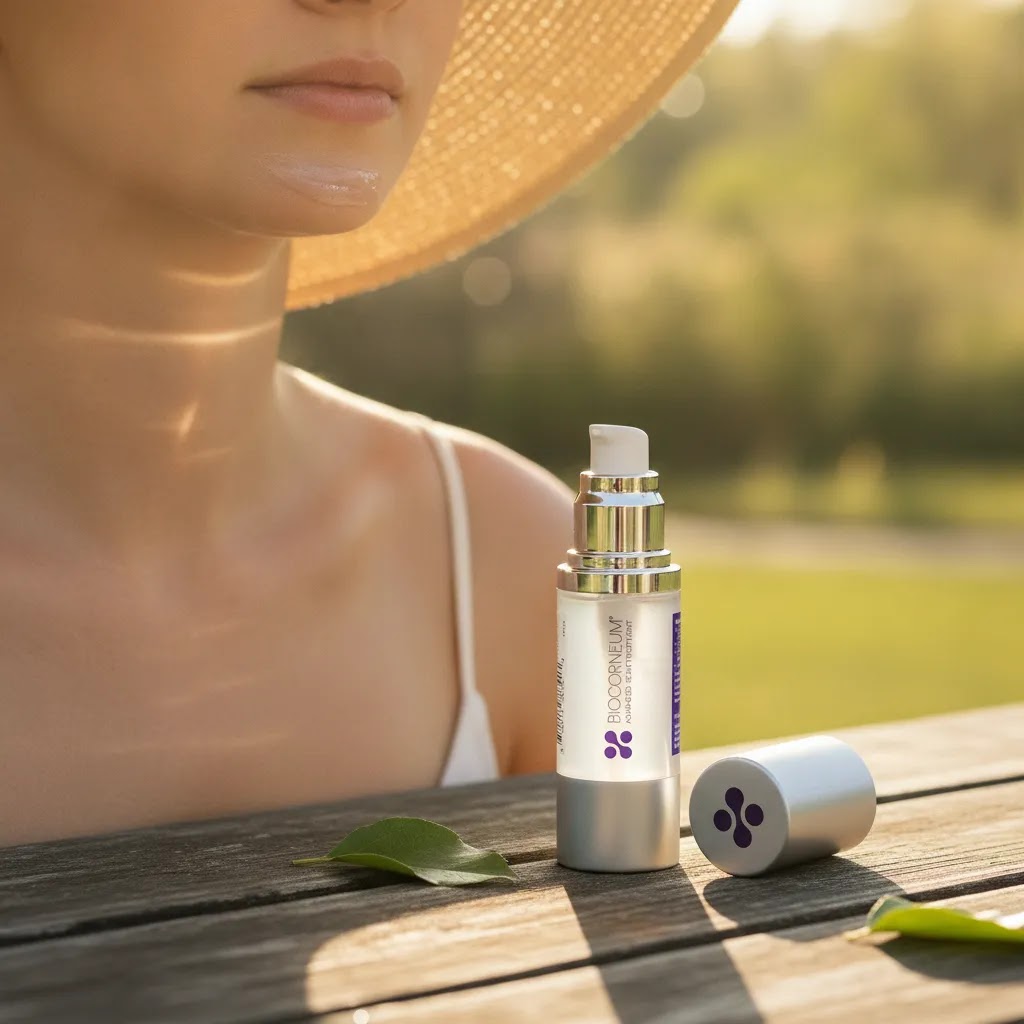
Sun exposure is one of the most overlooked factors in scar appearance. This is especially true early on. Healing scar tissue can darken more easily with ultraviolet (UV) light. As a result, color differences may look stronger and take longer to settle. That is why scar care discussions often include sun habits, not just the product itself.
However, “use SPF” is not always simple right after a procedure. Most clinicians still want the area fully closed before you apply sunscreen directly to the site. If the skin barrier is not intact, sunscreen may sting or irritate the area.
In practice, this means you will often think in phases:
- If the area is not fully closed, physical coverage is usually the safer default. Think a hat, clothing, or staying out of direct sun, based on your clinician’s guidance.
- Once the skin is closed and your clinician clears you for sunscreen, daily broad-spectrum SPF can be a useful part of scar management, especially for scars on the face, chest, shoulders, or any area that sees regular incidental sun.
- If the scar is in a high-friction or high-sweat area, your provider may help you choose an approach that protects the scar without triggering irritation.
Many patients also overlook the difference between silicone scar gels that include SPF and those that do not. A non-SPF silicone gel can still fit into a scar routine. However, you may need a separate sun-protection plan once it is appropriate. Your clinician can help you decide what makes sense based on scar location, daily sun exposure, and how reactive your skin has been during recovery.
For general sun-safety guidance, the American Academy of Dermatology offers practical recommendations. In addition, the Skin Cancer Foundation explains daily UV protection habits in plain language.
Biocorneum scar treatment application protocol
If your clinician has cleared you to begin, biocorneum scar treatment works best with a simple routine. Most patients do better with a plan that takes less than a minute. It should also fit easily into morning and evening habits.
A biocorneum scar treatment routine patients can follow
- Cleanse the area gently and let the skin dry fully.
- Apply a very thin layer to the scar itself, not a thick coating over the entire surrounding area.
- Allow it to dry before applying makeup, sunscreen, or other skincare if your clinician has said those are appropriate.
- Repeat as directed by your treating professional, often on a regular daily schedule.
- Continue long enough for scar maturation, which may take weeks to months rather than days.
Why thin application usually works better
More product does not always mean better scar support. A heavy layer may stay tacky or transfer onto clothing. It can also make the routine feel inconvenient. In most cases, thin and even coverage is the goal.
This is where many routines break down. Some people apply too much. Others stop too soon. Some skip days once the scar starts to look “pretty good.” Yet scar remodeling continues beneath the surface for quite a while. Because of that, consistency often matters more than intensity.
How long to stay consistent
There is no single timeline for every scar. Some scars settle faster. Others stay pink or firm for longer. Tension on the incision, body location, genetics, skin sensitivity, and sun exposure can all affect the course.
Your clinician may suggest topical scar care well beyond the first few weeks. This is especially common if the scar still looks active. That longer runway can feel tedious. Still, it is often more realistic than expecting a short burst of treatment to change a scar that is still maturing.
Best biocorneum scar treatment use cases
Clinicians most often discuss biocorneum scar treatment after a procedure once the skin has healed enough to move from wound care into scar care. Common examples include post-surgical incisions, facial procedure recovery, mole removal, and other planned skin closures where scar visibility matters.
The format may feel especially appealing if you want a topical option instead of a sheet-based routine. Some people are comfortable wearing silicone sheets for long stretches. Others find a gel easier around curved areas, smaller scars, hair-bearing skin, or visible locations where they want a more discreet option. If you want to compare gel with sheeting, Biodermis Silicone Scar Sheets may help add context.
That does not mean one format is always better. Instead, the right scar plan depends on the scar location, the stage of healing, your daily routine, and what you are actually likely to keep using.
If you are still weighing topical choices, biocorneum vs mederma can help you sort through differences in a more focused way. You can also review Best Scar Cream After Surgery for a broader post-procedure comparison.
How biocorneum scar treatment works
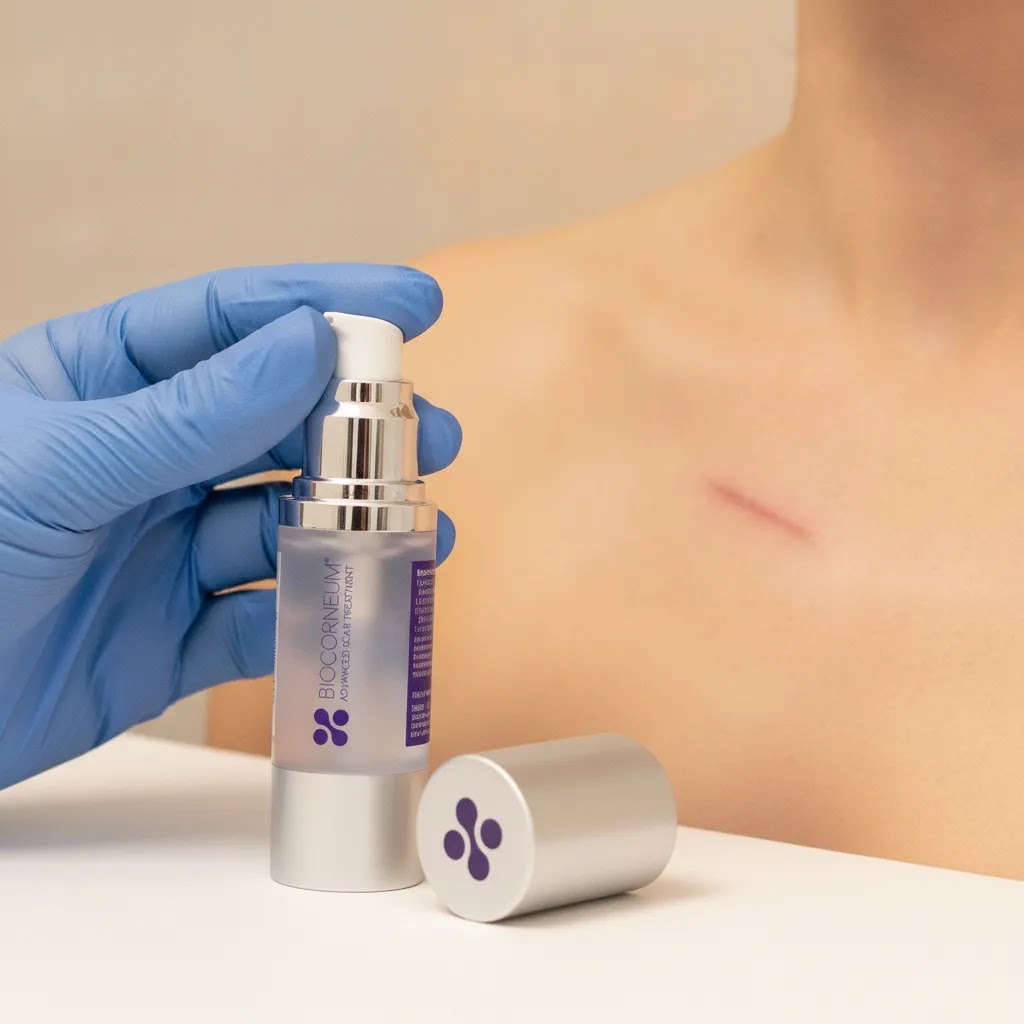
Silicone scar gels sit on top of the skin and form a thin, flexible, breathable layer over the scar. This layer acts like a lightweight shield. It helps support moisture balance during scar remodeling. Keeping the scar more consistently hydrated, without overly wetting the skin, is one reason clinicians often discuss silicone in scar management.
When people say a silicone gel may help “soften, flatten, and fade” a scar, it helps to translate those terms into plain language:
- Softening usually refers to a scar feeling less firm or tight to the touch as it matures.
- Flattening generally refers to a raised scar becoming less elevated over time, which can matter for scars under tension.
- Fading typically refers to color becoming less noticeable as redness settles and the scar blends more naturally with surrounding skin, which can take time.
The reality is that not all scars behave the same way. Newer scars that are still remodeling may respond differently than older scars that have already settled. Location also matters. For example, a scar over the chest, shoulders, or a joint may sit under more tension than a small scar on a low-movement area.
You may also hear terms such as hypertrophic scars and keloid scars. Hypertrophic scars stay within the original incision line. Keloid scars can grow beyond the original boundary. If you have a history of raised scarring, or if a scar becomes thicker, itchier, or more spread out, ask a qualified clinician to assess it. Self-managing may not be the best approach. As with any aesthetic treatment, side effects and limits exist, so the best plan should match the individual.
Common biocorneum scar treatment mistakes and misconceptions
“If the scar is closed, I can start anything”
Not necessarily. A surface may look improved, yet you may still need a clinician’s approval before starting scar topicals. Therefore, the safest next step is to follow the recovery plan for your specific procedure.
“If I do not see change in two weeks, it is not working”
Scar improvement is usually gradual. Early healing can involve redness, firmness, and color changes that settle slowly. As a result, many people judge a scar too early, long before remodeling has had time to progress.
“A scar product should remove the scar”
This expectation causes a lot of frustration. Scar care may improve how a scar looks and feels, but it does not usually make a scar disappear. More realistic goals include flatter texture, smoother surface feel, and less obvious visibility over time.
“If I miss a few days, it does not matter”
Life happens, and missing one application is not a disaster. Still, long gaps can make the routine less useful. Ultimately, scar care works best as a steady habit rather than an occasional rescue step.
Biocorneum scar treatment product spotlight
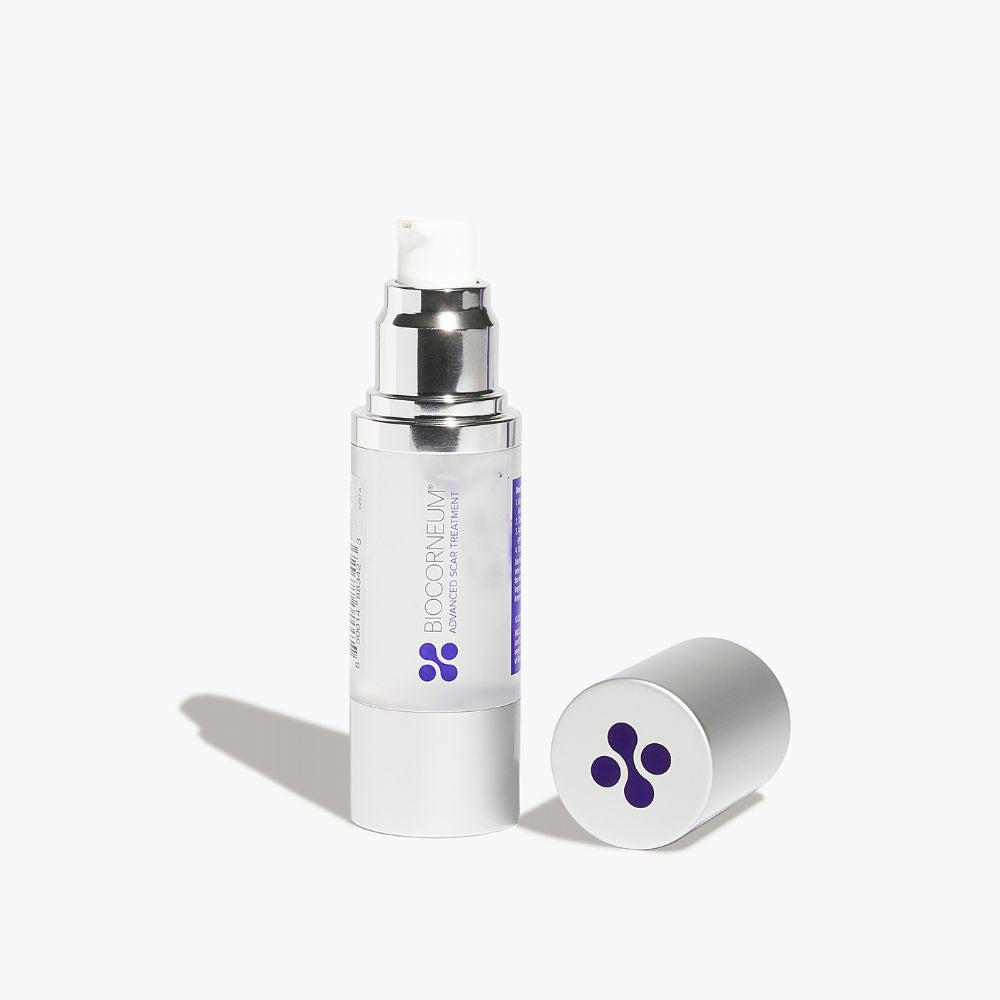 BIOCORNEUM SiliSilk Advanced Scar Gel, 30g is a scar care product priced at $84.95. The product description identifies it as a professional-grade silicone scar gel with an ultra-smooth, silky finish. It also describes the gel as clear and fast-drying.
In a post-procedure setting, that texture profile may matter more than people first assume. Patients often need scar care that fits into work mornings, social plans, or makeup routines. They usually do not want the area to look greasy or feel obvious. Because of that, a clear, fast-drying gel can be easier to live with than a product that stays wet or heavy on the skin.
Nuance Medical’s scar care education emphasizes practical, medically informed use rather than hype. That approach is especially helpful with a product like this, because the routine around the gel often shapes the experience as much as the gel itself. Readers browsing the broader Scar Treatment & Skincare category may also want to compare how gel-based care fits into a larger scar management plan.
For added brand context, Nuance Medical has also shared updates such as Introducing SiliSilk™: Everyday Silicone Scar Care, Simplified and BIOCORNEUM® SiliSilk™ Wins NewBeauty Award for Best Scar Gel.
Biocorneum scar treatment timeline and product sizing
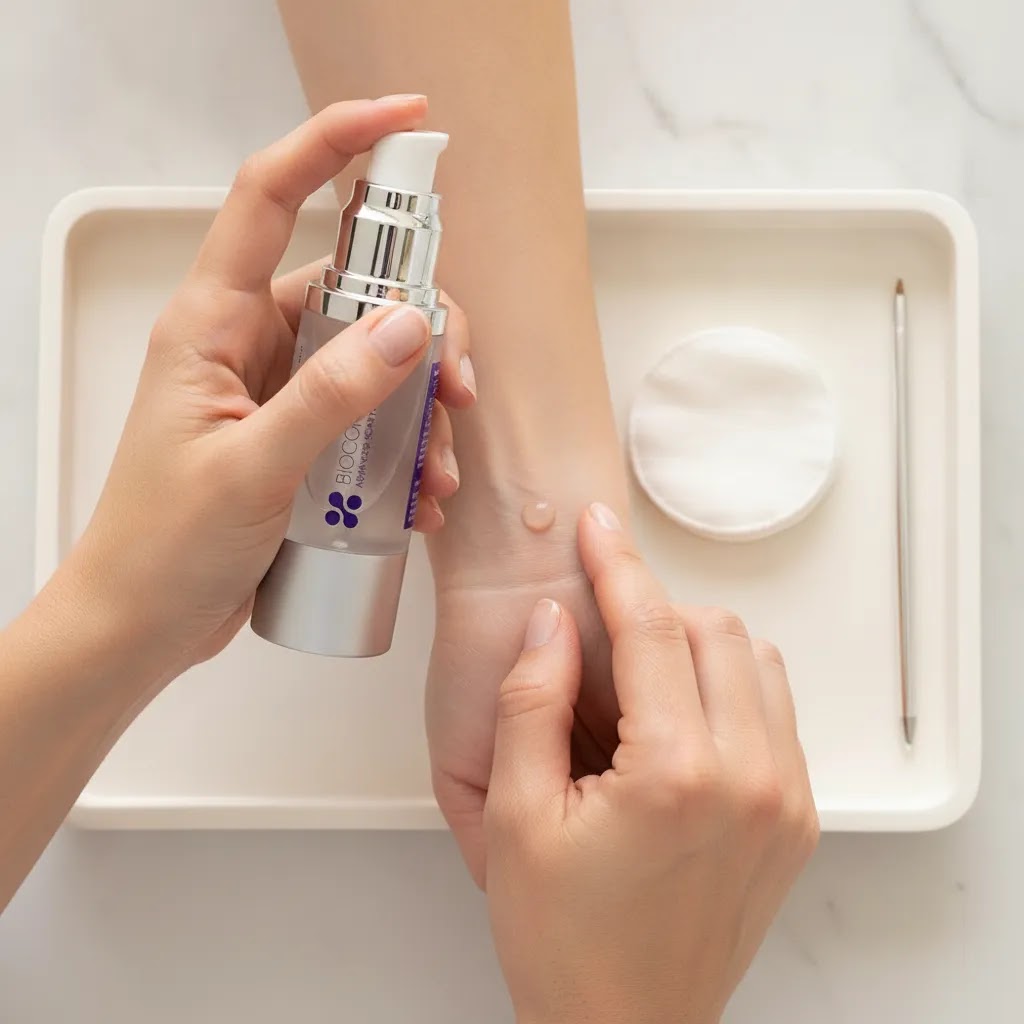
Patients usually do best when they have realistic time anchors. Scar remodeling is slow by design, so a silicone routine is usually judged over months, not a weekend. In many cases, visible improvement for a newer scar often begins around the 60-day mark. Then it may continue gradually with consistent use. Older scars can take longer to show change, and some may improve only subtly.
Results vary based on scar type, location, tension, genetics, skin tone, and how consistently you use the product. If you want more detail on scar timing, How Long does It Take for Scars to Fade can help set expectations.
Sizing also matters. Most people underestimate how quickly a tube or bottle can run out if the scar is long or if they apply it more than once daily. A small, fine-line facial scar generally uses very little product. By contrast, a longer surgical incision across the abdomen, chest, or breast area can require much more coverage over time. If you are treating multiple scars, product usage can rise quickly.
Consider this before you buy:
- Scar length and surface area matter more than you expect. Longer incisions usually mean faster product turnover, even with thin application.
- Application frequency changes your “run rate.” If your clinician recommends a consistent daily schedule, plan your supply so you are not forced to stop for a week while waiting for a replacement.
- Day-to-day livability affects compliance. Dry time, tackiness, transfer to clothing, and use on joints or high-movement areas are common reasons patients stop early, even when they started with good intentions.
In a consultation, this often turns into a simple conversation about scar location, routine, and what you can realistically maintain. If a product is hard to use in real life, the best plan may be to adjust the format or strategy instead of forcing a routine you will abandon.
What to look for when choosing biocorneum scar treatment
If you are close to making a purchase, focus on fit, timing, and ease of use. Flashy claims matter less. A scar product can look promising on paper and still be a poor match if it does not suit your procedure, your skin, or your ability to use it consistently.
- Choose a product category that fits the stage of healing. Wound care and scar care are not the same phase.
- Look for a format you can realistically apply every day.
- Ask your treating clinician whether the location of the scar favors gel, sheeting, or another approach.
- Check whether the product details clearly describe what it is, rather than relying on vague marketing language.
- If you are buying for clinic use or professional purchasing, the B2B Medical Supply section may be relevant.
A good scar plan is rarely the one with the longest feature list. Instead, it is the one you understand, tolerate well, and use correctly during the phase when scar management actually makes sense.
Biocorneum scar treatment quick facts
| Topic | What the article says |
|---|---|
| When to start | Start after the skin has closed and your clinician confirms scar care can begin. |
| Application style | Use a very thin layer on clean, dry skin and let it dry before layering other products if approved. |
| Routine length | Scar care usually continues for weeks to months while the scar matures. |
| Sun care | Use physical coverage before closure; add daily broad-spectrum SPF only after the skin is closed and cleared. |
| Timeline expectations | For newer scars, visible improvement often begins around the 60-day mark with consistent use. |
| Product details | BIOCORNEUM SiliSilk Advanced Scar Gel, 30g is priced at $84.95. |
Medical Disclaimer: This article is intended for informational and educational purposes only. It does not constitute medical advice and should not be used as a substitute for professional consultation with a qualified medical or aesthetic practitioner. Individual results vary. Always seek the guidance of a licensed healthcare professional before pursuing any aesthetic treatment.
Frequently Asked Questions
What is biocorneum scar treatment?
Biocorneum scar treatment generally refers to using a silicone scar gel after the skin has closed and your clinician has said scar care can begin. It is usually part of a longer scar-management plan rather than a stand-alone fix. The goal is not to erase a scar, but to support a healthier-looking scar as it matures over time. Your exact timing and routine may differ depending on the procedure, location, and how your skin is healing.
When should I start Biocorneum after surgery or a procedure?
You should usually start only after the wound is adequately closed and your treating clinician confirms it is appropriate. Starting too early can be a problem if the skin barrier is not ready. In practice, the transition from wound care to scar care happens at different times for different procedures. A follow-up appointment is often the safest point to confirm whether you are ready to begin.
How do you apply biocorneum scar treatment correctly?
You generally apply a thin layer to clean, dry skin over the scar area, then allow it to dry before putting anything else on top if your clinician has approved that routine. A thick layer is not usually the goal. Many people do better with a light, even application they can repeat consistently. The exact schedule should come from your provider, especially if the scar is near delicate facial skin or an area still recovering from a recent procedure.
Can biocorneum scar treatment be used on the face?
It may be used on the face if the treated area has healed appropriately and your clinician recommends it. Facial scars often raise extra concerns because they are harder to ignore day to day, and patients usually want a product that feels discreet. A clear, fast-drying gel format may appeal in that setting. Facial skin can also be more reactive, so professional guidance is especially useful if the area is still sensitive or recently treated.
How long does it take to see changes in a scar?
Scar changes usually happen gradually, not all at once. Many scars continue remodeling for months, and visible improvements may be subtle at first. Early redness or firmness does not automatically mean the scar will stay that way. What matters most is following a consistent routine, protecting the area as advised, and giving the scar enough time to mature before deciding how much the product may be helping.
Is biocorneum scar treatment the same as wound care?
No, scar care and wound care are different stages. Wound care focuses on helping the skin close and recover safely. Scar care usually begins after that phase, once your clinician says the site is ready for a topical scar routine. Mixing the two stages up is common, especially after a procedure that seems to be healing quickly, but timing really matters if you want the routine to be appropriate and well tolerated.
What kind of scars may be a good fit for this type of product?
This kind of product is often discussed for post-procedure scars once the area has closed and moved into the remodeling phase. It may be considered after surgical incisions, mole removal, or other planned skin closures where scar appearance matters. Suitability still depends on the scar’s age, location, and current healing stage. If the area is still open, irritated, or not healing as expected, you need clinical guidance before starting anything new.
Does biocorneum scar treatment work better than other scar products?
That depends on what you are comparing and what “better” means for your situation. Some people value the feel and convenience of a silicone gel, while others prefer a different format or ingredient approach. The product that fits your routine consistently may be more useful than one you stop using after a week. If you are sorting through options, a side-by-side review can help narrow the choice, but your provider’s advice should still lead.
Can I use makeup or skincare over it?
Possibly, but only after the gel has dried and only if your clinician has said other products are appropriate for that stage of healing. This matters most after facial procedures, where patients often want to return to normal routines quickly. Layering too much too soon can be irritating for some people. A simple routine is usually easier to tolerate in the early scar phase than a full stack of active skincare products.
Who should I ask before starting a scar treatment product?
Your surgeon, dermatologist, or another qualified medical professional involved in your care is the best person to ask. They can assess whether the area is truly ready for scar management and whether the product makes sense for the type of scar you have. If you are exploring products through a medically informed source like Nuance Medical, it can also help you prepare smarter questions for that conversation and choose a routine with more confidence.
Does BIOCORNEUM work on scars?
BIOCORNEUM is a silicone-based scar gel that may help support a smoother, less noticeable scar over time when used consistently after the skin has closed and a clinician has cleared you to start. Many patients use silicone gels during the remodeling phase to support hydration and scar comfort, but results vary by scar type, location, and age. If you are prone to raised scarring or your scar is changing quickly, it is best to have it assessed by a qualified professional.
What scar cream do plastic surgeons recommend?
Many plastic surgeons discuss silicone-based scar products, either gels or sheets, because silicone is commonly used in clinical scar management. The most appropriate choice still depends on your procedure, healing stage, and whether your incision is fully closed. Your surgeon’s recommendation should account for your skin sensitivity, scar location, and any history of hypertrophic or keloid scarring.
Is BIOCORNEUM on Amazon real or fake?
Marketplace listings can vary, and product authenticity can be harder to verify when items are sold through third-party sellers. If you choose to buy from a marketplace, check the seller information, packaging details, and return policy, and be cautious with unusually low pricing. If authenticity is a concern, asking your clinician where they recommend purchasing can help you feel more confident in what you are using.
How long does it take BIOCORNEUM to work?
Many people evaluate silicone scar gel use over weeks to months, not days, because scars remodel slowly. For newer scars, visible improvement often begins around 60 days with consistent use, while older scars may take longer and may improve more subtly. Your treating clinician can help you set a timeline based on your scar’s stage and the location on your body.
Key Takeaways
- Biocorneum scar treatment is generally used after the skin has closed and scar care is appropriate, not during open-wound care.
- A thin, consistent application routine is usually more practical than using large amounts of product.
- Scar improvement often takes weeks to months, and individual healing patterns vary.
- Gel-based scar care may suit patients who want a discreet topical format after a procedure.
- Professional guidance matters, especially for facial scars, recent procedures, or areas that still seem irritated.
Conclusion
If you are researching biocorneum scar treatment, you probably want clear answers. You want to know when it fits into healing, how to use it correctly, and whether it makes sense for your specific scar. Those are smart questions. In practice, scar care works best when it matches the recovery stage, stays simple, and gets used with patience.
The product itself is only one part of the picture. Timing, technique, and realistic expectations matter just as much. If you are still deciding whether silicone gel belongs in your post-procedure routine, speaking with a qualified professional is the most reliable next step. You can also explore Nuance Medical’s scar care resources to compare options, clarify your healing phase, and choose a plan that feels informed rather than rushed.