
Biocorneum Product Profile
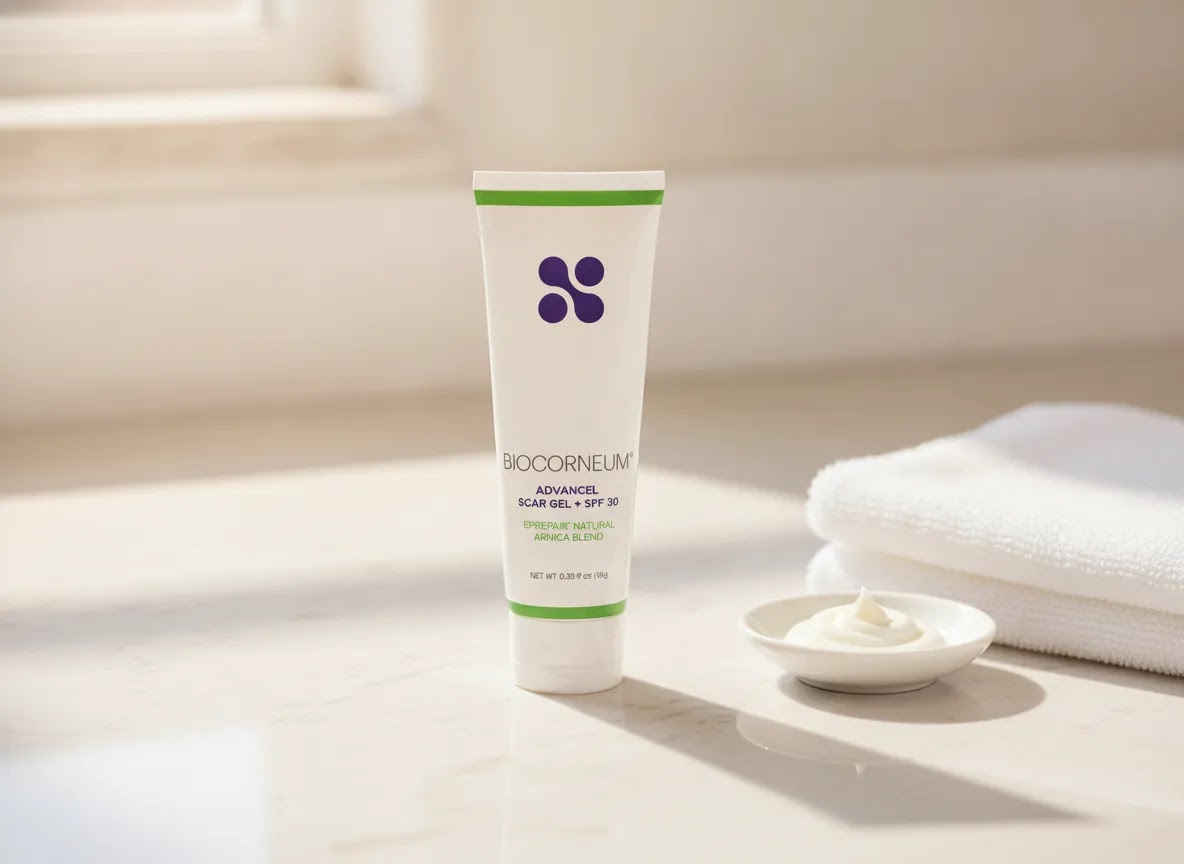
People generally use biocorneum as a silicone-based scar gel on healed skin. In scar care, many clinicians use silicone to create a light, flexible film over the scar surface. That film may help limit transepidermal water loss, support hydration, and encourage a flatter, softer-looking scar over time.
One feature stands out in biocorneum discussions: SPF 30. For scars that get regular daylight exposure, sun protection can shape the decision. UV exposure may prolong discoloration or make a healing scar more noticeable. As a result, a product that combines silicone care and sunscreen may appeal to readers who want one morning step instead of a separate gel and sunscreen routine.
If you want a more product-specific overview, see our page on biocorneum scar treatment. Readers comparing naming variations may also find it useful to review biocorneum advanced scar gel, since product naming and search phrasing can sometimes create confusion.
Biocorneum Ingredients and Formulation Details
Many patients overlook one point. “Silicone gel” is not just a generic label. In practice, the difference often comes down to how the formula forms a film on skin, how it feels each day, and how easily it fits into a routine with sun protection.
What biocorneum crosslinked silicone means in plain English
You will often see biocorneum placed in the crosslinked silicone gel category. Here, crosslinking describes how silicone molecules join into a light network after application. That network lets the product dry into a flexible, breathable film instead of acting like an oily ointment. Think of it as a clear, thin layer that moves with facial expressions or body movement.
From a scar-management standpoint, film formation is the main goal. A well-formed silicone layer can support hydration by reducing water loss from the skin surface. It can also reduce friction from clothing or daily contact. In practice, that matters for scars on the chest, shoulder, jawline, or other areas that rub often.
The biocorneum SPF 30 side of the formula
With SPF 30, the main value is not chasing a perfect number. Instead, it is about steady daily UV protection. Scars can hold onto redness or develop uneven pigment while they mature, and UV exposure often keeps a scar noticeable longer. That is why many clinicians emphasize sun protection in cosmetic scar care, especially for the face, chest, and shoulders.
At a category level, broad-spectrum coverage is the key SPF feature to look for. It helps protect against both UVA and UVB rays. Some people also want water resistance for outdoor or sweaty settings. However, sunscreen performance still depends on using enough product and reapplying when needed. A qualified practitioner can help you decide if a scar-specific SPF product fits your lifestyle or if separate sunscreen layering makes more sense. For general sunscreen guidance, see the American Academy of Dermatology sunscreen guide.
Biocorneum texture, wear, and layering notes
Many people choose silicone gels because they can look nearly invisible once dry. Ideally, the finish looks clear and smooth. In other words, you want a thin, dry-to-the-touch layer that sits flat rather than shiny. Some people also want it to work well under makeup or under another sunscreen for longer outdoor days.
If you have had issues with tackiness, pilling, or residue, the cause is often simple. A layer may be too thick. Skin may still be damp. Or heavy oils and thick moisturizers underneath may keep the film from setting. Therefore, give the gel time to dry, use a very thin layer, and space out other products when needed.
Why Biocorneum SPF 30 Changes the Conversation
Many scar gels focus on silicone alone. Biocorneum often enters a different conversation because SPF 30 adds a second decision factor: daytime scar protection. That matters most for scars that are flat or healing well but still prone to darkening, lasting redness, or contrast against surrounding skin.
Picture a thin surgical line on the cheek, upper lip, shoulder, or chest. Even if the texture is smooth, sunlight can keep the area looking more obvious. In those cases, a silicone gel with built-in sun protection may feel more convenient than using one product and then layering another on top. Convenience matters because consistent use often shapes results more than a complicated routine does.
Still, this SPF angle does not make biocorneum the best choice for every scar. A scar under clothing, a broad scar that may suit sheets better, or very sensitive skin may push someone toward another format. That is why comparison matters. If your question is less about SPF and more about visual expectations, our discussion of biocorneum scar gel before and after can help frame realistic progress over time.
How to Use Biocorneum Silicone Gel
People usually apply silicone scar gel only after the skin surface fully closes. Do not place it on an open wound unless a qualified clinician tells you to do so. The goal is a thin, even layer over the scar, not a thick, shiny coating.
- Wait for full closure. The incision or injured area should be closed and dry before topical silicone is started.
- Clean and dry the area. Oils, moisture, and heavy skincare products can affect how evenly the gel sits on skin.
- Apply a very thin layer. With silicone gel, more product is not always better. A heavy layer may pill, stay tacky, or feel uncomfortable.
- Let it set. The film should be allowed to dry before clothing, makeup, or additional skincare is applied.
- Repeat as directed. Scar care often depends on steady use across weeks to months, not a few applications.
Many readers also want to know whether they should choose a gel or a sheet. Gels may suit curved or visible areas more easily, while sheets may suit broader, flatter body scars. That comparison is especially relevant for scars at risk of becoming raised, including a hypertrophic scar or, in some cases, a keloid. Suitability varies, and raised scars often deserve professional evaluation rather than self-selection alone.
Biocorneum Timeline and Visible Improvement
Scar products often promise “improvement,” but scar change is gradual. It also looks different from person to person. Therefore, it helps to think in time horizons and trackable changes instead of expecting a dramatic shift in a week or two.
Typical biocorneum timelines and why they vary
Many silicone scar gel brands mention early visible change around the 60-day mark for newer scars, with longer timelines for older scars. As a general framework, many people use a 60 to 90+ day window as a starting expectation, not a guarantee. Scar location, skin type, thickness, sun exposure, and consistency all influence what you actually see.
Scars also mature over time whether you use a product or not. Remodeling can continue for many months. As a result, it can be hard to separate natural scar change from product-specific effect without consistent use and realistic expectations.
What biocorneum visible improvement often looks like
For many people, early progress is subtle and practical. You might notice less tightness. The scar may look a bit less shiny. Or it may feel less irritated by clothing. Over time, people often track a gradual softening of firmness, a flatter profile, and a slow fading of redness or contrast.
In plain terms, the scar may shift from “bright and attention-grabbing” to “calmer and more blended.” Texture often improves more slowly than color. Itch or sensitivity can also change as the scar settles. If a scar becomes more raised, more uncomfortable, or spreads beyond its original borders, that is a different scenario and deserves medical review.
Biocorneum expectations for new scars vs old scars
Silicone products often play the clearest role after the skin closes and while the scar is still remodeling. For newer scars, consistent film wear plus sun protection may support a more favorable environment during this active stage.
For older scars, improvement may still happen, but it is usually slower and more modest. If a scar has stayed stable for years, topical products may help surface feel and mild texture concerns. However, they are less likely to meaningfully change a thick, contracted, or very raised scar on their own. A consultation can help set realistic expectations. You can also compare broader scar timelines in How Long does It Take for Scars to Fade.
Biocorneum Comparison Landscape
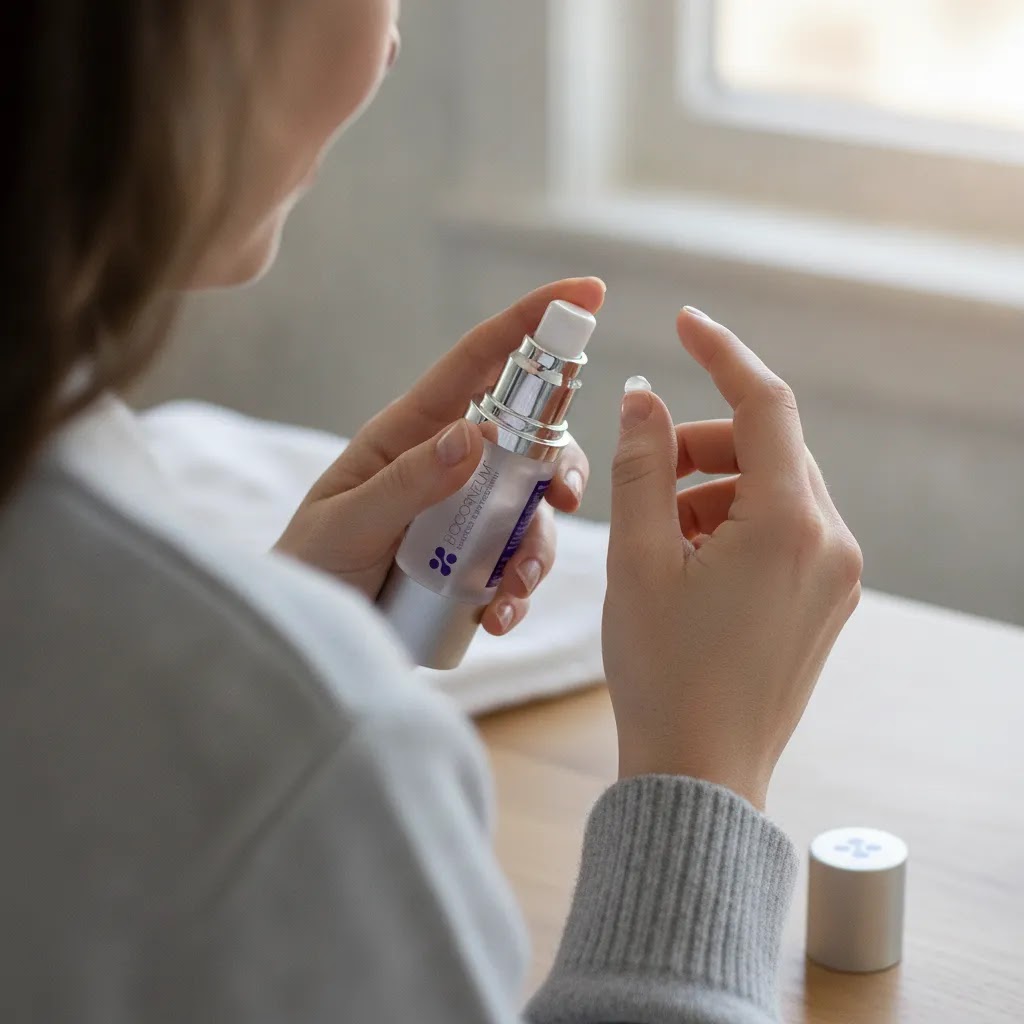
The clearest way to position biocorneum is not as “better than everything else.” Instead, it is a specific option within topical scar care. It sits where silicone scar management and daily UV protection overlap. That makes it especially relevant for facial scars, post-procedure marks on exposed skin, and anyone who prefers a simpler routine.
Compared with silicone sheets, biocorneum may be easier to use on contoured areas such as the nose, jawline, collarbone, or joints. Sheets can be harder to keep in place there, especially with sweating, talking, or frequent movement. On the other hand, sheets may feel more reassuring for larger linear scars because they physically cover the area and can stay on longer once applied correctly.
Compared with non-silicone scar topicals, the main question is ingredient philosophy. Readers often compare biocorneum with more cosmetic-style scar creams or gels that focus on botanical or onion-extract based approaches. If that is where you are in your research, you may want to read both biocorneum vs mederma and mederma vs biocorneum. Looking at the comparison from both angles can help clarify whether your priority is silicone film formation, sunscreen inclusion, texture, or budget.
Biocorneum vs sheets vs non-silicone topicals at a glance
| Option | Best fit from this article | Key tradeoff |
|---|---|---|
| Biocorneum | Visible or sun-exposed scars, contoured areas, minimalist routines | Not ideal for every scar shape or every sensitivity profile |
| Silicone sheets | Broader, flatter, or larger linear scars; extended wear | Can be harder to keep in place on mobile or contoured areas |
| Non-silicone scar topicals | Readers comparing different ingredient approaches | May not match the silicone-film approach some users want |
If you want a more direct sheet comparison, see Epi-derm Silicone Gel Sheeting for Scars or Biocorneum vs Silagen.
Biocorneum Pros and Considerations
Benefits
- Combines silicone scar care with SPF 30, which may simplify daytime routines for exposed scars.
- May be easier than sheets on facial contours, joints, or irregularly shaped scars.
- Usually leaves a thin film rather than a bulky dressing, which some people prefer under makeup or clothing.
- Can support scar hydration, an important part of topical silicone scar management.
- May help readers stay more consistent if they prefer a single-step morning product.
Considerations
- It is not suitable for open wounds or skin that has not fully healed.
- Silicone gel results vary, and noticeable change often takes weeks to months rather than days.
- Some people may prefer sheets for large scars or scars they want covered for longer wear periods.
- SPF 30 is useful, but sunscreen habits still matter, especially with prolonged outdoor exposure.
- Topical scar care may be only one part of management if the scar is raised, itchy, spreading, or becoming increasingly firm.
Who May Like Biocorneum Most
Biocorneum may appeal most to someone with a healed scar on a visible area who wants silicone support without the feel of a sheet. It can be practical for post-surgical facial scars, chest scars, cosmetic procedure recovery, or marks on areas that are hard to tape or cover comfortably. It may also suit people who are more likely to stick with a simple morning product.
It may be less appealing for someone who wants an occlusive sheet format, has a very broad scar surface, or struggles with topical sensitivity. If your scar is changing quickly, becoming more raised, or looks more like abnormal scar growth than routine healing, a qualified medical professional should assess it before you rely on self-directed topical care alone. For medical scar care basics, the MedlinePlus scars overview offers a general reference.
What to Look for Before You Buy Biocorneum
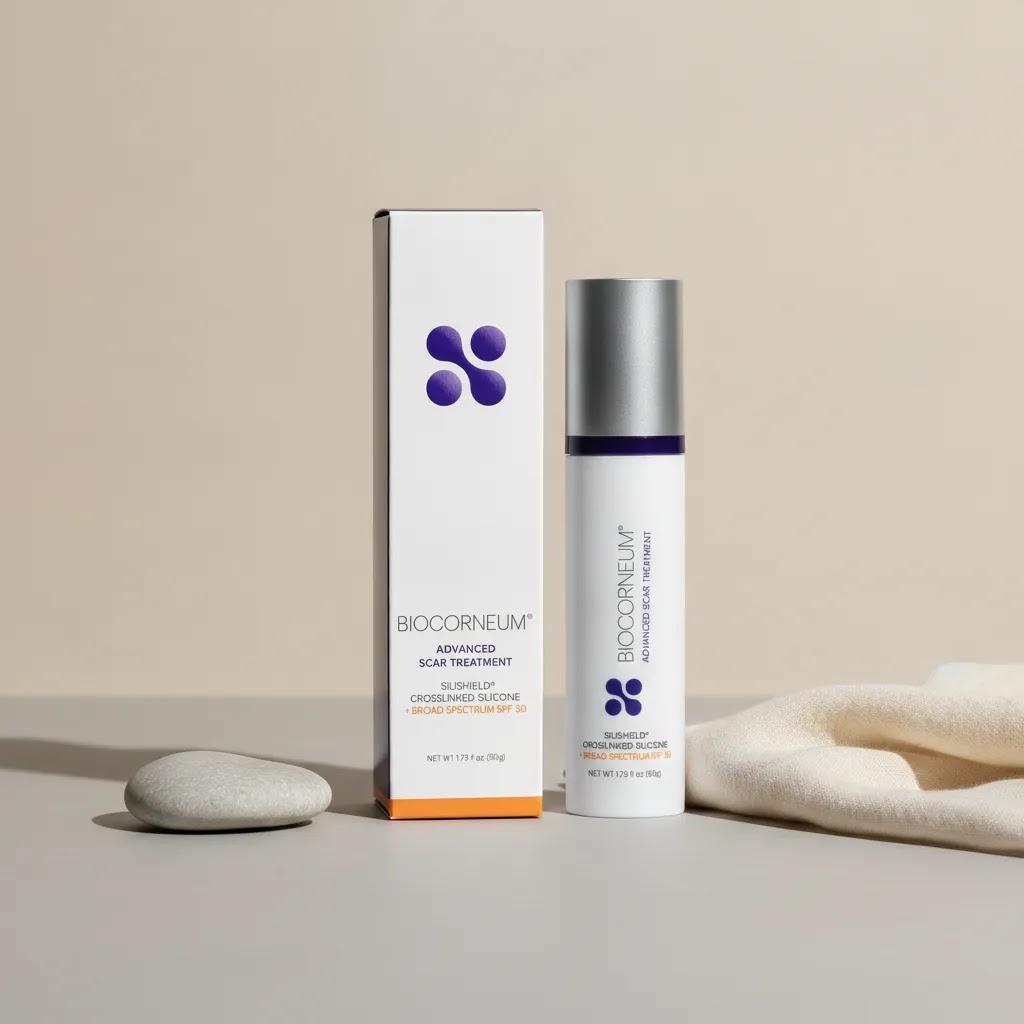
If you are trying to decide whether biocorneum is worth it, focus on buying criteria rather than marketing language alone.
1. Scar location
A gel format often makes the most sense on the face, neck, shoulders, or other areas where a sheet may lift, wrinkle, or feel visible. If the scar sits on a broad flat area such as the abdomen, a sheet may still be worth comparing.
2. Need for daytime sun protection
This is where biocorneum has a distinct place in the category. If the scar sees daylight regularly, having SPF 30 in the same product may be a meaningful advantage. If sun exposure is minimal, that feature may matter less.
3. Routine fit
Some people do better with a product that dries quickly and fits under normal skincare or makeup. Others prefer a more “set it and leave it” format like sheeting. Ultimately, the right option is often the one you can use consistently.
4. Scar behavior
If the scar is flat and early in remodeling, a silicone gel may be a reasonable first-line topical option. If it is thickening, extending beyond the original boundary, or staying very raised, professional assessment becomes more important.
5. Broader recovery needs
Not every post-procedure concern is a scar concern alone. Some people also deal with tenderness, bruising, or discomfort in nearby tissue. In those cases, scar care and topical comfort strategies may be separate decisions. Nuance Medical’s Topical Pain Relief category and this cross-topic lidocaine guide may help if you are sorting out those adjacent questions.
Biocorneum Authenticity, Where to Buy, and Counterfeit Risk
With any popular skincare or medical-adjacent topical, where you buy it can affect what you receive. Counterfeit, expired, or poorly stored products are a known issue across many online categories. Scar gels with SPF add another concern because sunscreen performance depends on a stable, correctly formulated product.
How to reduce the chance of counterfeit or expired product
If authenticity is a priority, many people start with a qualified medical practice, their post-procedure provider, or a reputable retailer with controlled inventory. When you receive the product, check that the packaging looks professionally sealed and consistent. Also note the lot number and expiration date if present. If the color, smell, or texture seems unusual, pause and verify before you keep using it.
Why large online marketplaces can be inconsistent
Buying on a large marketplace does not always mean the supply chain is verified from start to finish. Listings can change hands, third-party sellers can vary, and storage conditions may be unclear. That matters for skin tolerance. It can also matter for SPF reliability, since sunscreen filters and emulsions can change with age or improper storage.
What to do if you suspect a problem or have an unexpected reaction
If you suspect you received an inauthentic or expired product, or if you develop an unexpected skin reaction, stop using it. Reactions can happen even with authentic products. However, significant redness, discomfort, or worsening irritation deserves prompt attention from a qualified professional. You can also contact the seller or manufacturer to report the concern and help confirm authenticity.
Nuance Medical Perspective on Biocorneum
Nuance Medical’s educational content around scar care supports a careful, practical approach. Rather than treating every scar product as interchangeable, it helps to ask which format fits the scar’s location, your tolerance for daily application, and whether sun exposure is a real part of your routine. That question is often more useful than asking which product is “best.”
If you are exploring biocorneum as part of a broader scar plan, Nuance Medical offers additional education across the category, including comparison content and product-focused reading. You can also review recent updates such as BIOCORNEUM® SiliSilk™ Wins NewBeauty Award for Best Scar Gel and Introducing BIOCORNEUM’s New Dual-Action Bruise Care System. If you want more product detail, you can also read Biocorneum Advanced Scar Treatment with Spf 30. Then speak with a qualified practitioner for individualized guidance, especially if your scar is raised, persistent, or located on a high-visibility area.
Frequently Asked Questions
What is biocorneum used for?
Biocorneum is generally used as a silicone-based topical scar product with SPF 30. People often consider it for healed surgical scars, cosmetic procedure scars, injury-related scars, and other marks where they want both scar management support and daily sun protection. Individual results can vary by scar type, timing, and consistency of use.
How long do you usually use biocorneum?
Biocorneum is typically used over weeks to months rather than for a few days. Scar remodeling is gradual, so changes in texture, firmness, and visibility may take time. The most appropriate duration depends on how mature the scar is, where it is located, and whether a clinician recommends a longer course.
Does biocorneum work better than silicone sheets?
Biocorneum is not automatically better than silicone sheets. Instead, it is better suited to certain situations. Gels often work well on visible or curved areas, while sheets may suit larger flat scars and people who prefer extended wear. The stronger choice is usually the one that matches both the scar and the routine you can maintain.
Can you use biocorneum on the face?
Yes, many people consider silicone scar gel for facial scars because it can be easier to apply than a sheet on mobile or contoured areas. Facial use still requires caution around the eyes and only on fully healed skin. A qualified practitioner can help confirm timing after surgery or a facial procedure.
Are there side effects with biocorneum?
As with many topical products, some users may experience irritation, sensitivity, residue issues, or dissatisfaction with texture. Silicone gels should not be used on open wounds. If the skin becomes significantly red, uncomfortable, or reactive, stop use and seek professional advice.
Is biocorneum worth it?
Biocorneum may feel worth it if you specifically want silicone scar care plus SPF 30 in one step. That value tends to be strongest for visible scars exposed to daylight. If you do not need built-in sun protection or prefer sheet wear, another silicone format may make more sense.
Where can I buy biocorneum near me?
Availability can vary by provider, clinic, and retailer. Many readers start by checking a qualified medical practice, post-procedure provider, or trusted medical skincare source rather than relying only on general marketplaces. That can be especially helpful if you want guidance on timing, application, and scar suitability.
Can biocorneum help old scars?
Older scars may still improve somewhat with topical care, but expectations usually need to be more modest than with newer scars in active remodeling. Silicone products often have the clearest practical role earlier in scar management. Established scars that are thick, contracted, or highly raised may need more than a topical approach.
Does BIOCORNEUM really work?
BIOCORNEUM may help support scar appearance over time because it is a silicone-based film-forming gel, and silicone is widely used in topical scar care. “Work” usually means gradual changes like improved comfort, softness, and a less noticeable look rather than a complete disappearance. Results vary based on scar age, location, sun exposure, and consistent use.
What is better, Mederma or BIOCORNEUM?
Neither option is universally better. They are different categories with different priorities. BIOCORNEUM is typically chosen for silicone film formation plus SPF 30, while Mederma is often discussed as a non-silicone scar topical approach. Your best match depends on whether you value silicone wear characteristics, built-in sun protection, texture preference, and how consistently you will use it.
Is BIOCORNEUM on Amazon real or fake?
Some listings may be authentic, but large marketplaces can include third-party sellers with inconsistent supply chains. If authenticity matters to you, purchasing through a qualified medical practice or a reputable retailer with controlled inventory can reduce risk. If the packaging looks off, the product seems unusually old, or you have an unexpected reaction, stop use and seek guidance.
Is BIOCORNEUM better than ScarAway?
It depends on the format and what you will realistically use. Many ScarAway products are silicone sheets, which can be a strong fit for broader, flatter scars and extended wear, while BIOCORNEUM is a silicone gel that may be easier on contoured or highly visible areas and includes SPF 30. The more effective choice is usually the one that fits the scar location, your comfort, and your ability to stay consistent.
Key Takeaways
- Biocorneum is best understood as a silicone scar gel with the added convenience of SPF 30.
- Its strongest use case is often a healed scar on a visible, sun-exposed, or hard-to-sheet area.
- Silicone gels and silicone sheets serve different practical needs, neither is universally best.
- Raised, spreading, or unusually firm scars deserve professional assessment rather than product guesswork alone.
- Consistency, correct timing, and realistic expectations matter more than dramatic claims.
Biocorneum Conclusion
Biocorneum stands out because it combines two needs that often matter at the same time: silicone-based scar support and daily UV protection. For the right person, especially someone managing a healed scar on an exposed area, that combination can make the product easier to use consistently. It is not the only valid option, and it does not fit every scar shape, age, or lifestyle. If you are deciding between gel, sheeting, or another scar strategy, Nuance Medical’s scar care resources can help you compare formats more clearly. A qualified practitioner can then help you choose a plan that fits your skin, healing stage, and goals.
Medical Disclaimer: The information provided in this article is intended for general informational and educational purposes only. It does not constitute medical advice and should not be used as a substitute for a professional consultation with a qualified aesthetic practitioner or healthcare provider. Individual results from aesthetic treatments vary. Always seek the advice of a qualified medical professional before undergoing any cosmetic procedure.