Why epi-derm silicone gel sheeting for scars selection matters
Clinicians often discuss silicone sheeting for scars that are raised or likely to become raised during remodeling. In plain language, remodeling is the stage when scar tissue is still organizing and changing over time. A sheet only helps if it covers the area well and stays practical for daily wear.
That is why selection matters. A sheet that is too small may leave important edges uncovered. On the other hand, a sheet that is much larger than you need may feel harder to position, especially over clothing lines or curved areas. Medium-to-large scars on the torso or limbs often fall in the middle, where a standard sheet may be the sensible starting point.
If you want broader sheet-format background, biodermis scar sheets may help fill in the bigger picture. You can also compare options in this guide to biodermis silicone scar sheets. This article stays focused on the standard format because that is where many people get stuck.
How epi-derm silicone gel sheeting for scars works
Silicone scar sheets do not work like a medication that changes biology overnight. Instead, they create a stable, protected environment over a healed scar. That environment can influence how the scar matures over time.
Silicone sheeting mainly works through occlusion and hydration. In plain language, it acts like a soft, flexible cover that helps reduce transepidermal water loss, which is the normal evaporation of water from the skin’s surface. When a scar stays more hydrated, it may become less dry and less irritated.
In addition, silicone sheets may reduce friction from clothing and movement. That matters for scars on the chest, shoulders, waistline, or other high-friction areas.
What the evidence suggests about silicone scar sheets
Many clinicians view silicone gel and silicone sheets as a reasonable first-line, non-invasive option for hypertrophic scars and some keloid-prone situations. Hypertrophic scars are raised scars that stay within the original incision or injury borders. Overall, medical literature tends to support silicone for improving scar thickness, texture, color irregularity, itch, and discomfort when people use it consistently.
However, improvement is the right expectation. Scars usually do not vanish. Established keloids can also resist treatment and may need added medical care from a qualified clinician.
When to start silicone scar care
Timing plays a big role. Scars often remodel for months, and sometimes longer. Because of that, clinicians commonly emphasize early, consistent use after the skin fully closes.
Starting years later may still help with comfort or surface texture in some cases. However, results are usually less predictable than they are during active scar change. In practice, a clinician looks at how active the scar seems, how long it has been since surgery or injury, whether the scar is raised or symptomatic, and whether silicone is a practical next step.
As with any topical scar approach, side effects can happen. For example, some people develop irritation or rash. Suitability depends on healing, skin tolerance, and the details of the scar. A qualified clinician can help you decide whether silicone sheeting fits your situation. For general scar guidance, the American Academy of Dermatology and the U.S. National Library of Medicine both offer helpful background on scars and skin healing.
What epi-derm silicone gel sheeting for scars is meant for
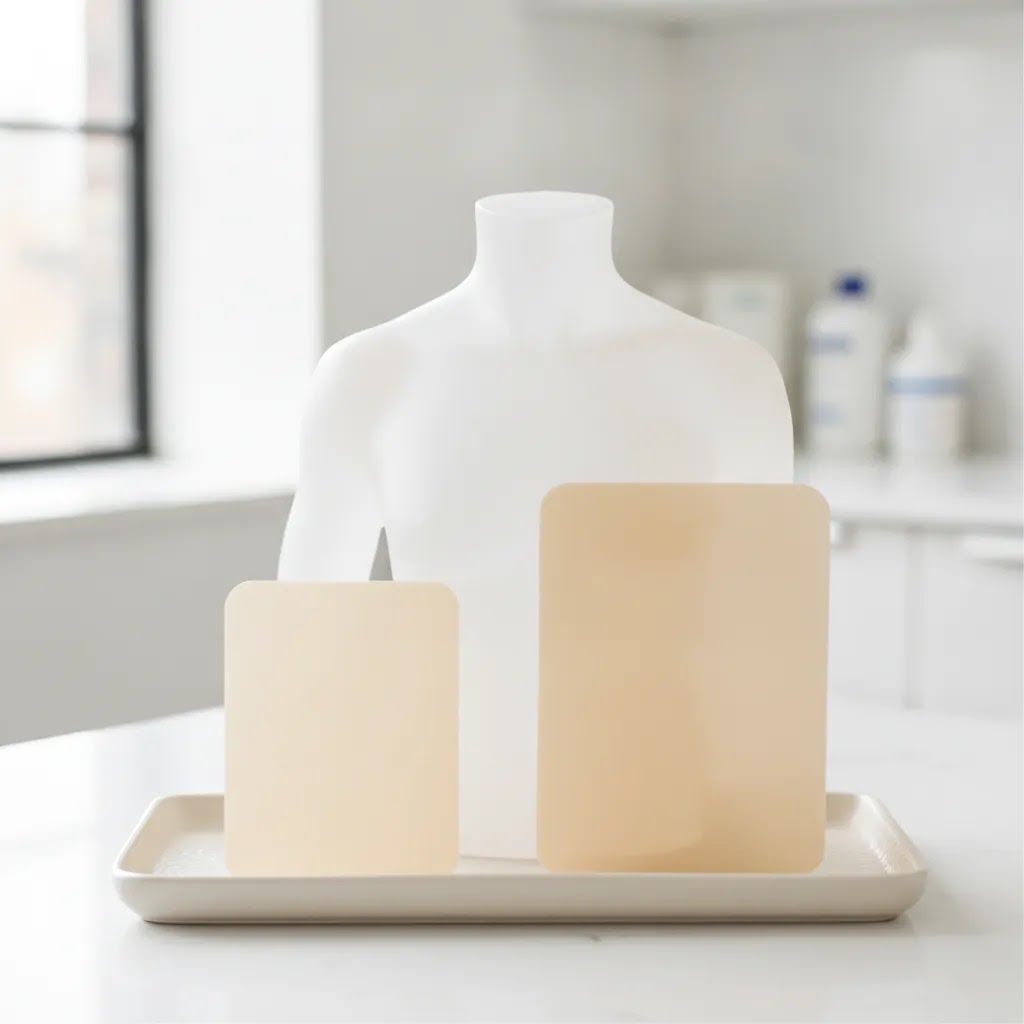
According to the product information, the standard Epi-Derm silicone gel sheet provides a healing environment beneficial for burn scar reduction therapy, as well as treatment of medium to large keloid and hypertrophic scars from surgery or trauma. Keloid and hypertrophic scars are both raised scars, though they do not behave the same way. The main point is simple: the standard sheet is designed for more than a tiny spot treatment.
It may help when a scar covers a moderate area on the torso. It may also work when part of a limb needs coverage and the sheet can wrap around that area. In addition, you can trim it for custom fitment, which matters when your scar is not shaped like a neat rectangle.
That trimming flexibility often makes the standard sheet appealing. For example, a post-surgical scar on the chest, a wider scar on the upper arm, or a healed burn area that is broad but not extensive may all need customization instead of a narrow pre-cut strip.
How to choose between standard and large epi-derm sheets
The standard and large sheets do not do the exact same job. They overlap, but they serve different coverage needs.
- The standard sheet is described for medium to large scars and may suit moderate torso coverage or wrapping around part of a limb.
- The large sheet is described for large scars, including large burn scars, and may make more sense when the treatment area is broad enough that a standard sheet would need awkward placement or frequent repositioning.
- If your scar is long but relatively narrow, the decision may come down to how much trimming you are comfortable doing and whether one sheet can cover the entire area cleanly.
People sometimes assume larger is always safer, but that is not necessarily true for daily wear. A very large sheet may help with extensive coverage. However, it may also give you more material than you need if the scar occupies only part of the available surface. In those cases, the standard version may strike a better balance.
If your scar is smaller, curved, or shaped in a way that needs a different format, you may also want to review biodermis epi-derm c-strip silicone or this related guide on Biodermis Epi-derm C-strip Silicone Scar Sheets.
How to trim, place, and wear epi-derm silicone gel sheeting for scars
Most confusion about epi-derm silicone gel sheeting for scars is not about silicone itself. It is about daily handling. Readers often want to know how exact they need to be, whether they should cover only the visible line, and what custom fitment really means.
A practical approach usually includes the following steps:
- Wait until the skin surface is fully closed and your treating clinician says topical scar care is appropriate.
- Estimate the treatment area before cutting, including the raised or most active portion of the scar and a small margin around it if advised by your clinician.
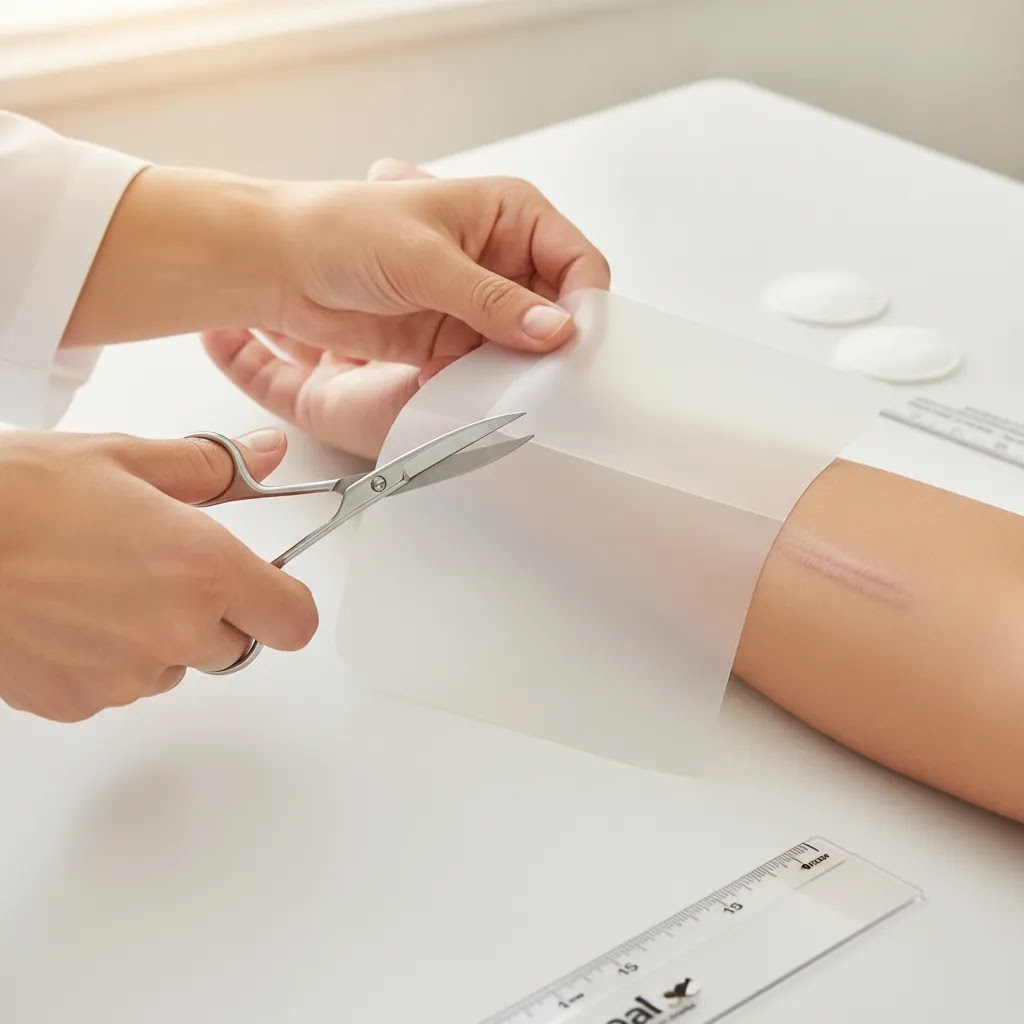
- Trim the sheet so it fits the scar location rather than forcing the scar to fit the sheet.
- Apply it smoothly so it lies flat against the skin.
- Check comfort in motion, especially if the scar crosses the chest, shoulder, elbow, knee, or another area that bends or stretches.
For medium-to-large scars, custom trimming often matters more than choosing between clear and natural. The product information notes that Epi-Derm Standard Sheets are available in Clear or Natural, and that Epi-Derm Clear uses a pink liner for easier visibility prior to application. That is a small handling detail, but it can make placement easier for some users.
Wear instructions can vary based on the scar, skin tolerance, and your clinician’s guidance. In real life, people do better with a plan they can maintain. If a sheet bunches under clothing, lifts during activity, or feels poorly sized, adherence may drop. That is one reason selection should happen before you start cutting a new sheet.
Wear time, daily schedule, and how long to use Epi-Derm sheets
Once you have the sizing right, the next challenge is consistency. Many people are not looking for a perfect routine. They want one they can actually follow.
Clinicians often use a simple framework for wear time: wear the sheet for as many hours as your skin comfortably tolerates. In practice, that often means working toward extended daily wear and watching the scar over time instead of expecting a fast change in a week.
How long to use silicone sheets before reassessing
A practical way to think about duration is in decision windows. Many patients use silicone sheeting daily for 8 to 12 weeks, then reassess. At that point, they look for signs that the scar seems calmer, flatter, or less symptomatic.
Some scars settle within that timeframe. Others may benefit from longer use, especially if they remain thick, itchy, or visually prominent. Your clinician’s guidance matters here, particularly if you have a history of raised scarring or you are managing a larger burn scar area. If you want more context on healing timelines, this guide on how long does it take for scars to fade may help.
How to build a realistic daily wear routine
If your skin is sensitive, a ramp-up strategy can help. Consider this approach, unless your clinician advises otherwise:
- Start with shorter wear periods so your skin can adjust, for example a few hours at a time.
- Build up gradually over several days as long as the skin remains comfortable and intact.
- Aim for consistent daily wear rather than occasional long days followed by several days off.
Consistency in real life usually means choosing predictable anchor times. For example, you might wear the sheet at home in the evening, overnight if appropriate and comfortable, or under stable clothing during the day if it stays in place. If your lifestyle includes frequent sweating, high-friction activity, or constant clothing changes, a gel format may be easier during some hours and a sheet during others.
Cleaning and care can also affect comfort and how long a sheet remains usable. Follow the product instructions for cleaning and storage. Also, watch for buildup that could irritate the skin. If a sheet is not adhering well, it may not stay in full contact, and that can make daily wear harder.
It is also important to know when to pause and check in. If you develop a rash, significant redness, increasing itch, worsening discomfort, or any broken skin, stop using the sheet and contact a qualified clinician. Silicone products are generally considered low-risk on healed skin, but irritation can still happen, especially with sensitive skin, heat, moisture, or friction-prone areas.
Product options to know
The products below are the main formats relevant to this discussion. Each serves a slightly different role depending on scar size, surface area, and whether you want a single pack or a multi-pack.
| Product | Price | Main use described in this article |
|---|---|---|
| Epi-derm Standard Sheet | $58.95 | Medium to large keloid and hypertrophic scars from surgery or trauma, as well as burn scar reduction therapy |
| Epi-derm Standard Sheet (5 Pack) | $223.95 | Same intended use profile as the single standard sheet, with five for the price of four |
| Epi-Derm Large Sheet | $163.95 | Large scars, including large burn scars from surgery or trauma |
| Epi-Derm Large Sheet (5 Pack) | $643.95 | Same large-area use as the single large sheet, with a multi-pack discount structure |
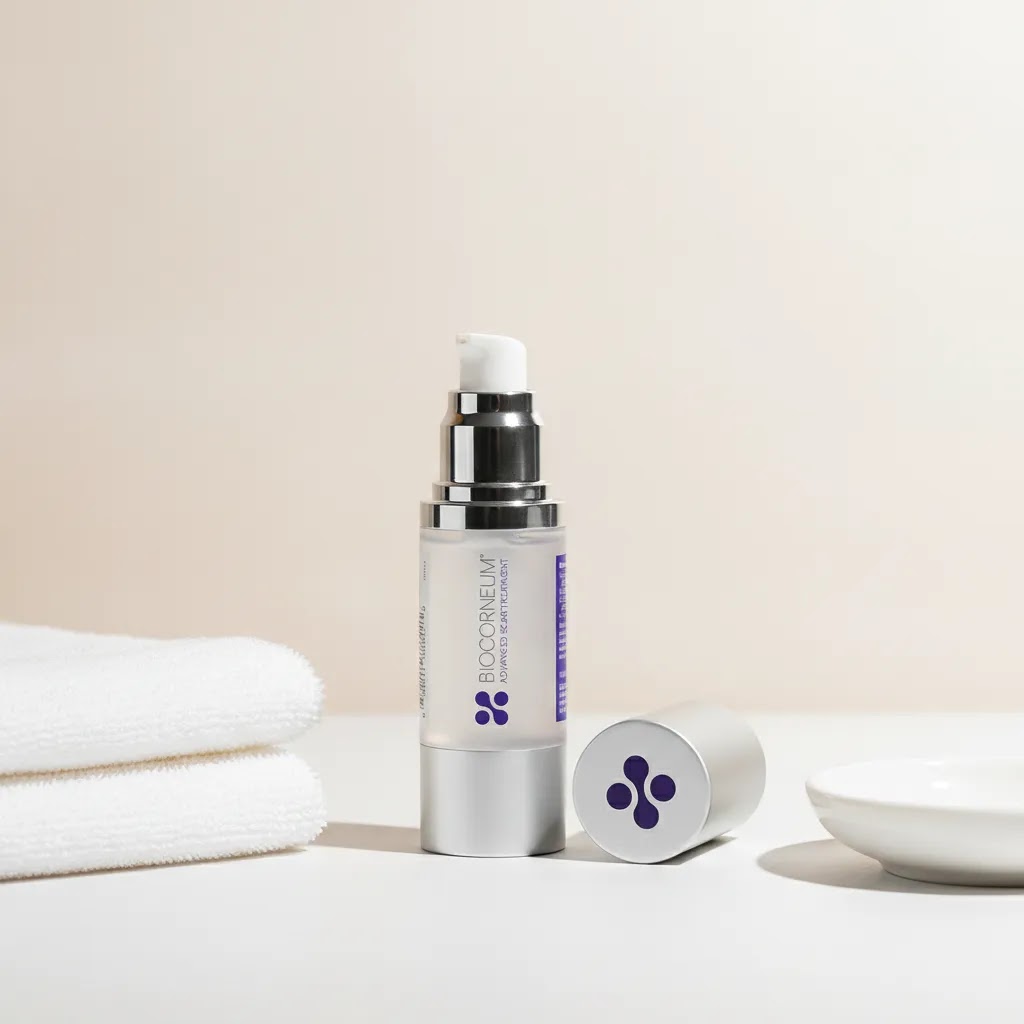
| BIOCORNEUM SiliSilk Advanced Scar Gel, 30g | $84.95 | Clear, fast-drying, SPF-free silicone scar gel for areas where sheet wear is less practical |
Epi-derm Standard Sheet
The Epi-derm Standard Sheet is priced at $58.95. It is available in Clear or Natural and is described for medium to large keloid and hypertrophic scars from surgery or trauma, as well as burn scar reduction therapy. It can wrap around a limb, cover medium scar areas on the torso, and trim for custom fitment. That makes it the central product for readers researching epi-derm silicone gel sheeting for scars.
Epi-derm Standard Sheet (5 Pack)
The Epi-derm Standard Sheet (5 Pack) is priced at $223.95. The product page notes a multi-pack value, with five for the price of four, and the same intended use profile as the single standard sheet. This option may fit readers who already know the standard size is appropriate and want more than one sheet on hand for a longer care period or broader coverage planning.
Epi-Derm Large Sheet
The Epi-Derm Large Sheet is priced at $163.95. It is described for large scars, including large burn scars from surgery or trauma, and can be wrapped around a limb or used to cover larger scar areas on the torso. This is the more relevant pick if the standard format would likely leave you piecing together coverage or trimming around a very broad area.
Epi-Derm Large Sheet (5 Pack)
The Epi-Derm Large Sheet (5 Pack) is priced at $643.95. The product page describes the same large-area use as the single large sheet, with a multi-pack discount structure. It may fit situations where large-area scar management is already established and repeated sheet use is expected.
BIOCORNEUM SiliSilk Advanced Scar Gel, 30g
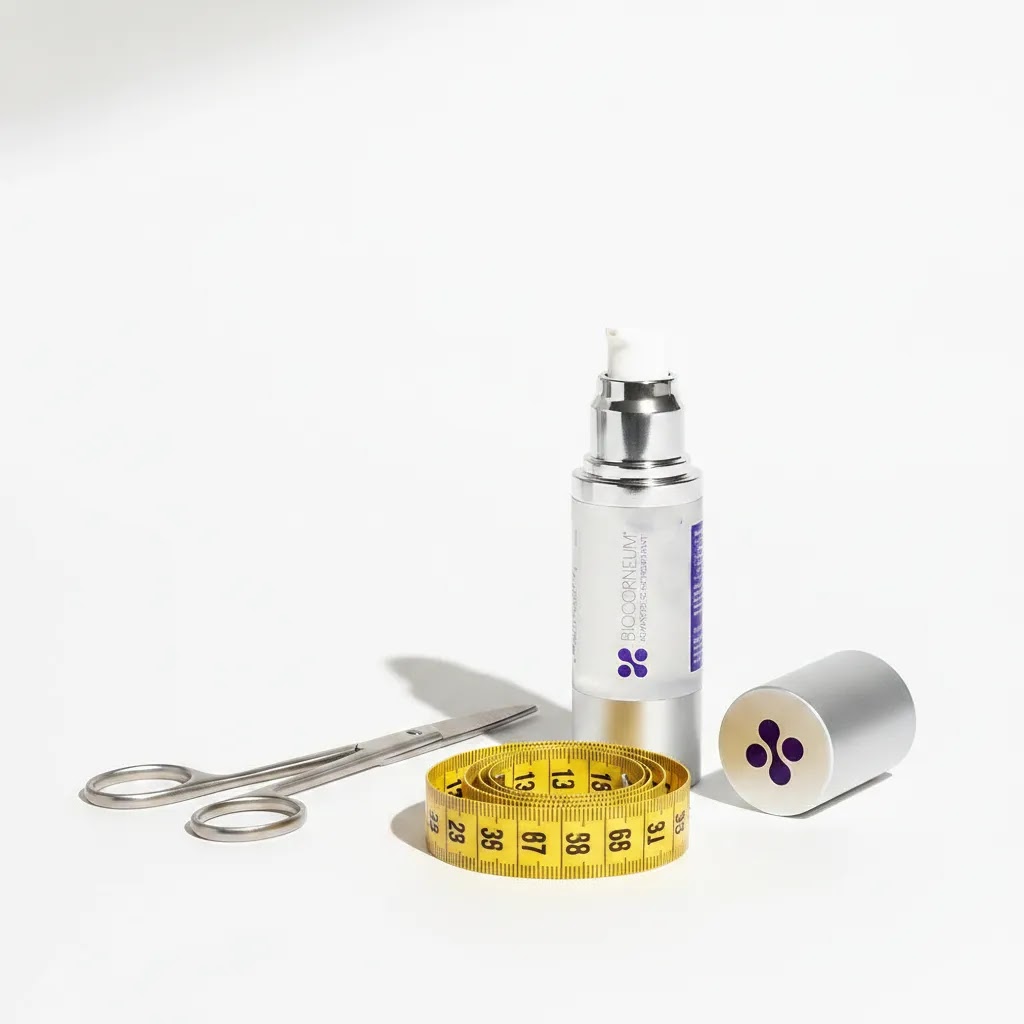
BIOCORNEUM SiliSilk Advanced Scar Gel, 30g is priced at $84.95. It is a clear, fast-drying, SPF-free silicone scar gel with an ultra-smooth, silky finish, described as working well under sunscreen, makeup, or on its own. It fits this topic because some scars are not ideal for sheet wear every hour of the day, and a gel format may be easier to integrate into a face, neck, or daily cosmetic routine.
Where sheets fit compared with other formats
A standard silicone sheet is not automatically the right answer for every scar. Location matters. So does your routine. A torso scar under stable clothing may be easier to manage with sheeting than a scar on a highly mobile facial area or one that needs to layer neatly under daytime skincare and cosmetics.
That is where format choice becomes personal. A sheet may provide broad, direct coverage over a larger area. A gel may be easier where visibility, flexibility, or layering matters. The point is not to force one format into every scenario, but to match the format to the scar and the way you actually live.
Nuance Medical approaches scar education with that kind of practicality in mind. For readers exploring the broader Scar Treatment & Skincare category, it can help to compare products by wear style as much as by ingredient category. If you are a clinician or procurement-focused reader, the B2B Medical Supply category may also be relevant.
Silicone sheets vs silicone gels vs onion-extract products
Many patients overlook one simple point: the best scar product usually comes down to fit and consistency, not marketing language. The scar’s location, stage, and your ability to use a product regularly often matter more than small differences in packaging.
Each option has a practical advantage, and each has limitations.
When silicone sheets make the most sense
- Silicone gel sheets: Often useful for broader coverage and for scars where direct contact and protection from friction are helpful. Sheets can be a strong fit for torso scars and some limb areas, especially when clothing can help keep the sheet stable. The tradeoff is that sheets can be harder in high-motion zones or in areas that need frequent washing, sweating, or cosmetic layering.
- Silicone gels: Often easier for visible areas, contoured areas, and places where you need flexibility. A gel may layer more naturally under sunscreen or makeup, and it can be simpler for smaller scars or irregular shapes. The tradeoff is that you have to apply it correctly and consistently, and some people find gels less convenient if they want a single “set and forget” application for long wear.
- Non-silicone scar products, including onion-extract or allantoin-based formulas: These are commonly marketed for scars, and some people like them for the feel of a cream or gel. The clinical reality is that silicone is often the more commonly clinician-recommended topical option for raised scars because it has a longer track record in medical scar management. Non-silicone products may still support skin comfort for some users, but expectations should stay realistic, especially for thicker or more raised scars.
How to choose based on location and routine
Scar location and lifestyle can help you decide quickly. A sheet can be easier on a flatter surface under stable clothing. A gel can be easier in friction zones, for athletic routines, or for areas where you need to reapply sunscreen and do not want a sheet edge showing.
If your scar is in a high-sweat area or you find that a sheet lifts regularly, a gel during the day and a sheet at night can be a practical compromise, if your clinician agrees. If you want to compare a gel-focused option, see Biocorneum Scar Gel: SPF 30, Results, and Comparisons.
Finally, be cautious with absolute claims. “Best silicone gel” is not a universal answer. The best option depends on scar type, scar stage, skin sensitivity, and how reliably you can use it. A qualified clinician can help you sort out which format is most practical for your scar and routine.
What to discuss with a qualified clinician
If you are unsure whether a standard sheet gives enough coverage, a qualified medical professional can help you assess the scar’s size, location, stage of healing, and whether silicone sheeting makes sense for your situation. That conversation is especially useful if the scar is extensive, crosses a joint, follows a curved incision, or sits in an area with friction from clothing or movement.
At Nuance Medical, patient education is most helpful when it is specific. A consultation can clarify whether a standard Epi-Derm format, a larger sheet, or a different silicone format may be easier to use consistently. For additional context on the product line, you may also find Epi-Derm Named Best Overall by InStyle and Biodermis Exhibiting at The Aesthetic Meeting informative as background reading.
Ultimately, the goal of that discussion is not perfection. It is a better match between the scar, the product format, and what you can realistically maintain over time.
Frequently Asked Questions
What is epi-derm silicone gel sheeting for scars used for?
Epi-Derm silicone gel sheeting is described for scar care in situations such as burn scar reduction therapy and the treatment of certain raised scars, including medium to large keloid and hypertrophic scars from surgery or trauma. In simple terms, it is used over healed skin where silicone sheeting may help support a more controlled scar environment. It is not a replacement for wound care on open skin. Timing and suitability should be guided by a qualified clinician, especially if you are recovering from a recent procedure or injury.
How do I know if the standard sheet is the right size for my scar?
The standard sheet is generally positioned for medium to large scars rather than very small, spot-sized areas. It may make sense if your scar covers a moderate section of the torso or needs partial wraparound coverage on a limb. The main question is whether the sheet can cover the area cleanly after trimming, without leaving important sections exposed or creating too much excess material. If your scar is extensive, very broad, or difficult to cover in one piece, a large sheet or a different format may be more appropriate.
Can I trim an Epi-Derm Standard Sheet?
Yes. The product information states that the standard sheet can be trimmed for custom fitment. That can be helpful because many scars are not shaped like a straight line or simple rectangle. Trimming may allow you to fit the sheet more comfortably over the torso, around part of a limb, or over a scar with uneven dimensions. The goal is usually to create practical coverage for the scar area, not to preserve the sheet in its original shape. A clinician can guide you if you are unsure how much area to cover.
What is the difference between the standard and large Epi-Derm sheets?
The standard sheet is described for medium to large scars, while the large sheet is described for large scars, including large burn scars. Both can be wrapped around a limb or used on the torso, and both can be trimmed for custom fitment. The difference is mainly about coverage. If the scar area is broad enough that a standard sheet would feel cramped or wasteful after repeated trimming decisions, the large sheet may be easier to work with. Selection should be based on actual surface area, not just a desire to buy the biggest format.
Are clear and natural versions different in how they are used?
The standard sheet is available in Clear or Natural. The product information specifically notes that Epi-Derm Clear uses a pink liner for easier visibility before application. That detail may make handling and positioning simpler for some users, especially during placement. The available information does not indicate a different core use based on color alone. If you are deciding between them, the more relevant issue is usually whether the size and shape of the sheet fit the scar properly and whether you can apply it comfortably and consistently.
Is a silicone sheet always better than a scar gel?
Not always. A sheet may be appealing for larger areas that benefit from broad physical coverage, especially on the torso or parts of a limb. A gel may be easier in areas where a sheet feels visible, awkward, or difficult to keep in place during daily life. Some people also prefer gel when they want something that layers under sunscreen or makeup. The better choice is often the one that suits the scar location and fits your routine well enough to use regularly. That can vary a great deal from person to person.
Can I use Epi-Derm sheeting on a scar that crosses a joint or moves a lot?
It may be possible, but mobility changes the practical side of wear. Areas such as the shoulder, elbow, knee, or side of the torso move and stretch more than flatter surfaces. Even if a sheet can technically cover the scar, the real question is whether it stays comfortable and positioned well enough during normal activity. Because the standard sheet can be trimmed and wrapped around part of a limb, it may work in some of these cases. A clinician can help you judge whether the movement pattern of the area makes another format worth considering.
Is the 5 pack worth considering instead of a single sheet?
The 5 pack is mostly a planning decision. If you already know the standard size fits your scar and you expect ongoing use, a multi-pack may be more convenient and may offer better value per the listed product pricing. If you are still unsure about sizing, shape, or how the sheet will fit your routine, some people prefer starting with a single sheet first. That approach can make sense if you want to confirm that the format works well on your body before committing to a larger quantity.
Can epi-derm silicone gel sheeting for scars be used right after surgery?
Silicone sheeting is generally discussed after the skin surface is fully closed, not over open or actively healing wounds. The exact timing depends on your procedure, how the incision is healing, and the advice of your treating clinician. Starting too early may interfere with wound management, while starting at the right stage may make the product easier and safer to use. If you are recovering from surgery, the best next step is to ask the clinician overseeing your care when topical silicone products may be appropriate for your specific scar.
Do silicone gel sheets work on scars?
Silicone gel sheets may help improve the look and feel of certain scars, particularly raised scars such as hypertrophic scars, and they are often used in keloid-prone situations under clinician guidance. The benefit is usually framed as gradual improvement in thickness, texture, color, and symptoms like itch or discomfort, not complete removal. Results vary based on scar type, how long it has been present, where it is located, and how consistently the sheet can be worn.
Can the epiderm remove scars?
No. The epidermis is the outer layer of the skin, and it does not “remove” scars on its own. A scar reflects deeper changes in the skin’s structure after an injury or incision. Topical products and sheeting can support the surface environment and may improve how a scar matures, but they cannot erase the fact that the skin has healed. A qualified clinician can help you understand what kind of improvement is realistic for your specific scar.
Which silicone gel is best for scars?
The “best” silicone gel is usually the one you can use correctly and consistently on your scar location. Clinically, silicone gels are often chosen when a sheet is impractical, such as on visible areas, contoured areas, or places where you need to layer sunscreen or makeup. The right choice also depends on whether the scar is raised, how recently it formed, and how sensitive your skin is. If you are unsure, a clinician can help you match the format to your scar and your routine.
How long should you put silicone gel on a scar?
Many people use silicone products daily for a period such as 8 to 12 weeks before reassessing how the scar is responding, and some scars may benefit from longer use depending on how active or raised they remain. With gels, the key is consistent daily application according to the product instructions and your clinician’s guidance. If you develop irritation or the skin becomes broken, pause use and check in with a qualified clinician.
Where can I learn more before choosing a scar product format?
A good starting point is to look at both the product format and the scar’s real-world demands. Broader educational pages on scar sheets, curved-strip formats, and silicone gels can help you compare options more clearly. Nuance Medical provides educational resources for readers who want to understand scar care without pressure. If you prefer personalized guidance, booking a consultation may help you sort through whether a standard sheet, a larger sheet, or a gel format fits your scar, your routine, and your goals more comfortably.
Key Takeaways
- Epi-Derm Standard Sheets are positioned for medium to large scars, including certain raised scars from surgery, trauma, and burn care.
- Standard sheeting selection is mainly about usable coverage, not just buying the biggest format available.
- The standard sheet can be trimmed for custom fitment, which may help with torso scars or partial wraparound use on a limb.
- Large sheets may be more appropriate when the scar area is broad enough that standard coverage would feel limiting.
- Silicone sheets and silicone gels each have a place, and the better choice often depends on scar location, daily wear, and what you can maintain consistently.
Conclusion
Choosing epi-derm silicone gel sheeting for scars is often less about finding a perfect product and more about matching the sheet to the scar you actually have. The standard format may fit medium-to-large scars that need flexible coverage on the torso or part of a limb. A larger sheet may make more sense for broader areas, while a gel may be easier where sheet wear feels awkward or visible.
If you are still weighing those options, that is normal. Scar care decisions often become clearer once you look at size, shape, mobility, and healing stage together. Nuance Medical aims to make that process easier through practical, medically grounded education. If you want help sorting out your next step, you can explore scar care resources or book a consultation to discuss which format may suit your needs best.