
How benzocaine blocks nerve signals
Benzocaine belongs to the amino ester class of local anesthetics. Chemically, it is the ethyl ester of p-aminobenzoic acid, often shortened to PABA. This classification matters because ester and amide anesthetics are processed differently in the body and have different allergy considerations.
Nerves communicate by moving sodium ions through specialized channels in the nerve membrane. Benzocaine’s ionized form binds within these voltage-gated sodium channels, reducing sodium movement and interrupting the electrical signal that conveys discomfort to the brain. In plain language, it temporarily quiets the nerve signal in the area where the product is applied.
Key terms in plain language
- Local anesthetic: A medication that temporarily reduces sensation in a specific area without causing unconsciousness.
- Voltage-gated sodium channel: A protein pathway in nerve cells that helps carry pain signals.
- PABA: A breakdown-related compound associated with ester anesthetics and some allergy concerns.
- Plasma pseudocholinesterase: An enzyme in the blood that helps break down ester anesthetics.
Unlike amide anesthetics, which are primarily metabolized in the liver, ester anesthetics are broken down by plasma esterases. Plasma pseudocholinesterase hydrolyzes benzocaine and related ester anesthetics to PABA. Benzocaine’s poor water solubility also limits how readily it enters the circulation, a property that helps explain its common use as a surface anesthetic rather than an injectable medication. These pharmacology details are described in reviews of local anesthetic mechanisms and metabolism.
Understanding labeled concentrations
In oral topical products, the concentration tells you how much benzocaine is present in the formulation. Under the FDA’s OTC oral health care monograph, non-solid benzocaine products such as gels, liquids, and sprays may contain a 5% to 20% solution or suspension. Solid forms, such as lozenges, may contain 2 to 15 mg of benzocaine.
That is why you may encounter labels that say benzocaine 5%, 10%, or 20%. A 20% benzocaine product contains 20 g of benzocaine per 100 g of product, or 200 mg per gram. This number does not, by itself, tell you how much to apply or how often to use it. Directions, delivery format, and age restrictions on the individual product label remain essential.
The FDA’s OTC monograph M022 identifies benzocaine as a permitted active ingredient for oral anesthetic and analgesic products. Before federal OTC monograph reform, oral health care products were addressed through a pending monograph process associated with 21 CFR part 356. The FDA’s rulemaking history for OTC oral health care products provides context for that change.
A higher concentration should not be treated as a reason to use more product. Safe use depends on following the exact labeled directions and choosing a product that matches the reason for use.
Choosing an oral benzocaine format
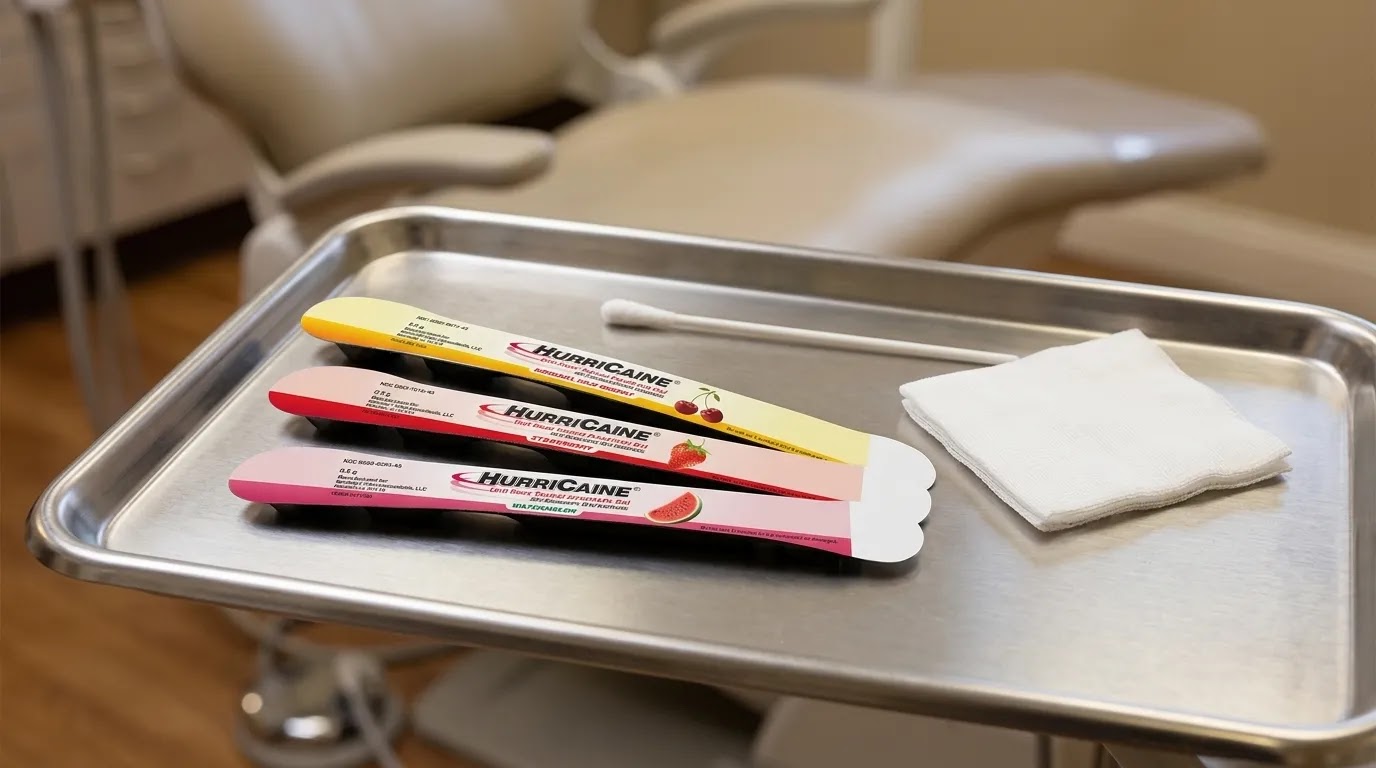
Sprays, gels, liquids, and lozenges can all contain benzocaine, but the format affects where the medication can be applied and how much product may reach the intended area. A gel or liquid may allow more targeted placement on a small area of mouth tissue, while a spray may distribute medication over a broader surface. A lozenge dissolves in the mouth and is used according to its own labeled directions rather than applied directly to one spot.
These products are not interchangeable simply because they contain the same active ingredient. The amount delivered with a spray, the amount placed with a gel or liquid, and the dose in a lozenge can differ. Each Drug Facts label should guide the appropriate age, amount, frequency, and duration of use for that specific product.
A different format or higher concentration does not make repeated application appropriate. Use only the product and amount directed on the label. If you are uncertain which format is suitable for a mouth or throat concern, a pharmacist, dentist, or physician can help you review the options.
Where topical benzocaine fits
FDA monograph labeling permits benzocaine oral products for temporary relief of occasional minor irritation and pain associated with sore mouth and sore throat. The monograph also includes temporary relief of pain from canker sores and minor dental procedures. These are short-term symptom-relief uses, not treatment for the underlying cause of persistent oral pain.
For 20% topical benzocaine in dental literature, onset is often reported at about 30 seconds, with surface anesthesia lasting roughly 5 to 15 minutes once achieved. Those figures describe benzocaine generally, not a promise that every formulation or person will have the same experience. Product base, amount applied, application site, and individual response can all affect how it feels in practice.
- Temporary relief of occasional minor mouth irritation or pain
- Temporary relief associated with sore mouth or sore throat
- Temporary relief of pain from canker sores
- Temporary relief of pain from minor dental procedures
In dentistry, topical benzocaine may reduce discomfort before an injection in the alveolar mucosa, the soft tissue around the teeth. It only affects surface sensation, so it does not replace injected local anesthesia when a procedure requires deeper numbness. A review of topical anesthesia in dental care describes these clinical uses, timing estimates, and formulation considerations.
Persistent, worsening, or unexplained mouth pain deserves assessment from a dentist or physician rather than repeated self-treatment. A topical anesthetic may provide brief comfort, but it cannot determine why symptoms began.
When short-term numbing is not enough
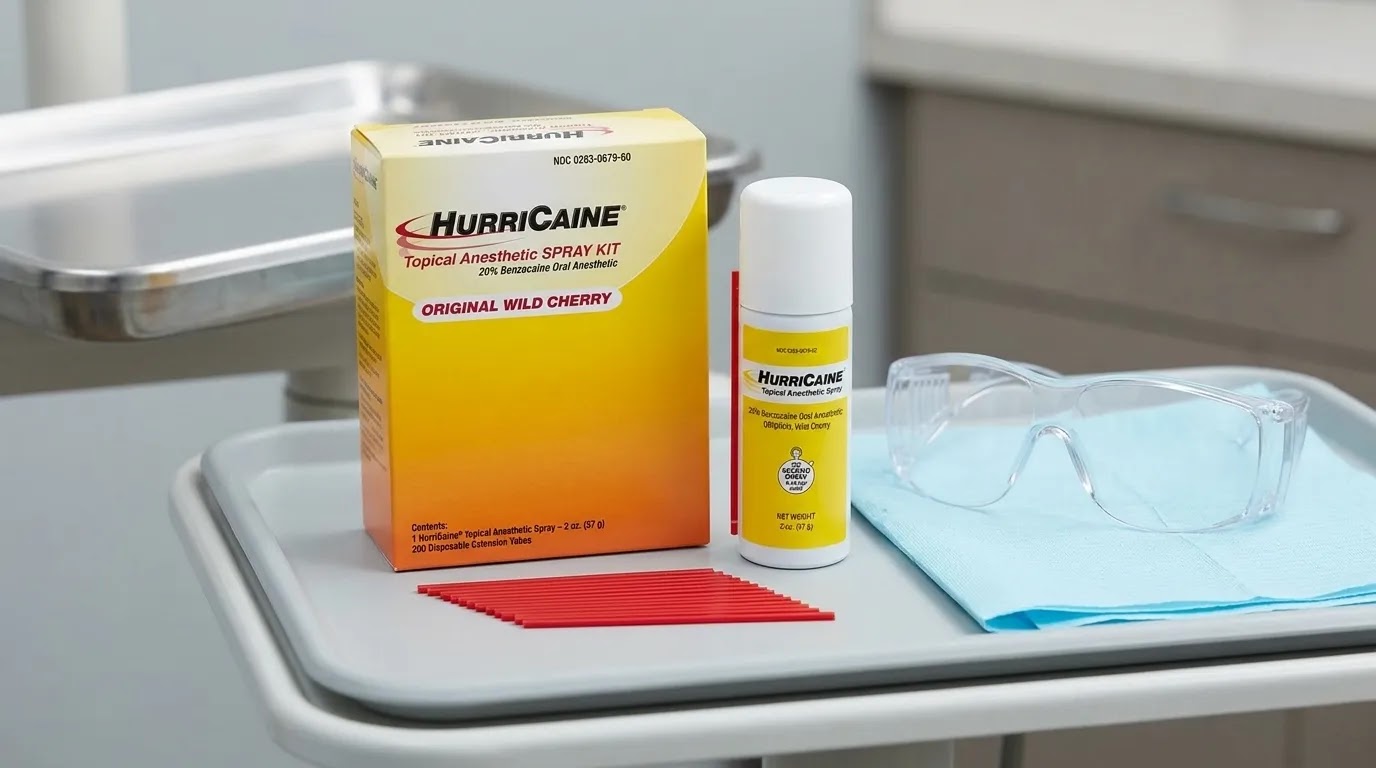
Benzocaine temporarily reduces surface sensation. It does not heal canker sores, treat an infection, or address the cause of persistent dental, mouth, or throat pain. Relief after application does not establish why the symptom is present.
Short-term use according to the label may be appropriate for occasional minor discomfort. Repeated use is not a substitute for assessment if symptoms persist, worsen, return frequently, or occur with swelling, fever, or trouble swallowing. Dental pain may require evaluation of a tooth or surrounding tissue, while ongoing mouth or throat symptoms can have several causes that topical medication cannot identify.
A dentist, physician, or pharmacist can help determine whether continued use of a product is appropriate. Seek urgent medical care for trouble breathing or swallowing, rapidly increasing swelling, or symptoms of methemoglobinemia.
The safety warning to know
Benzocaine can cause methemoglobinemia, a rare but serious condition in which the blood carries substantially less oxygen. Benzocaine is a recognized cause of this complication, and a review of local-anesthetic-associated cases found that it accounted for approximately two-thirds of reported cases. The risk is why product warnings and dose directions should be read carefully, even if you have used a benzocaine product in the past.
The FDA states that oral benzocaine products should not be used for teething or in children younger than 2 years. In 2018, the agency urged manufacturers to stop marketing OTC oral benzocaine products for teething. The FDA also explains that methemoglobinemia can reduce the oxygen carried through the bloodstream and requires prompt medical attention.
Symptoms that warrant immediate medical care include pale, gray, or blue skin; shortness of breath; headache; rapid heart rate; dizziness or lightheadedness; and unusual fatigue. People with a PABA allergy should not use benzocaine. For a closer look at practical precautions, see our guide to benzocaine safety and side effects.
The FDA’s benzocaine safety communication explains the warning for children and teething. A qualified clinician or pharmacist can help you review whether a particular product is appropriate in the context of your health history, allergies, and other medications.
Additional safety considerations before use
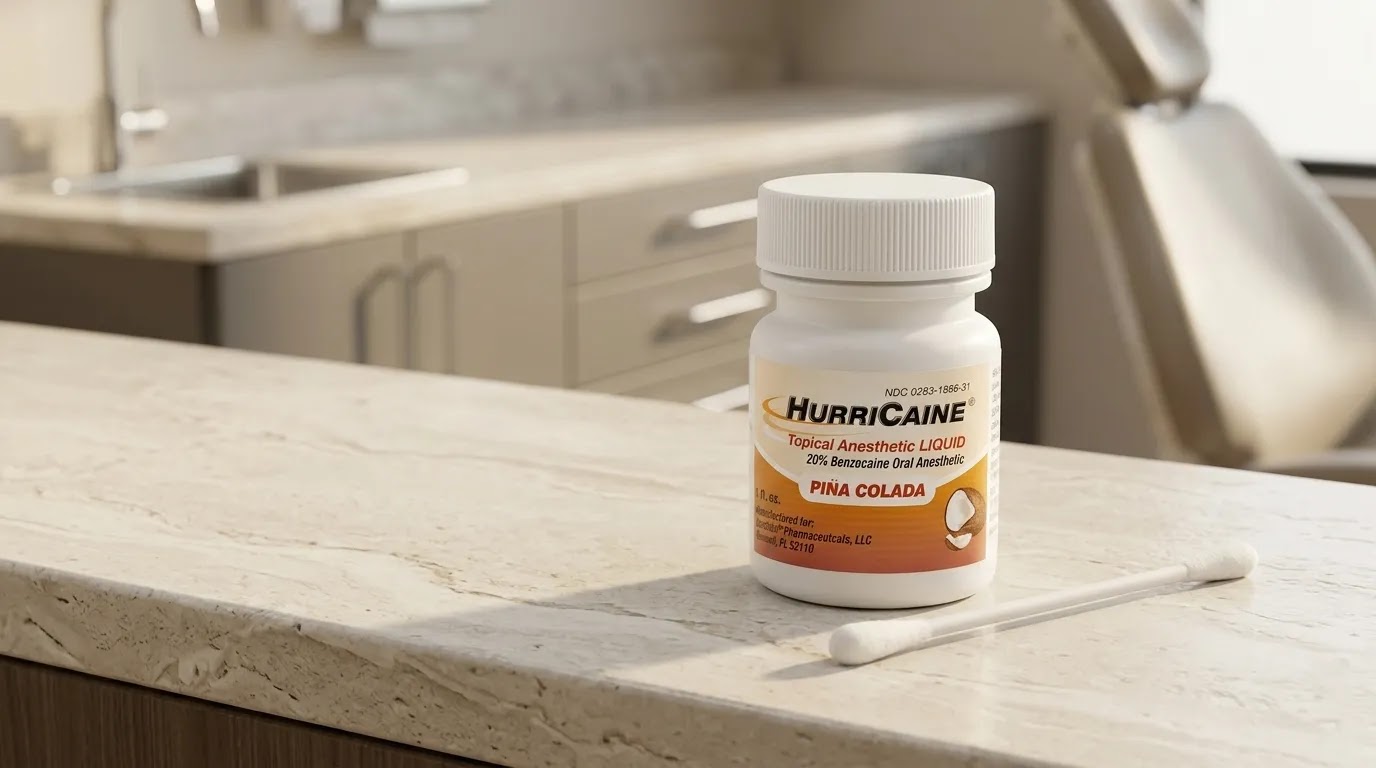
People with breathing concerns, heart-related concerns, a history of methemoglobinemia, or questions about other medications should speak with a clinician or pharmacist before using an oral topical anesthetic. These factors can affect how safely a product should be used and whether another approach is more appropriate.
Methemoglobinemia can occur even after prior uneventful benzocaine use. Using more than directed, applying it more often than directed, or using more than one benzocaine-containing product can increase avoidable exposure. A lack of problems with a previous application does not make additional or repeated use risk-free.
Do not combine multiple products containing benzocaine unless a qualified clinician or pharmacist has reviewed the plan. This includes checking active ingredients in oral pain-relief products, throat products, and other topical anesthetics. As with any medication, the individual label remains the primary source for age limits, warnings, and directions.
HurriCaine ONE clinical context
Nuance Medical offers HurriCaine ONE Benzocaine, a single-use, non-aerosol oral topical anesthetic containing benzocaine 20%, or 200 mg per g. Its Drug Facts label identifies the use as temporary relief of occasional minor irritation and pain associated with sore mouth and sore throat.
The label states that adults and children age 2 and older may use the product up to four times daily, or as directed by a dentist or doctor. It also warns that methemoglobinemia is serious and must be treated promptly, including in people who have previously used benzocaine without a problem. The labeled age restriction and directions should be followed exactly.
A unit-dose format can support controlled application and help reduce medication waste in clinical settings, but it does not remove the need for appropriate screening and label-based use. If you are comparing active ingredients for a procedure or oral pain concern, our explanation of benzocaine vs. lidocaine can help clarify the distinction between these two local anesthetic classes.
Explore HurriCaine 20% benzocaine product instructions with a treating clinician or pharmacist if you have questions about the appropriate product format, use instructions, allergy history, or symptoms that do not improve.
Frequently Asked Questions
What is benzocaine used for?
Benzocaine is a local anesthetic used for temporary surface numbing. In oral OTC products, permitted uses include temporary relief of occasional minor irritation and pain related to sore mouth, sore throat, canker sores, and minor dental procedures. It is intended to relieve symptoms for a limited period, not to diagnose or treat the cause of ongoing pain. If a mouth symptom persists, worsens, or returns often, a dentist or physician can assess the cause and recommend appropriate care.
How does benzocaine work?
Benzocaine works by interfering with sodium channels in nerves. These channels help nerves send electrical signals, including signals interpreted as discomfort. By reducing sodium movement through the channel, benzocaine can temporarily interrupt the signal near the application site. It acts locally on surface tissue and does not provide the same depth of anesthesia as an injected anesthetic. The effect is temporary, and the duration can vary with the formulation, application area, and amount used.
What does benzocaine 20% mean?
Benzocaine 20% means that the formulation contains 20 g of benzocaine per 100 g of product, equivalent to 200 mg per gram. Under FDA OTC monograph M022, non-solid oral benzocaine products may contain 5% to 20% benzocaine. A 20% label does not mean a product should be applied more generously or more frequently. You should use the smallest appropriate amount and follow the product’s directions, age limits, warnings, and frequency limits exactly.
How fast does topical benzocaine work?
Dental literature commonly describes an onset of about 30 seconds for 20% benzocaine after application to oral tissue. This is a general literature estimate, not a product-specific guarantee. The product format, the tissue being treated, the amount applied, and individual variation can change the timing. If a product’s label gives different instructions or expectations, the product label should guide use. Avoid reapplying early simply because the sensation is not identical to what you expected.
How long does benzocaine last?
Once topical anesthesia is achieved, dental literature describes benzocaine’s surface-numbing effect as lasting roughly 5 to 15 minutes. This is only a typical range. It may feel shorter or longer depending on the formulation, location of use, saliva exposure, and the individual’s response. Benzocaine should not be used repeatedly beyond the label’s limits to chase a longer effect. Continued pain may be a sign that the underlying concern needs professional evaluation rather than additional topical medication.
Is benzocaine safe for children?
FDA safety communications state that oral benzocaine products should not be used for teething or in children younger than 2 years because of the risk of methemoglobinemia. For products labeled for children age 2 and older, caregivers should still follow the individual label carefully and supervise use as directed. Age alone does not settle every safety question. A pediatrician, dentist, or pharmacist can advise on an appropriate approach for a child who has mouth discomfort or throat symptoms.
What is methemoglobinemia?
Methemoglobinemia is a condition in which hemoglobin cannot carry oxygen as effectively as it should. It can occur after benzocaine exposure, sometimes even in people who used benzocaine previously without a problem. Warning signs can include pale, gray, or blue skin, shortness of breath, headache, rapid heartbeat, dizziness, or unusual tiredness. These symptoms require immediate medical attention. This risk is uncommon, but it is serious enough that benzocaine labels include specific warnings and restrictions.
Can someone with a PABA allergy use benzocaine?
No. Benzocaine is chemically related to PABA and is contraindicated for people with a PABA allergy. If you have had an allergic reaction to benzocaine, PABA, or another local anesthetic, do not assume a different topical product is suitable without professional guidance. Bring the product name or ingredient list to a pharmacist, dentist, or clinician. They can help distinguish an allergy concern from another type of reaction and identify whether another approach may be more appropriate.
Does benzocaine heal or just numb?
Benzocaine temporarily numbs surface tissue. It does not heal a canker sore, treat an infection, or correct the cause of tooth, mouth, or throat pain. It may offer short-term symptom relief while minor irritation settles, but symptoms that persist, worsen, or recur frequently should be assessed by a dentist or physician.
Is benzocaine harmful to the body?
Used according to its Drug Facts label, benzocaine may provide temporary local numbing for its permitted uses. It can also cause side effects and, rarely, serious methemoglobinemia. The risk may increase with excessive or repeated use, use of multiple benzocaine-containing products, or certain health histories. Do not use more than directed, and seek immediate medical care for pale, gray, or blue skin, shortness of breath, rapid heart rate, dizziness, or unusual fatigue.
Is benzocaine safe in the mouth?
Oral benzocaine products may be used for their labeled short-term purposes when the directions, warnings, and age limits are followed exactly. They are not appropriate for teething or for children younger than 2 years. Do not use a product more frequently than directed or combine benzocaine-containing products without guidance from a clinician or pharmacist. Persistent pain, swelling, fever, or trouble swallowing needs professional assessment rather than additional topical medication.
Sources
- Benzocaine (StatPearls)
- Recent advances in topical anesthesia
- Essentials of Local Anesthetic Pharmacology — Anesthesia Progress, 2006
- Over-the-Counter Monograph M022: Oral Healthcare Drug Products for Over-the-Counter Human Use (Final Administrative Order OTC000028)
- FDA Drug Safety Communication: Risk of serious and potentially fatal blood disorder prompts FDA action on oral over-the-counter benzocaine products used for teething and mouth pain and prescription lo