
Why people choose arnica gel bruise treatment after bruising
Arnica is a botanical ingredient that many brands include in products for bruise support. In aesthetic settings, people usually ask about it after dermal fillers, neurotoxin injections, liposuction, or other procedures that can disturb small blood vessels. The goal is not to erase a bruise overnight. Instead, people hope to help the area look calmer while the body clears trapped blood and fluid over time.
Bruising happens when tiny blood vessels break and blood leaks into nearby tissue. That color change is part of normal healing. Over several days, the body gradually reabsorbs the blood. As a result, bruises often shift from purple or blue to green, then yellow or brown before they fade.
Arnica gel bruise treatment remains popular because it is easy to apply and familiar to many patients. Some formulas pair arnica with other ingredients that support circulation, skin comfort, or antioxidant defense. If you are exploring a broader biocorneum guide, it helps to separate early bruise support from later scar management so you can match the product to the healing stage.
Home bruise-care basics that pair with arnica gel bruise treatment
Even when someone is specifically looking for arnica gel bruise treatment, most people also use a few simple steps at home. These supportive measures can matter most in the first day or two, when a bruise is still developing.
For many everyday bruises, a cold compress is the first step. Cooling the area may cause temporary vasoconstriction, which means the small blood vessels narrow for a short time. In practice, that may limit how much blood and fluid spreads into the tissue after an impact or needle stick. A typical approach is 15 to 20 minutes at a time, followed by a break. Then repeat as needed. Use a thin cloth as a barrier, and never place ice directly on skin.
Other basics people often use for simple bruises include:
- Elevation when possible, especially if the bruise is on an arm or leg, since it may help reduce fluid pooling.
- Gentle compression in appropriate areas, as long as it is not painful and does not interfere with post-procedure instructions.
- After the first 24 to 48 hours, some people switch to a warm compress for comfort. Warmth may support circulation as the bruise moves through its normal color changes. If you have had a cosmetic procedure, ask your clinician before using heat, since timing may differ depending on the treated area.
Just as important, know what not to do. Aggressive massage early on can make bruising look worse. Heat used too soon may increase redness or swelling. After aesthetic treatments, it is also wise to avoid stacking multiple active products on already sensitized skin. In many cases, a simple routine is the safer choice unless your clinician advises otherwise.
Arnica gel bruise treatment vs. scar care: why bruises and scars differ
This distinction matters more than many people realize. A bruise forms when blood collects under the skin after small vessels break. A scar forms when the skin repairs deeper structural disruption. You may have one without much of the other, or you may have both at different points in the same recovery timeline.
After injectables, you might bruise without developing any meaningful scar at all. After surgery, you may first deal with bruising and swelling. Later, your attention may shift to incision healing and scar appearance. That is why a bruise-focused topical and a scar-focused silicone product are not interchangeable, even when both fit into post-procedure care.
People sometimes assume that if a product supports healing, it should help every visible mark. In reality, the target matters. Clinicians usually discuss arnica in the context of bruising and swelling. They usually introduce silicone scar products once the surface fully closes and the goal shifts to the scar itself. If you want more background on scar-specific pathways, biocorneum scar treatment covers that topic more directly. You can also compare longer scar timelines in How Long does It Take for Scars to Fade.
Where arnica gel bruise treatment may fit after aesthetic treatment
In real life, people rarely want a complicated recovery plan. They want to know what belongs in the first few days, what should wait, and what could irritate treated skin if used too soon. Arnica-based products may fit best in the early visible-bruising phase, especially when the skin is intact and your treating clinician has cleared topical use.
Common scenarios include:
- Bruising after filler or neurotoxin injections
- Discoloration after liposuction or body contouring procedures
- Post-sclerotherapy bruising
- Everyday bumps where the skin is not open
That said, timing and skin condition matter. If the area is freshly treated, irritated, or not fully closed, your provider may want you to wait before using certain topicals. A qualified clinic will usually give you a recovery plan that separates immediate aftercare, bruise support, and later scar care.
At Nuance Medical, patient education works best when recovery is framed in stages rather than as one product doing every job. That staged approach also helps you avoid using a scar product too early or expecting a bruise cream to manage later scar texture.
How to use arnica gel bruise treatment for bruises
This is one of the most common missing pieces when people talk about arnica gel bruise treatment. Many articles stay general, but patients usually want practical guidance. They want to know how much to use, how often to use it, and how to apply it without affecting post-procedure results.
Application and frequency for arnica gel bruise treatment
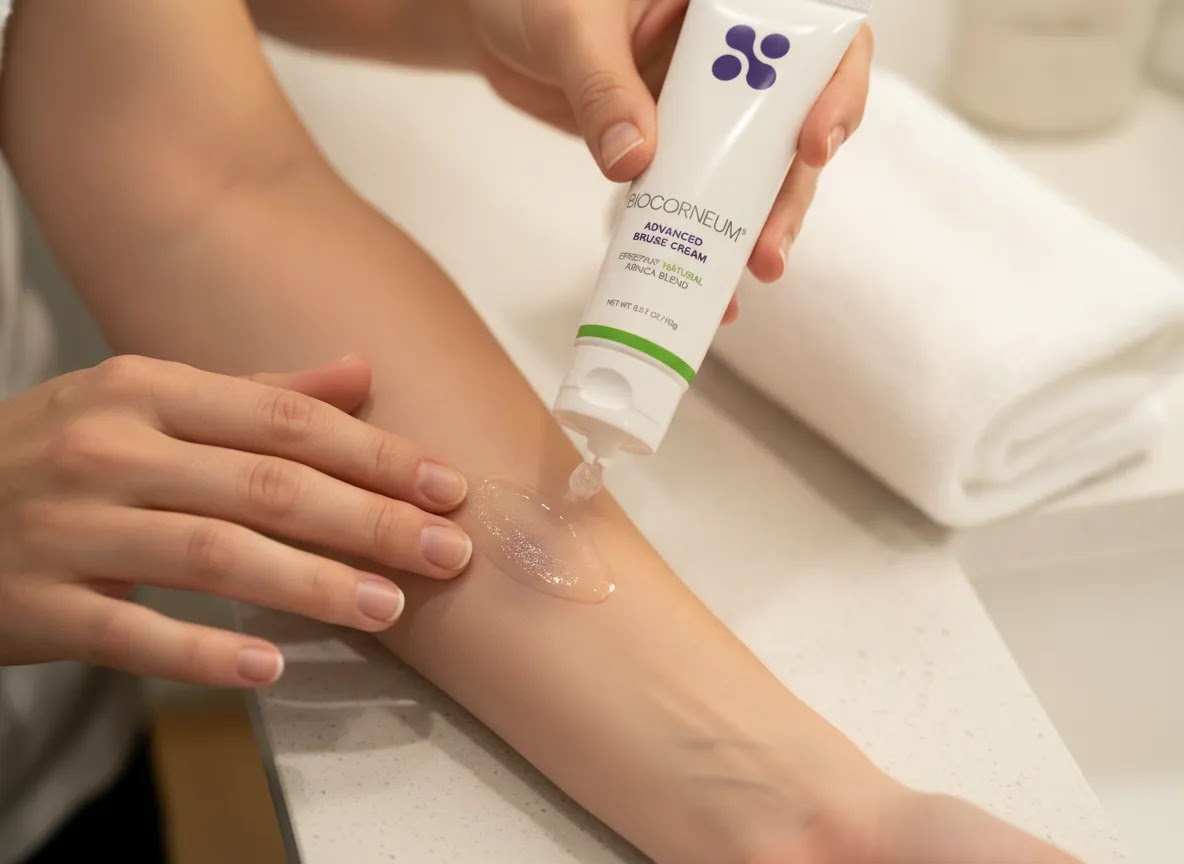
For minor, everyday bruises on intact skin, people typically apply arnica gels and creams in a thin layer over the discolored area. Many over-the-counter style products are used up to 2 to 3 times daily. However, the label instructions for the specific product should come first. More product does not always mean better results. In addition, heavy application can raise the chance of irritation, especially on sensitive skin.
Timing after cosmetic procedures
After injectables, technique and timing matter as much as frequency. Immediately after treatments like dermal fillers, many clinicians advise patients to avoid pressure, rubbing, or massaging the area unless they gave specific instructions to do so. In practice, that means you should apply any topical bruise product very gently. Use a light smoothing motion rather than a firm massage. If your aftercare instructions say “do not touch,” “do not massage,” or “avoid pressure,” follow that guidance and ask your provider when topical application is appropriate.
Timing also depends on what else is happening in the tissue. A bruise may look more prominent for the first day or two before it starts to fade. If the bruise improves gradually, a simple and consistent routine is usually more useful than switching products every day. If it does not improve as expected, or if symptoms feel out of proportion, check in with your clinician instead of continuing to self-treat.
Basic safety guidance is simple but important:
- Use on intact skin only, unless a clinician has told you otherwise.
- Avoid the eyes, eyelids, and mucous membranes, including the inside of the mouth and nose.
- Do not apply to broken, irritated, or rash-like skin.
- Stop using the product if you notice stinging, worsening redness, itching, or other signs of irritation.
- If you are recovering from a cosmetic procedure, your clinician’s instructions should always override general product guidance.
Featured bruise care products for arnica gel bruise treatment routines
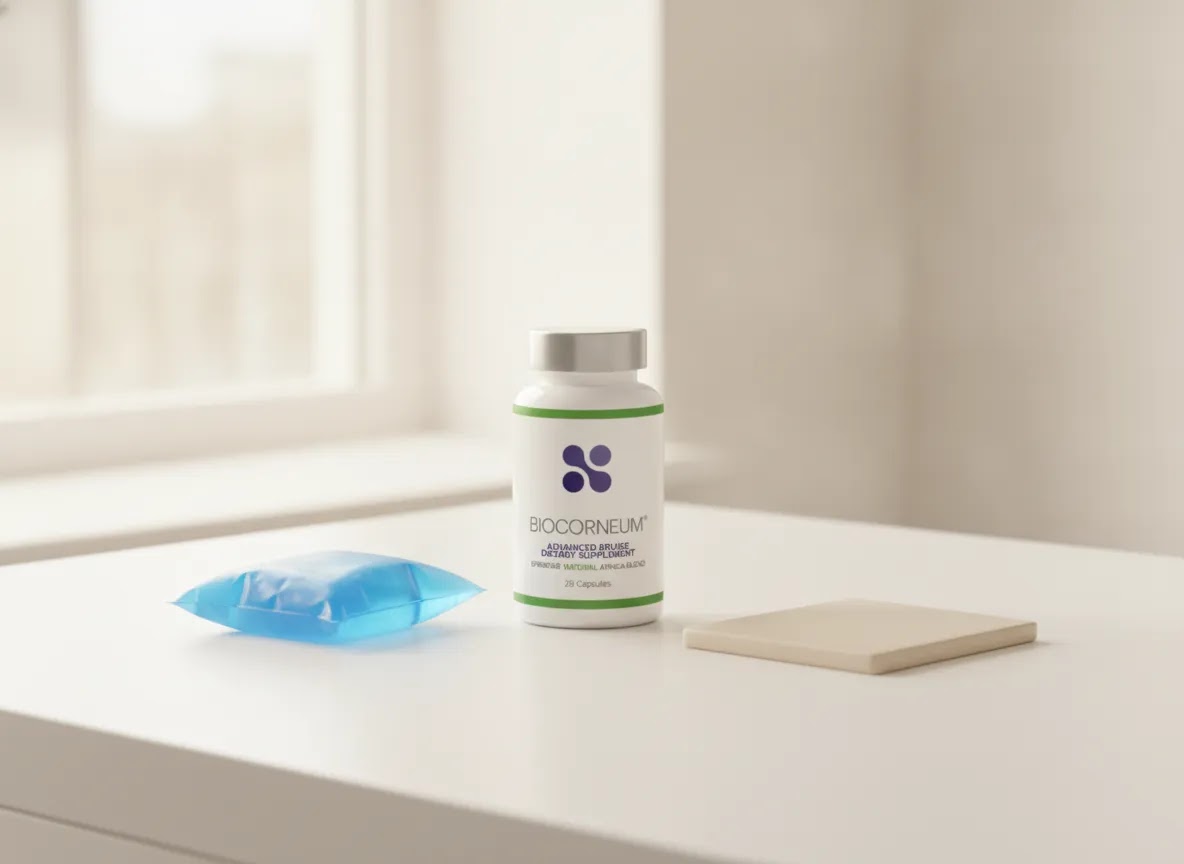
For readers comparing bruise-support options, two BIOCORNEUM products are especially relevant because they were developed around post-procedure bruising and recovery support. Nuance Medical also features education around this category, including Introducing BIOCORNEUM’s New Dual-Action Bruise Care System, which helps explain how topical and oral support may be paired in a routine.
| Product | Type | Price | How the article describes it |
|---|---|---|---|
| BIOCORNEUM Advanced Bruise Dietary Supplement | Dietary supplement | $28 | Positioned for bruise support from the inside out with a daily regimen of two capsules. |
| BIOCORNEUM Advanced Bruise Cream | Cream | $44.95 | Formulated with Arnica and Vitamin K for visible bruise care and post-procedure recovery support. |
BIOCORNEUM Advanced Bruise Dietary Supplement
Price: $28
 This dietary supplement is positioned for bruise support from the inside out, with a daily regimen of two capsules. The product page states that it is designed to help reduce the appearance of bruising, support circulation, and aid the body’s natural skin recovery with ingredients including Vitamin C, Vitamins K1 and K2, Zinc, Folic Acid, Vitamin B12, Arnica, and Bromelain.
Its relevance to this topic is straightforward. Some people prefer not to rely on a topical alone, especially after cosmetic procedures where bruising may be more widespread. The product page also notes that it may be paired with the bruise cream as part of a broader recovery protocol.
BIOCORNEUM Advanced Bruise Cream
Price: $44.95
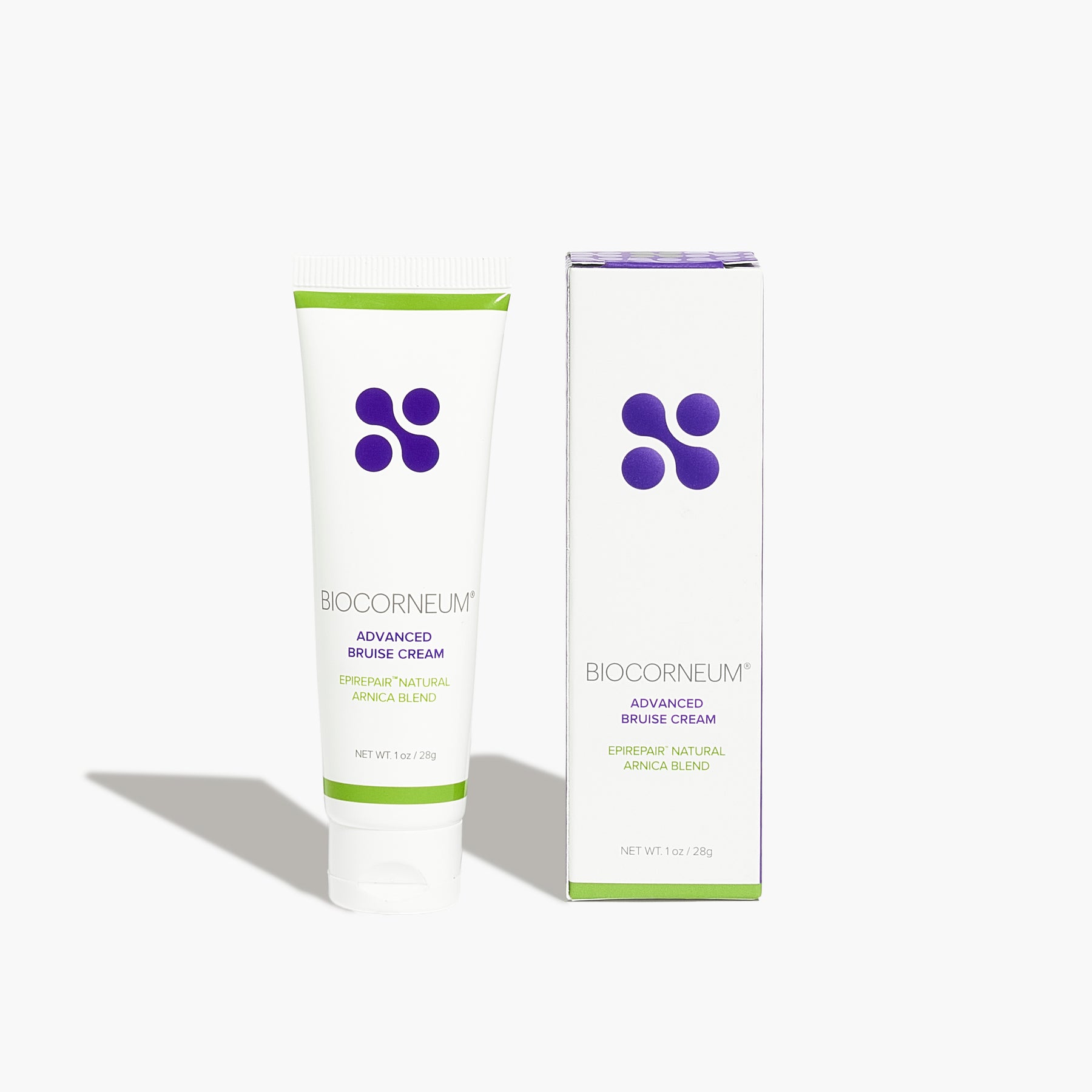
This cream is formulated with Arnica and Vitamin K, two ingredients commonly recognized in bruise care. The product page describes it as intended to help support and accelerate the skin’s natural recovery process and to minimize the appearance of bruising after cosmetic procedures such as neurotoxin injections, liposuction, sclerotherapy, or dermal fillers, as well as everyday bruises.
Its fit for this article is especially strong because it sits right at the intersection of visible bruise care and post-procedure recovery. The listed ingredients also include Emu Oil, Vitamin E, and Green Tea Extract, which the product page associates with moisturization, antioxidant support, and healthy blood vessel walls.
How arnica gel bruise treatment can complement scar care
The phrase “complement scar care” is where this topic becomes most useful. Arnica gel bruise treatment does not replace silicone scar management. Instead, it may support an earlier phase of recovery while you wait for the point when scar-directed care becomes appropriate.
A common timeline looks something like this:
- Early phase: focus on your clinician’s immediate aftercare instructions, swelling management, and bruise support if approved.
- Transition phase: once the skin barrier is intact and your provider confirms it is safe, scar-directed products may be introduced if scarring is a concern.
- Later phase: consistency with scar care, sun protection, and routine follow-up often matters more than adding many products at once.
This is especially relevant after surgery. You may notice bruising first because it is more dramatic in the short term. Weeks later, the question often changes from “How do I fade this discoloration?” to “How do I support a smoother, less noticeable scar?” Those are related concerns, but they are not identical.
If you are comparing expectations around appearance changes, biocorneum scar gel before and after can help you understand the scar side of that discussion more clearly. For a broader product view, the Scar Treatment & Skincare category is the most relevant place to browse related options. You may also find Best Scar Cream After Surgery helpful once bruise care is no longer the main concern.
What to ask before using any post-procedure product
Even over-the-counter style recovery products need context. A product can make sense in one setting and be poorly timed in another. If you have had an aesthetic procedure, ask your clinician a few specific questions before you start applying or taking anything new.
- Is the skin fully intact, or should I wait before using a topical?
- Am I treating bruising, scar risk, or both at different stages?
- Should I avoid this because of irritation, sensitivity, or another product in my routine?
- Is there any reason an oral supplement would not fit my medical history or medications?
Questions like these matter because recovery products do not exist in isolation. You may also use cold compresses, sunscreen, moisturizers, silicone products, or prescription aftercare. Therefore, a thoughtful plan is usually simpler and safer than layering several products without guidance.
Nuance Medical’s educational approach fits well here. The goal is not to push every product category at once. Instead, it aims to help you understand which tool matches each phase of recovery. Readers who want a sense of the company’s product background can also see Nuance Medical Acquires BIOCORNEUM.
Some readers also search for terms like topical numbing gel, topical lidocaine gel, topical anesthetic dental gel, hurricaine topical anesthetic gel, cetacaine topical anesthetic gel, or topical oral anesthetic gel while researching recovery. Those products serve a different purpose. They are generally discussed for temporary numbing or pain relief, not for reducing the appearance of bruises. If that is your focus, the Topical Pain Relief category is the more relevant resource.
When to avoid arnica gel bruise treatment and when bruising needs medical guidance
Not every bruise is a simple wait-it-out situation, and not every topical belongs on every skin surface. If you are unsure whether arnica gel bruise treatment is appropriate, especially after a procedure, it is reasonable to pause and ask rather than guess.
When to avoid topical arnica
In general, people usually avoid arnica topicals when:
- The skin is broken, actively irritated, or healing from an incision or open wound.
- The area is near the eyes or on mucous membranes, such as inside the mouth or nose.
- You have had a prior sensitivity reaction to arnica or a similar botanical ingredient.
- Your clinician specifically instructed you to avoid topicals on the treated area for a defined period after a procedure.
When bruising needs faster medical follow-up
It also helps to understand that a bruise can look different depending on what is happening under the skin. Ecchymosis is the classic flat discoloration most people recognize as a bruise. A hematoma is a more localized collection of blood that may feel raised or lump-like. A small, mildly tender bruise after an injection is common. However, a rapidly enlarging, very painful, firm swelling is not something to self-treat with topical products. Contact your treating clinician promptly for guidance.
Other situations where bruising deserves medical input include:
- Bruising that is unusually large for the impact or procedure, or that continues to spread quickly.
- Significant pain, marked warmth, or concerning swelling in the area.
- Frequent unexplained bruising, bruising in multiple areas, or bruising that appears without a clear trigger.
- Bruising that does not improve in a reasonable way over time, especially if it is interfering with normal activity or is paired with other symptoms.
- Bruising in the context of blood-thinning medications, bleeding disorders, or a medical history that affects clotting, since individual risk profiles can differ.
As with any aesthetic treatment, a qualified practitioner should discuss potential side effects with you. If something about your recovery feels off, getting personalized guidance is usually the safest step, even when the most likely explanation is still a normal bruise resolving on its own. For general bruise basics, the MedlinePlus bruises page offers an overview. For post-procedure concerns, clinicians also often rely on wound-care guidance from the American Academy of Dermatology when discussing safe skin healing habits.
Medical Disclaimer: This article is intended for informational and educational purposes only. It does not constitute medical advice and should not be used as a substitute for professional consultation with a qualified medical or aesthetic practitioner. Individual results vary. Always seek the guidance of a licensed healthcare professional before pursuing any aesthetic treatment.
Frequently Asked Questions
Does arnica gel actually help bruises go away faster?
Arnica gel may help support the skin’s natural recovery from bruising, but it should not be viewed as an overnight fix. Bruises fade because your body gradually clears leaked blood from the tissue. Products with arnica are typically used to support that process and may help the area look less prominent over time. Results vary based on the size of the bruise, how your body heals, the procedure involved, and whether the skin is intact. If bruising is significant or follows a medical procedure, ask your treating clinician when topical use is appropriate.
Can I use arnica gel right after fillers or Botox?
Possibly, but only if your provider says the treated area is ready for it. After injections, the skin may be tender, and your clinician may want you to avoid rubbing or pressing on the area for a period of time. That is especially relevant after fillers, where excessive manipulation could be unhelpful. Arnica-based products are often discussed for post-injection bruising, but timing matters. Your aftercare instructions should take priority over general advice online, because the right timing can differ depending on the treatment, the injection sites, and your skin’s response.
Is arnica gel the same thing as scar gel?
No. They may both be used during recovery, but they usually address different concerns. Arnica products are generally used for visible bruising and swelling support. Scar gels, especially silicone-based formulas, are typically used later, once the skin surface is fully closed and the focus shifts to scar appearance. If you use them, they are often introduced at different times rather than as true substitutes for each other. This difference matters because applying the wrong kind of product at the wrong stage can create confusion about what it is actually meant to help.
When should I switch from bruise care to scar care?
The shift usually depends on healing stage, not on the calendar alone. Bruise care often belongs earlier, while scar care is more relevant once the skin barrier is closed and your clinician confirms that scar-directed treatment is appropriate. After surgery, you may notice bruising first and scar changes later. After injectables, you may never need scar care at all. The safest approach is to ask which concern is active right now: bruising, swelling, irritation, or scar formation. That answer helps guide whether a bruise-support product, a silicone scar product, or simple observation makes more sense.
Can arnica gel help with old bruises?
It may still be used on a bruise that has been present for several days, but expectations should be realistic. Older bruises are already partway through the body’s clearing process, so improvement may be gradual rather than dramatic. Products like arnica gel are usually more relevant while bruising is still visible and evolving in color. If discoloration persists unusually long, keeps returning, or is associated with other symptoms, that deserves medical guidance rather than more self-treatment. Persistent skin color changes are not always just “a bruise taking its time.”
What ingredients are often paired with arnica in bruise products?
Many bruise-support products pair arnica with ingredients such as Vitamin K, antioxidants, or moisturizing agents. In the BIOCORNEUM Advanced Bruise Cream, the product page lists Arnica Oil, Emu Oil, Vitamin K, Vitamin E, and Green Tea Extract. Those ingredients are described as supporting circulation, moisturization, antioxidant defense, and healthy blood vessel walls. Different formulas may emphasize different recovery goals, so it is worth reading the intended use rather than assuming every bruise cream works the same way. The texture, application area, and timing after treatment can also influence which formula is easier to use consistently.
Are oral bruise supplements better than topical bruise creams?
Not necessarily better, just different. A topical works at the skin level where bruising is visible, while an oral supplement is usually positioned as internal support for circulation and recovery. Some people prefer a topical because it feels targeted. Others like a supplement when bruising may be more diffuse or when they want a simple routine. In some recovery plans, the two may be paired rather than treated as competitors. Suitability still depends on your medical history, the procedure you had, and any medications or supplements you already use, so professional guidance remains important.
Can I use arnica gel on broken skin or an open incision?
Use caution here. Products intended for bruises are not automatically appropriate for open skin, fresh incisions, or areas that are still actively healing at the surface. After surgery or any procedure that disrupts the skin barrier, your treating clinician should tell you when a topical is safe to begin. Scar care products also usually have timing requirements for the same reason. If a wound is open, draining, or irritated, the correct next step is not to improvise with a bruise gel. It is to follow your provider’s instructions and ask before applying anything new.
Why do people search for numbing gels when they really mean bruise care?
Recovery terms often get mixed together. Someone may search for topical analgesic gel, topical lidocaine gel, candi caine topical anesthetic gel, 20 benzocaine gel, or topical oral anesthetic gel because they associate any post-procedure discomfort with “healing products.” Those categories are not the same. Numbing or anesthetic gels are generally used to reduce temporary discomfort, not to reduce the appearance of bruising. Bruise-support products are chosen for a different reason. Sorting those goals early can save you from buying a product that addresses sensation when your actual concern is visible discoloration.
Do all cosmetic procedures cause bruising?
No. Some procedures cause little to no visible bruising, while others make it more likely. Injectables, liposuction, and sclerotherapy are common examples where bruising can occur because blood vessels may be disrupted during treatment. Even then, bruising varies from person to person. Your anatomy, medications, supplements, skin sensitivity, and how your body responds all play a role. This is why two people can have the same treatment and very different recovery photos a few days later. A consultation is the best place to ask what bruising risk may apply to your specific treatment plan.
How often should you put arnica gel on a bruise?
Many arnica topical products are used up to 2 to 3 times daily, but you should follow the instructions for the specific formula you are using. If you are using arnica gel bruise treatment after a cosmetic procedure, frequency is only part of the decision. Your clinician may also advise you to avoid rubbing or pressure on the treated area for a period of time, which can affect how and when topical products can be applied.
When not to use arnica gel?
Arnica gel is typically avoided on broken, irritated, or actively healing skin, and it should be kept away from the eyes and mucous membranes. If you have had a procedure, do not assume a topical is appropriate immediately afterward. Your treating clinician should confirm when the skin barrier is ready and whether topical use fits your specific aftercare plan. Discontinue use if you develop irritation or a sensitivity reaction.
How long does it take for arnica gel to work on a bruise?
Bruises change on their own as the body clears blood from the tissue, often over several days to a couple of weeks depending on size and location. Arnica gel may support that natural recovery process, but timing varies widely. Some people notice that the area looks calmer over time with consistent use, while others see minimal difference. If a bruise is not improving as expected, or if it is associated with significant pain or swelling, it is worth checking in with a clinician.
Does arnica gel speed up bruise healing?
It may help support the appearance of recovery for some people, but it is not a guarantee and it should not be viewed as a substitute for normal healing. Bruise resolution depends on factors like the degree of vessel disruption, your individual tendency to bruise, medications and supplements, and the type of procedure involved. The most reliable approach is to follow your provider’s aftercare instructions, keep expectations realistic, and use topical products only when the skin is intact and topical use is appropriate for your situation.
Key Takeaways
- Arnica gel bruise treatment is usually discussed for visible bruising and swelling support, not as a scar treatment.
- Bruises and scars involve different healing processes, so they often need different products at different times.
- BIOCORNEUM Advanced Bruise Cream and BIOCORNEUM Advanced Bruise Dietary Supplement are both positioned around post-procedure bruise support.
- Scar care usually becomes relevant later, once the skin surface is fully closed and your provider confirms it is appropriate.
- The safest recovery plan is one that matches the product to the healing stage and is cleared by a qualified medical professional.
Conclusion
If you are looking into arnica gel bruise treatment, you are probably trying to answer a practical question: what can help me look and feel more normal while healing continues? That is a reasonable question, especially after cosmetic treatments where bruising may be expected but still inconvenient. Arnica-based bruise support can make sense in the early phase of recovery, while scar-directed care often belongs later and serves a different purpose.
The most helpful way to approach this is not to search for one product that does everything. Instead, understand the healing stage you are in, the goal you are addressing, and the guidance your clinician gives you for that specific treatment. Nuance Medical’s educational resources are designed to help you make those distinctions with more confidence. If you want help sorting through bruise care, scar care, or the recovery process after an aesthetic procedure, you can explore related treatments or book a consultation for personalized guidance.