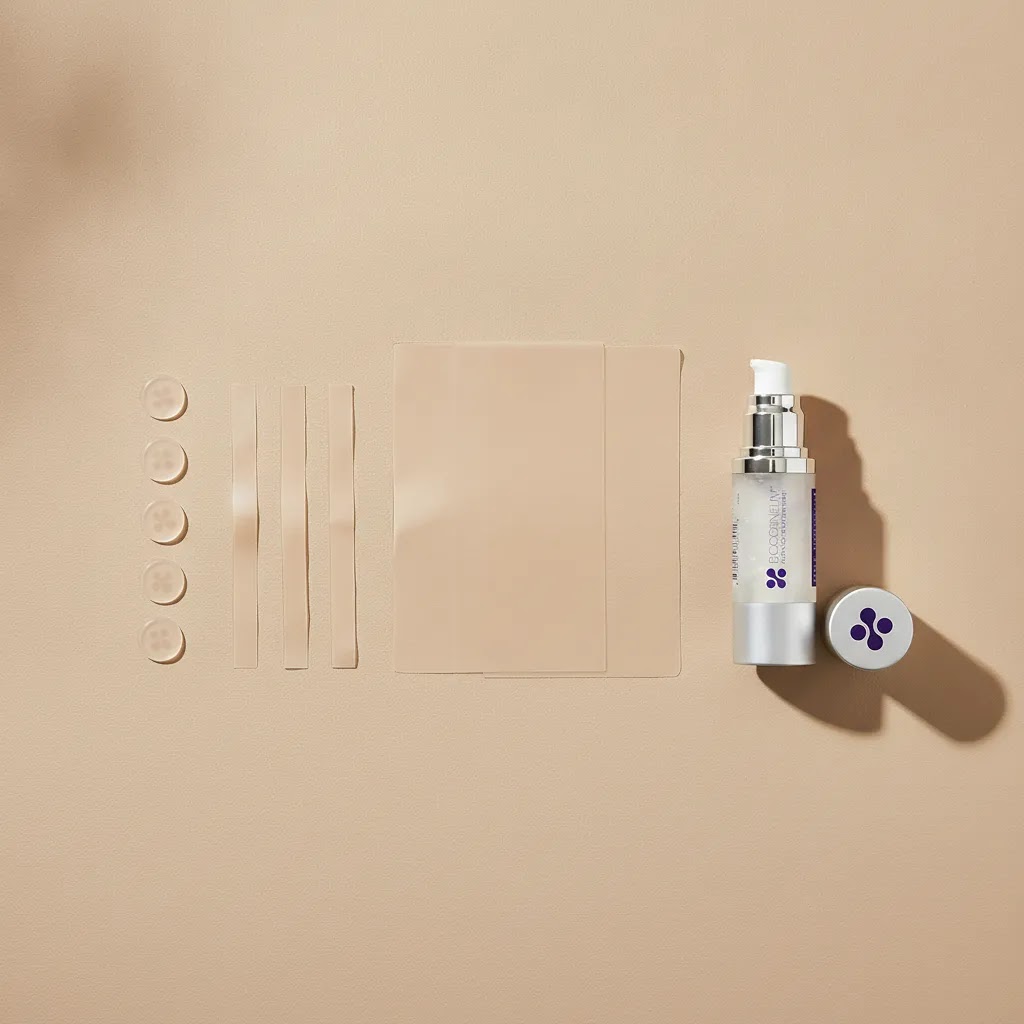
This article ranks biodermis scar sheets by size and scar application so you can compare smaller tabs, strips, and larger sheet options more clearly. You will also see where an accessory or a silicone gel may fit better than sheeting alone. If you want the broader product family overview, you can start with this biodermis guide. Here, the focus stays on matching sheet format to scar type, location, and practical use.
Why size selection matters more than most people expect
People often group silicone sheeting into one broad category. However, real-life use is much more specific. A scar product may be high quality and still feel frustrating if the format does not match the scar’s length, width, curve, or body location.
Small scars often do better with smaller patches or strips because you do not need excess material bunching around healthy skin. Longer surgical scars often need a sheet that covers more surface area. You can also trim some sheets for a custom fit. Wider scars or burn areas may need broader coverage.
That is one reason readers often compare options such as biodermis epi-derm c-strip silicone or ask how sheeting differs from other forms of epi-derm silicone gel sheeting for scars. The most suitable choice usually depends on fit, not just the word “silicone” on the label.
How biodermis scar sheets work (the clinical rationale in plain English)
Silicone sheeting comes up often in scar care because it helps create a consistent surface environment over healed skin. Many practitioners recommend silicone as a common topical option, especially for scars that are raised or prone to thickening. However, it is not a guarantee of a specific result.
What silicone does on the skin surface
So what does it actually do? In simple terms, a silicone sheet sits on top of the scar and forms an occlusive barrier. That barrier can help reduce transepidermal water loss. In plain language, it helps the skin hold moisture instead of drying out.
A more stable, hydrated surface may support more favorable scar remodeling over time. In practice, silicone does not erase a scar. Instead, it supports the skin conditions that can influence how a scar matures.
Why timing and protection matter
Many patients overlook timing. Scars usually move through an active remodeling phase for weeks to months. You will often see the first 8 to 12 weeks mentioned because scars can change quickly during that window. Still, remodeling can continue well beyond that. It depends on your body, the location, and the type of injury or incision.
This is also why clinicians stress protection from sun exposure and friction. UV exposure can contribute to discoloration. Repeated rubbing or tension across a scar can also affect how it settles. For general sun-safety guidance, the American Academy of Dermatology offers practical advice.
When to use silicone safely
Use silicone sheets only on fully closed skin. Also, follow the guidance of the clinician who managed your procedure. If you wear a sheet too long too soon, trap too much moisture under it, or place it on irritated skin, you may raise the risk of maceration or local irritation.
As with any topical scar-care product, ask a qualified professional to confirm whether the area is ready. They can also guide daily wear time and help if you notice sensitivity. For wound-care basics and healing guidance, see the U.S. National Library of Medicine MedlinePlus wound care resources.
Biodermis scar sheets ranked from smallest to largest
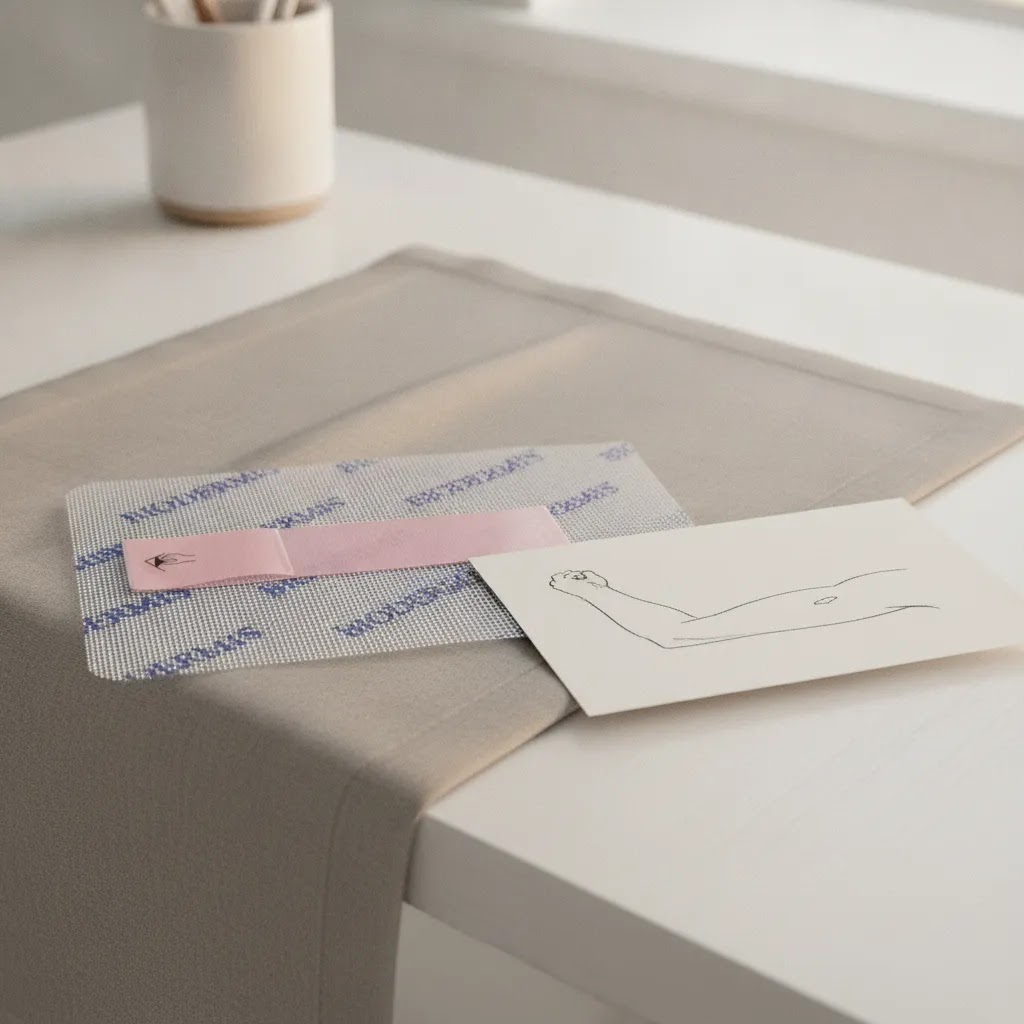
If your goal is to choose biodermis scar sheets by size and scar application, this is the clearest way to sort them.
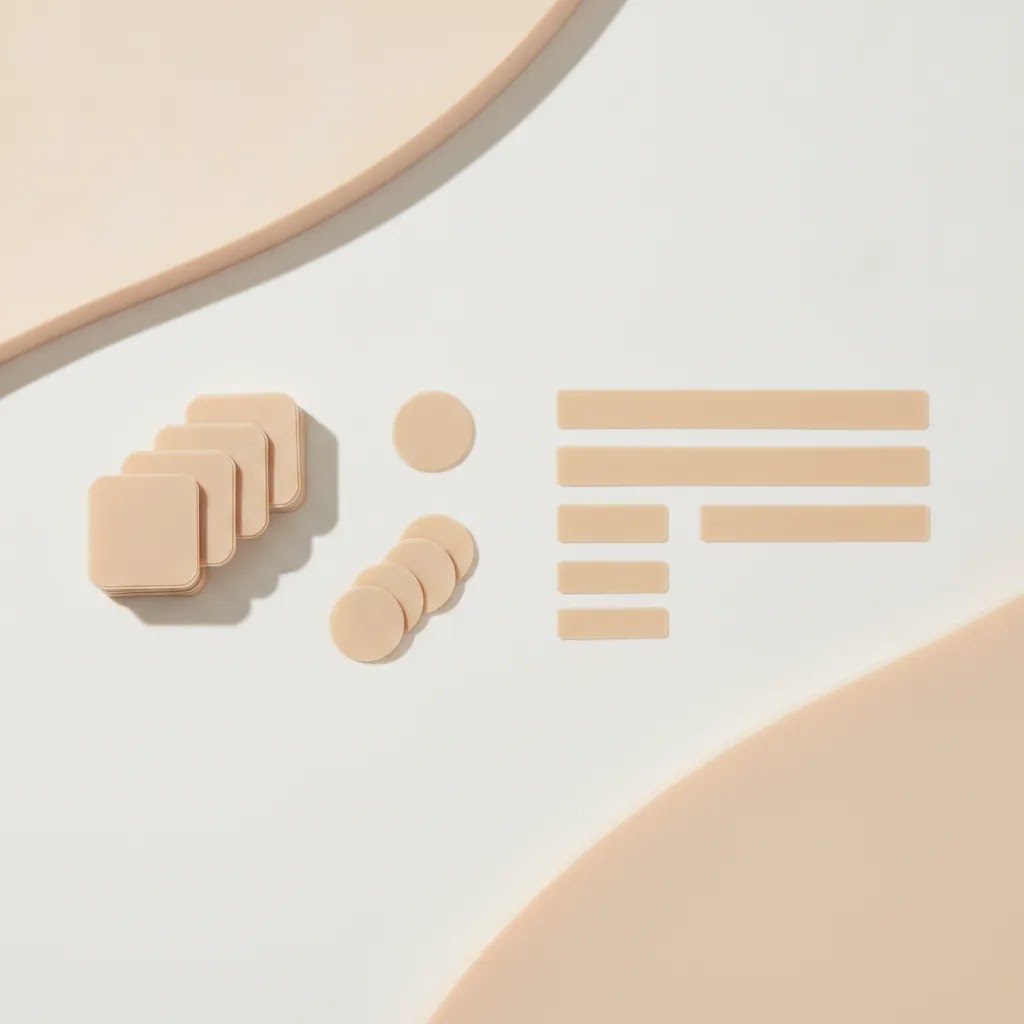
- Best for pinpoint or very small scars: Epi-Derm Epi-Tabs (6)
- Best for short linear scars: Epi-Derm Small Strips (3)
- Best for medium to large scars and broader coverage: Epi-derm Standard Sheet (5 Pack)
That ranking is about footprint and intended use, not about one option being universally superior. Smaller formats are usually easier to manage on isolated marks. Larger sheets make more sense when you need wider or longer coverage and do not want to piece together multiple small patches.
| Product | Best fit | Format notes |
|---|---|---|
| Epi-Derm Epi-Tabs (6) | Pinpoint or very small scars | Smallest and most targeted option |
| Epi-Derm Small Strips (3) | Short linear scars | Fabric-backed strips for narrow scar lines |
| Epi-derm Standard Sheet (5 Pack) | Medium to large scars and broader coverage | Can be wrapped around a limb and trimmed for custom fitment |
| BIOCORNEUM SiliSilk Advanced Scar Gel, 30g | Visible, curved, or makeup-prone areas | Fast-drying silicone gel instead of a sheet |
Biodermis scar sheets and related product spotlights
Epi-Derm Epi-Tabs (6)
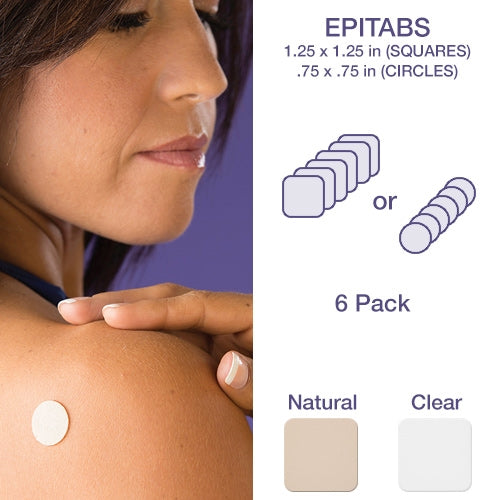
Price: $29.95
Epi-Tabs are silicone scar patches for mole removal scars, cannula scars, and other small scars. The product information also says they are ideally dimensioned for preventing and managing small hypertrophic and keloid scars from trauma, punctures, mole removal, liposuction cannulas, and more.
This is the smallest and most targeted option in this group. If your scar is tiny, round, or limited to a very small spot, Epi-Tabs may feel more precise than cutting down a larger strip.
Epi-Derm Small Strips (3)
Price: $14.99–$28.95
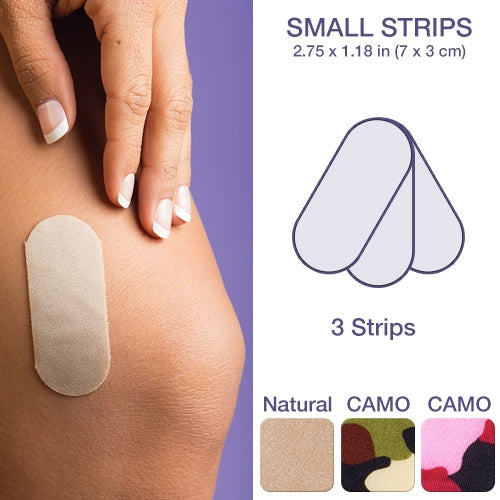
Epi-Derm Small Strips are fabric-backed silicone strips available in Natural, Pink CAMO, or Green CAMO. The product page describes them as ideal for managing small scars, including trauma, burns, basal and squamous cell removal, mole removal, and more.
In the size ranking, these sit above Epi-Tabs because they suit short linear scars better. If you have a narrow scar from a procedure or skin lesion removal, this format may be easier to place along the line of the scar without as much trimming.
Epi-derm Standard Sheet (5 Pack)
Price: $223.95
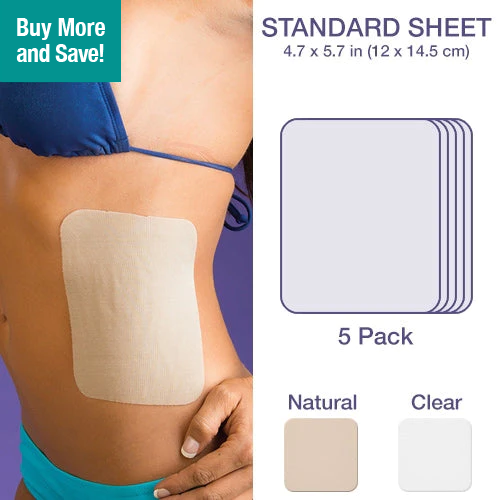
This multi-pack is intended for medium to large scars. The product page states that the standard Epi-Derm silicone gel sheet provides a healing environment beneficial for burn scar reduction therapy, as well as treatment of medium to large keloid and hypertrophic scars from surgery or trauma. It can be wrapped around a limb or cover medium scar areas on the torso, and it can be trimmed for custom fitment.
Among the sheet options featured here, this is the clear choice for broader coverage. It may suit readers who need one sheet to span a larger area rather than piecing together smaller formats.
Epi-Derm Drying Rack: Extend the Life of your Sheeting
Price: $15.95
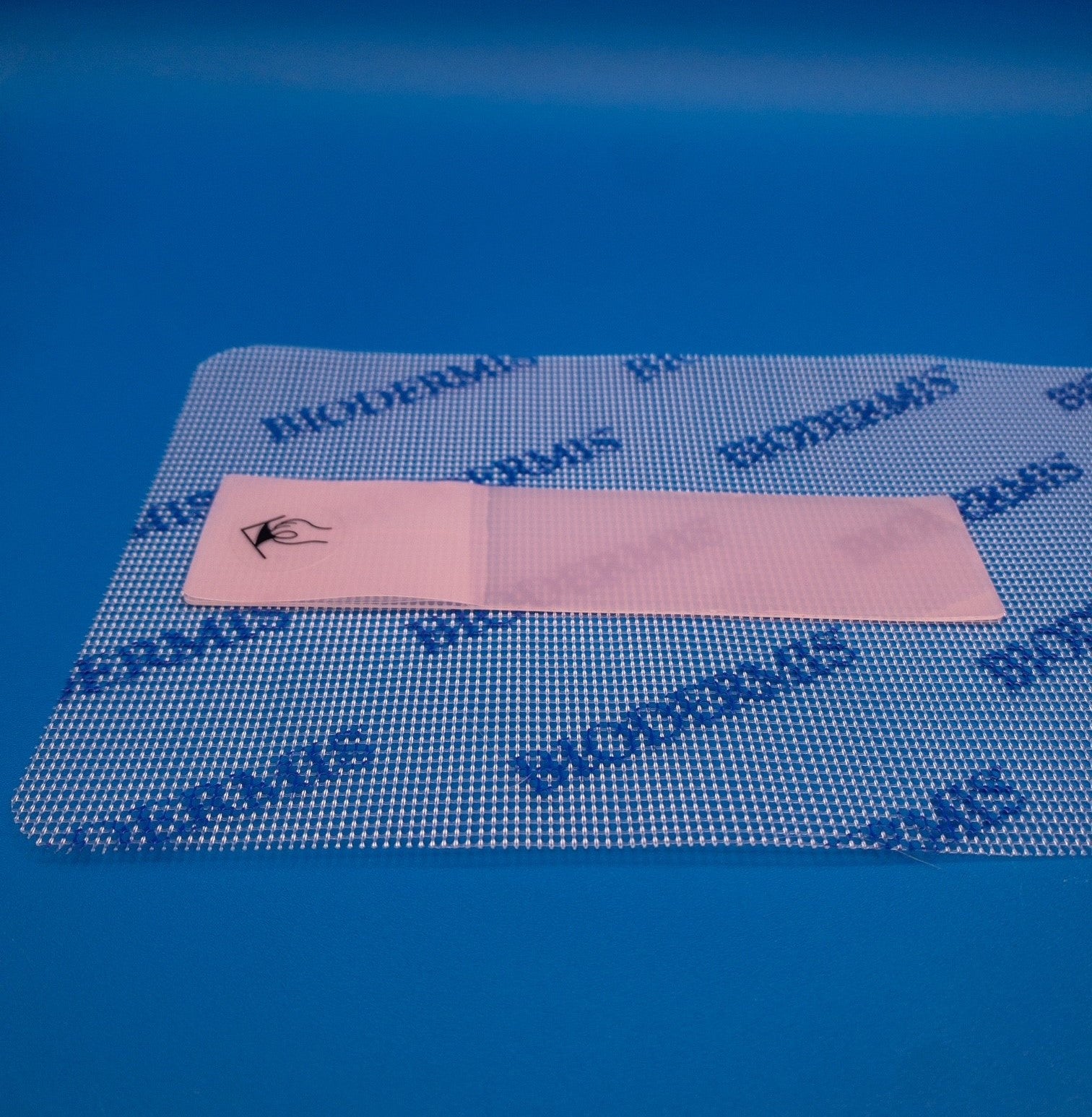
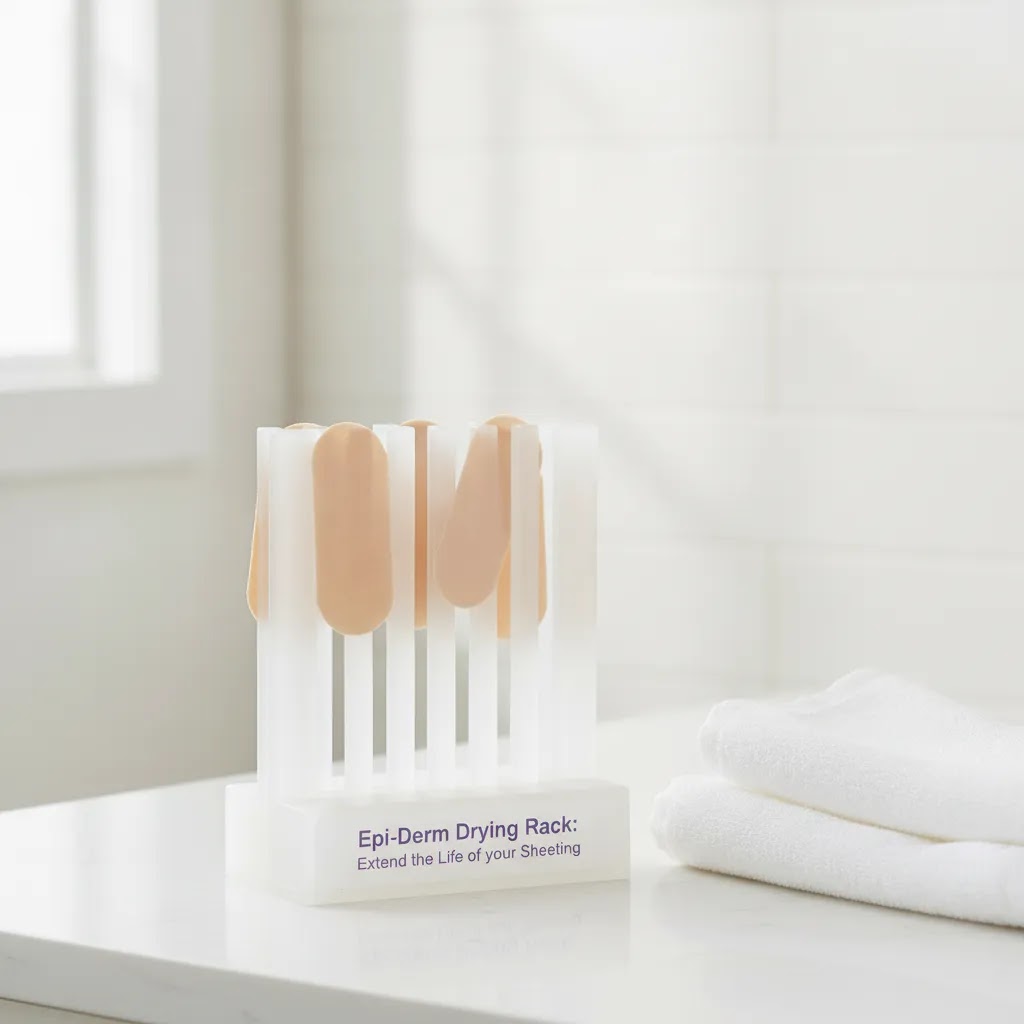
This accessory is a premium mat for silicone sheet storage between uses. Product information states that it extends the life of silicone sheeting, allows airflow to speed drying time, helps prevent sheeting from sticking to other surfaces, and is designed to fit most silicone sheeting styles and sizes.
It is not a scar sheet itself, but it matters if you plan to use reusable sheeting regularly. A cleaner, more organized routine often makes long-term use easier to maintain.
BIOCORNEUM SiliSilk Advanced Scar Gel, 30g
Price: $84.95
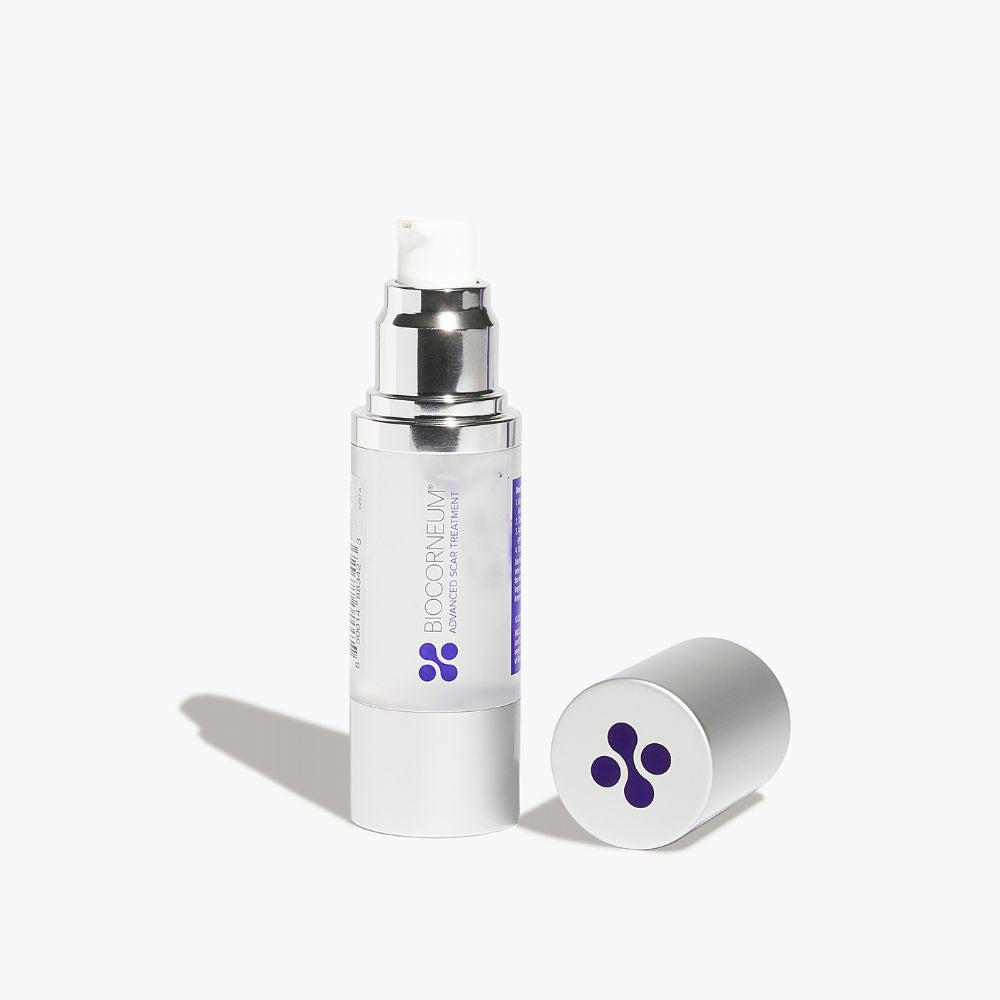
This clear, fast-drying silicone gel is described as professional-grade scar care with an ultra-smooth, silky finish. The product page states that it is lightweight, non-greasy, suitable for all skin tones, and compatible with skincare, sunscreen, and cosmetics. It is also described as water- and sweat-resistant for daily activities.
Although it is not part of the sheet ranking, it belongs in the conversation because some scars are easier to treat with a gel than with a fixed sheet shape. That may be especially relevant if your scar sits in a visible area or under makeup.
Where gel or other formats may fit better
Some readers start by searching only for biodermis scar sheets. Then they realize a sheet may not be the easiest option for every body area. Curved zones, highly visible facial areas, or places that need a very thin layer under sunscreen or makeup can change the decision.
That is where a silicone based scar gel may be worth discussing with a qualified professional. A gel does not replace sheeting in every case. However, it can make daily use easier in spots where a patch feels bulky or obvious. If you want a product-specific overview, see this guide to Biodermis scar gel.
If you want a more general scar-care category view, the Scar Treatment & Skincare section is the most relevant place to browse related options. If you are purchasing for clinical or practice needs, B2B Medical Supply may also be useful.
Biodermis scar sheets vs gel: how to choose
People often ask, “Which is better, scar gel or scar sheets?” In reality, both formats usually aim for the same general goal at the skin surface: a protected, hydrated environment over a healed scar. In many cases, the more useful question is which option you can use correctly and consistently in the area you are treating.
When sheets may be the easier fit
Consider this practical framework when you are deciding:
- If the scar is long or you want predictable coverage: Sheets can be easier because you can see exactly what area is covered, and a larger sheet can often be trimmed to match the scar line.
- If the scar is raised or seems to be thickening: Many patients and clinicians prefer the steady, physical barrier of sheeting. This is not a promise of outcome, but in real-world routines, the consistency of contact can be a reason sheeting is favored for certain scar behaviors.
- If the scar is irregularly shaped or on a high-movement area: Gel can be easier to apply without wrinkling or lifting. Areas near joints, the side of the torso, or anywhere clothing rubs can challenge sheet adhesion.
- If the scar is on the face or a very visible area: Gel often fits more naturally under sunscreen or cosmetics. Some people feel self-conscious in a sheet during the day, even if it is effective in theory. That day-to-day comfort matters.
- If the scar sits under tight clothing or frequent friction: Sheets may roll at the edges or peel sooner, especially with heat and sweat. Gel may be easier for daytime use, while sheeting can sometimes be reserved for evenings or overnight if your clinician agrees that is appropriate.
What makes a routine easier to maintain
The “best” format is often the one that matches your scar’s shape and your real schedule. If you can only tolerate a sheet for a few hours before it lifts or irritates your skin, a gel routine you can maintain may be the more practical choice. On the other hand, if a sheet stays put comfortably, it can simplify coverage and reduce daily guesswork.
If you are unsure which direction makes sense for your specific scar and stage of healing, a consultation can help you match format to anatomy, lifestyle, and scar behavior. That kind of fit-focused planning is usually more valuable than trying to force one solution for every situation. If you are also comparing consumer brands, this article on Mederma vs Scaraway may help with context.
Timing, wear, and daily care questions
One of the most common decision points is not which sheet to buy, but when to start scar treatment after surgery. In general, silicone products are typically considered only after the skin surface is fully closed and your treating clinician says the area is ready. You should not place scar sheeting over an open wound.
Cleaning and drying also matter. For reusable sheeting, routine care helps preserve tackiness and makes wear more hygienic. The Epi-Derm Drying Rack is specifically designed to hold silicone sheeting sticky side down until dry and ready for reuse, which can make the process less awkward than laying sheets on random household surfaces.
If you are curious about broader product recognition within the line, you can also read Epi-Derm Named Best Overall by InStyle. For readers comparing gel routines, Introducing SiliSilk™: Everyday Silicone Scar Care, Simplified offers additional context.
How to use and care for Biodermis scar sheets (wear time, cleaning, and replacement)
In a consultation, the discussion usually centers on two things: wear time and skin tolerance. Many people do better when they build up gradually, especially if their skin is sensitive or the scar sits in a warm, high-friction area. Your clinician may suggest shorter daily wear periods at first and then longer wear as your skin adjusts.
Daily wear tips for biodermis scar sheets
These practical details often make sheeting feel workable:
- Apply to clean, fully dry skin: Lotions, body oils, and even residual soap can reduce adhesion and may increase irritation for some people.
- If edges lift during the day: Check for friction from clothing seams or movement, and consider whether trimming the corners into a more rounded shape reduces peeling. Small fit changes can make a big difference.
- Sweating and heat matter: Warmth and sweat can loosen adhesion. If you know you will be exercising, you may find it easier to wear the sheet at a different time of day, depending on your clinician’s guidance.
- Showering and swimming: Some people remove and reapply after bathing to keep the routine cleaner and avoid constant peeling. Follow the product directions, and if you are unsure, ask a professional rather than guessing.
- Clothing friction: A sheet placed under tight waistbands, bras, or compression garments can roll. In practice, some patients reserve sheeting for times when the area is not under constant tension.
Cleaning, storage, and when to pause
Cleaning and storage are the other half of making reusable sheets realistic. A gentle wash, careful drying, and a clean storage surface can help maintain tackiness and hygiene. The goal is not perfection. Instead, it is to reduce common reasons people stop using sheeting, such as lint buildup, loss of stickiness, or irritation from unclean contact surfaces. This is also where a drying rack can help by giving the sheet a predictable place to air-dry between uses.
It is also important to know when to pause and ask for guidance. If you notice persistent redness, itching, increasing sensitivity, or any broken skin, stop and check in with a qualified clinician before continuing. The same applies if a scar seems to be changing rapidly, becoming unusually painful, or showing signs that worry you. For readers wondering about longer timelines, this guide on how long scars take to fade may also be helpful.
How to choose for your scar pattern
If you are trying to narrow it down, start with the scar’s shape before anything else.
- Tiny, isolated scars: Epi-Tabs usually make the most sense for pinpoint areas such as mole removal marks or small cannula scars.
- Short, narrow scars: Small Strips are often the more natural match for linear scars that do not need broad coverage.
- Medium, large, or wider scars: The Standard Sheet is the strongest fit when you need more coverage, trimming flexibility, or wraparound use on a limb or torso area.
- Awkward, highly visible, or makeup-prone areas: A silicone gel may be easier to use consistently than a sheet.
The reality is that consistency often shapes the experience more than an elaborate setup. A well-matched format may be easier to wear, clean, and keep using over time. If you are unsure which scar-care path suits your stage of healing, a qualified clinic like Nuance Medical can help you review your options in a measured, no-pressure consultation.
Medical Disclaimer: This article is intended for informational and educational purposes only. It does not constitute medical advice and should not be used as a substitute for professional consultation with a qualified medical or aesthetic practitioner. Individual results vary. Always seek the guidance of a licensed healthcare professional before pursuing any aesthetic treatment.
Frequently Asked Questions About Biodermis Scar Sheets
What are biodermis scar sheets usually used for?
Biodermis scar sheets are generally used as silicone scar-care products for healed scars that may benefit from a protected, hydrated surface environment. Different sheet sizes are intended for different scar patterns. Small patches may suit tiny scars, while longer strips or larger sheets may fit surgical scars, trauma scars, or some burn-related scar areas more naturally. Product selection should still depend on the scar’s location, size, and whether the skin is fully closed before use.
How do I know whether I need tabs, strips, or a full sheet?
Start by looking at the scar’s shape. Small round or puncture-like marks often fit better under a patch-style option such as Epi-Tabs. A short, narrow incision may be easier to cover with a strip. A wider or longer scar usually needs a larger sheet so you are not piecing together several smaller products. If the area curves sharply or sits in a highly visible zone, a silicone gel may be easier to manage than a sheet.
When should you start scar treatment after surgery?
Silicone scar care is typically considered after the wound has fully closed and your treating clinician confirms that the area is ready. Starting too early can irritate healing tissue or interfere with wound care. The exact timeline may differ depending on the procedure, your healing progress, and whether there were any complications. If you are recovering from surgery, the safest next step is to ask the professional who managed your procedure when silicone sheeting or gel may be appropriate.
How does silicone scar gel work compared with silicone sheets?
Silicone gel and silicone sheets are both used to support the scar environment at the skin surface. In broad clinical use, both are meant to help maintain hydration and create a protective barrier over healed skin. The difference is mostly the format. Sheets provide a physical patch, while gel dries into a thin layer. Some people prefer sheets for easy area coverage, while others prefer gel on curved, exposed, or makeup-prone areas. Results can vary with scar type and consistency of use.
Are biodermis scar sheets better for small scars than scar gel?
Not always. For very small scars, a targeted sheet like Epi-Tabs may feel neat and precise. For a tiny facial scar or a spot where a patch feels too noticeable, a gel may be more practical. The better option is often the one that fits the scar’s location and your routine well enough that you can use it regularly. That is why format choice should be based on scar shape, visibility, and daily comfort rather than assuming one category is always superior.
Can silicone sheets for scars be trimmed?
Some can. The Epi-derm Standard Sheet product information specifically states that it can be trimmed for custom fitment, which is helpful for medium to large scars that do not match a standard shape. Trimming can make coverage more precise and may reduce unnecessary overlap onto surrounding skin. Smaller ready-made options like tabs or strips may need less adjustment from the start. If you are trimming any sheet, follow the product directions carefully and keep the material clean between uses.
Do silicone sheets for scars work on old scars and new scars?
People often ask this because they want realistic expectations before buying. Silicone products are commonly discussed for newer scars once the skin has healed, especially if a scar is raised or seems prone to becoming raised. Older scars may still be part of a scar-care plan, but the visible change may be less dramatic and often depends on the scar’s age, thickness, and biology. A professional assessment can help set expectations that are specific to your scar rather than generic internet advice.
What if my scar is on a limb or a broader area of the torso?
A larger sheet is usually the more logical starting point. The Epi-derm Standard Sheet is the featured option here for medium to large scars, and its product information notes that it can be wrapped around a limb or used to cover medium scar areas on the torso. That makes it more suitable for broader coverage than tiny tabs or short strips. If your scar shape is irregular, the ability to trim a sheet may also make application easier and more personalized.
Is a drying rack really necessary for silicone sheeting?
It is not the treatment itself, but it can make reusable sheeting easier to manage. The Epi-Derm Drying Rack is designed to let air move around the sheeting as it dries, help prevent it from sticking to other surfaces, and support storage between uses. That can be useful if you are trying to keep your routine cleaner and more organized. For people using silicone sheets day after day, a simple accessory may help with consistency even though it is not a scar product on its own.
Can silicone scar sheets for wrinkles be used the same way as scar sheets?
This is a common search question, but wrinkle products and scar products are not always designed or discussed in the same way. Scar sheeting is generally chosen for healed scar management, especially where scar texture and elevation are concerns. If your goal is cosmetic skin smoothing rather than scar care, it is worth getting product-specific guidance rather than assuming every silicone sheet serves the same purpose. A qualified practitioner can help you sort out whether a scar product is appropriate for your concern.
Do ScarAway sheets really work?
Many people ask this because ScarAway is a widely recognized consumer brand, and they want to know if silicone sheeting is worth trying. In broad clinical practice, silicone sheets are commonly used as part of scar care for healed scars, particularly when a scar is raised or at risk of thickening. Whether a specific brand feels effective for you can vary based on fit, adherence, wear routine, and how your skin tolerates it. The more consistent the use, the more likely you are to get a meaningful sense of whether silicone sheeting is helping in your case. A qualified clinician can help you decide if silicone sheeting is appropriate for your scar and timing.
What are Biodermis silicone scar sheets for face?
Facial scars are often challenging because the skin is visible, expressive, and exposed to sun. Silicone sheets used on the face are generally intended for healed facial scars where you want a protective, hydrated surface environment, and where the sheet can sit comfortably without constant lifting at the edges. In practice, some people prefer silicone gel for facial areas because it can be easier under sunscreen or makeup, while others use small patches at home or overnight if recommended by their clinician. The best choice depends on the exact scar location and how well the format fits your daily routine.
What is the best brand of silicone scar sheets?
There is rarely a single “best” brand for everyone because the biggest determining factors tend to be fit, skin tolerance, and whether the product stays in place reliably on your scar location. Clinically, silicone itself is often the key ingredient that gets discussed, but the design details matter, including size options, reusability, comfort, and how easy the product is to keep clean. If you are trying to choose between brands, consider which one offers a format that matches your scar shape and your lifestyle, and ask a qualified professional if you are unsure.
Which is better, scar gel or scar sheets?
Neither is universally better. Both silicone gel and silicone sheets are used to support a scar’s surface environment once the skin has fully closed. Sheets can be helpful when you want consistent coverage and the product stays in place comfortably. Gel can be easier on curved areas, high-movement zones, or visible facial areas where a sheet is hard to wear during the day. The better choice is usually the option you can apply correctly and keep up with consistently, and a clinician can help you match the format to your scar type and stage of healing.
Biodermis Scar Sheets Key Takeaways
- Biodermis scar sheets are easiest to compare by scar size and shape, not by brand name alone.
- Epi-Tabs suit very small scars, Small Strips fit short linear scars, and the Standard Sheet is the strongest match for broader coverage.
- A silicone gel may be more practical than sheeting on visible, curved, or makeup-prone areas.
- Scar-care timing matters, and silicone products are generally considered only after the skin is fully closed and cleared by a clinician.
- Routine care, including proper drying and storage, may help reusable sheeting stay easier to manage over time.
Conclusion
Choosing biodermis scar sheets gets much simpler once you stop treating all silicone formats as interchangeable. The real decision usually comes down to size, scar shape, body location, and how manageable the routine feels in everyday life. A tiny post-procedure mark, a short surgical scar, and a larger burn or trauma scar may all call for different coverage choices. That does not mean one product is universally right. Instead, matching the format to the scar gives you a more practical place to start.
If you are weighing sheets against gel, or trying to decide when to begin scar care after a procedure, careful guidance can help you avoid guesswork. Nuance Medical takes that patient-education approach seriously, with an emphasis on clear information and realistic expectations. If you would like help sorting through scar-care options, you can explore the available resources or book a consultation with the Nuance Medical team for personalized guidance.