
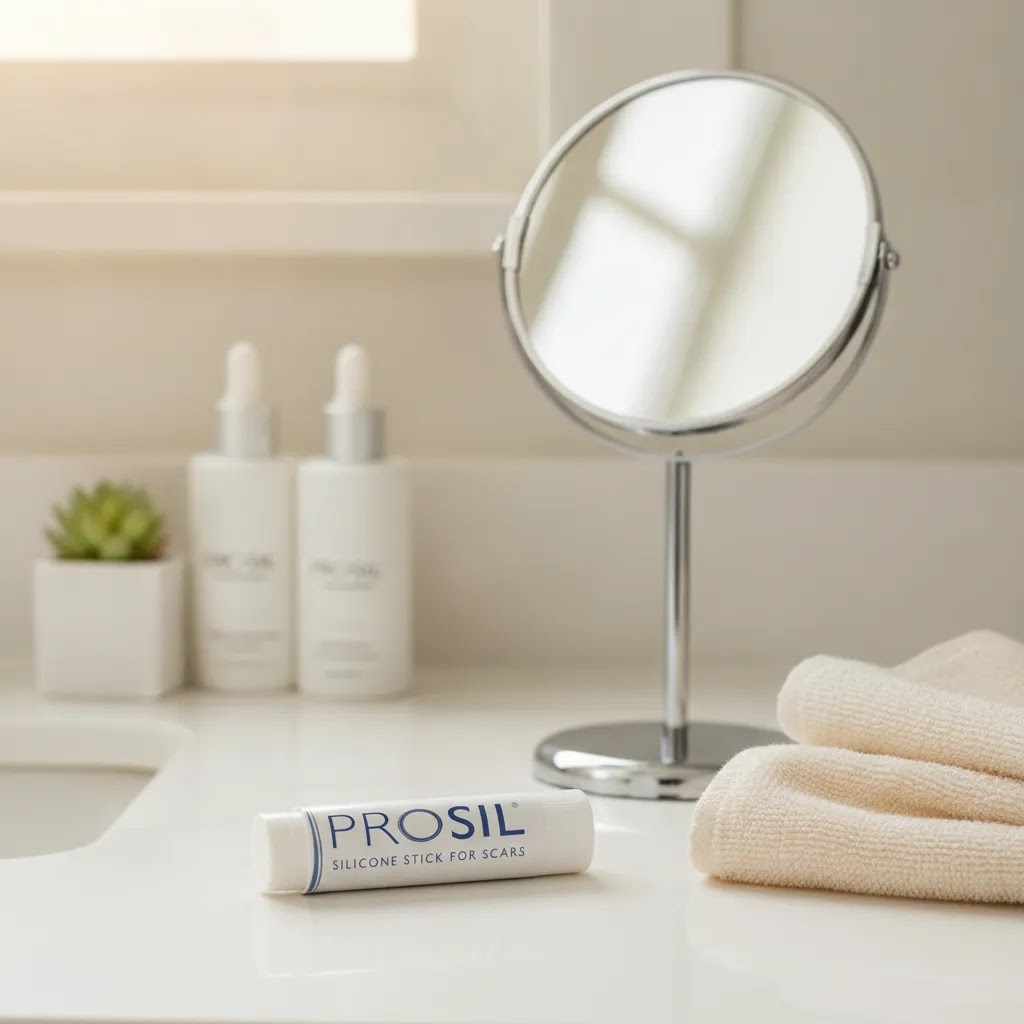
What is prosil silicone scar stick?
The prosil silicone scar stick puts topical silicone on the skin in a controlled, precise way. People often like that format because it feels less messy than a tube or pump. It can work well for small scars or exposed areas that need quick touch-ups during the day.
Pro-Sil 4.25g sells for $36.95. The product information highlights scars, acne, pediatric use, face and hands, and scars related to mole removal. The brand also markets it as Pro-Sil Original and Pro-Sil Silicone Scar Stick. In other words, it aims at targeted scar care rather than broad-body coverage.
The practical appeal is easy to see. If you are treating a small incision line near the jawline, a post-procedure mark on the hand, or a scar in a spot where a sheet feels awkward, a stick can feel easier to manage. At Nuance Medical, we usually start by matching the format to the scar location, your routine, and how consistently you can use it.
How prosil silicone scar stick and silicone scar care may help
Clinicians and patients often use silicone in scar management because it can support a healthier healing environment on the skin surface. In simple terms, silicone forms a light barrier over the scar. That barrier may reduce excess water loss and help the outer skin layer stay more balanced.
Why does that matter? Scars often look more noticeable when healing becomes overly reactive. A well-hydrated surface may help some scars look flatter and softer over time. It may also improve their overall appearance. However, results vary, and each scar behaves a little differently.
That is also why readers compare a silicone stick with a biodermis scar sheets option or with products described as a silicone based scar gel. The main idea stays the same, even when the format changes. If you want a wider look at gel options, you can also read Biodermis Scar Gel. In addition, if you are interested in newer day-to-day silicone options, you may also find value in Introducing SiliSilk™: Everyday Silicone Scar Care, Simplified.
How to use prosil silicone scar stick in a real-world routine
Here’s the thing: most people do not quit scar care because they do not care. They stop because the routine does not feel realistic. Sometimes they are also unsure how to apply the product in daily life. Stick-format silicone can make consistency easier, but technique still matters.
Prosil silicone scar stick application basics that tend to matter
In practice, most silicone scar products work best in a thin, even layer over clean, dry, fully closed skin. A thick coat is not automatically better. Instead, it can feel tacky or transfer onto clothing. Many people also do better when they let the product dry or set before they get dressed, apply makeup, or put on a mask or helmet strap.
How often you reapply depends on the product directions and your routine. If you are unsure, follow the manufacturer instructions first. Then ask your treating professional for guidance that fits your skin and recovery stage.
Pairing silicone with everyday habits that influence scar appearance
Many patients overlook one key point: scar appearance is not only about what you put on the skin. It also depends on what the scar goes through during the day while it remodels.
- Minimize friction when you can. Repeated rubbing from waistbands, bra straps, collars, or athletic gear can keep an area irritated. If the scar sits in a high-friction zone, you may need to think about clothing choices or protective coverage options that make daily wear more comfortable.
- Keep the area clean and dry before application. Even a good product can struggle if it is being applied over sweat, body oil, or residual skincare.
- Take sun exposure seriously for exposed scars. UV exposure can make scars look darker and more noticeable, particularly in the first several months. If the scar is on the face, chest, hands, or another sun-exposed area, building sun protection into the routine is often one of the most meaningful “extras” you can add. Many patients do best with a simple approach, silicone first if that is the plan, then sun protection once the silicone has set, using product directions as your guide.
Common “compliance” problems and how people work around them
Consistency is usually the hardest part, especially in places that move a lot or need frequent grooming. Consider this:
- High-movement areas such as the knee, shoulder, or elbow: product can rub off more easily. Some people do better applying at times when the area is less active, such as after showering and before bed, as long as that fits the product directions and your clinician’s guidance.
- Under bra straps or waistbands: friction can be constant. A change in garment style, strap placement, or padding can sometimes improve comfort and reduce irritation while you are staying consistent with scar care.
- Jawline scars with shaving or facial hair: shaving can disrupt the skin surface and irritate the scar. It may help to shave gently, avoid going directly over a fresh scar when possible, and apply silicone only after skin is clean and calm, following product instructions and professional guidance.
- Under makeup: many people want scar care that does not disrupt their appearance at work or events. Allowing time for the silicone to dry, then using makeup in light layers, can be a more practical approach than trying to cover a tacky product immediately.
At Nuance Medical, we often frame scar care as a routine-design issue as much as a product choice. If you pick a format that fits your day, you are more likely to use it consistently enough to see whether it helps.
Why some people prefer prosil silicone scar stick format
A scar treatment only works if you can use it consistently. That sounds obvious, but many routines fail at this point. If the product feels messy, slow, or awkward under makeup or sunscreen, people often stop using it as directed.
A stick format may be especially appealing in these situations:
- Small scars on the face, hands, or other visible areas
- Scars that need precise application
- People who travel often or want a simpler routine
- Parents helping manage a child’s scar care, when appropriate
- Anyone who dislikes the feel of sheet dressings for everyday wear
The strongest case for this format is convenience. A stick can feel more like a daily-care item and less like a dressing. As a result, it may suit adults who are back at work, caring for family, or managing scar treatment quietly during a normal day. A product does not need to feel complicated to be useful. It does need to fit your life.
That said, convenience does not mean automatic superiority. A prosil silicone scar stick may feel ideal for one person and less ideal for another. Scar size, placement, skin sensitivity, and the need for sheet coverage all matter.
Prosil silicone scar stick vs silicone sheets
Many shoppers end up weighing silicone sheets for scars against a stick product. The choice is not always about which one is better. More often, it comes down to which option suits the scar and the routine you can maintain.
Where sheets may make more sense
Silicone sheets often make sense for longer surgical scars or areas where sustained coverage feels practical. They can cover more surface area and may help when the scar shape is fairly linear. If you want a closer look at this category, compare options within biodermis epi-derm c-strip silicone resources or review Biodermis Silicone Scar Sheets.
Where prosil silicone scar stick may make more sense
A stick may work better for smaller scars, curved areas, acne-related marks, or visible zones such as the face or hands. Some people also find it less disruptive than cutting, placing, and removing a sheet.
What this means for you
If your main concern is day-to-day ease, a stick can be appealing. If you want to cover a larger scar with a dressing-style format, sheets may be worth exploring. In practice, some patients use one format for one scar and another format elsewhere. Scar care is rarely one-size-fits-all.
When to start prosil silicone scar stick after surgery
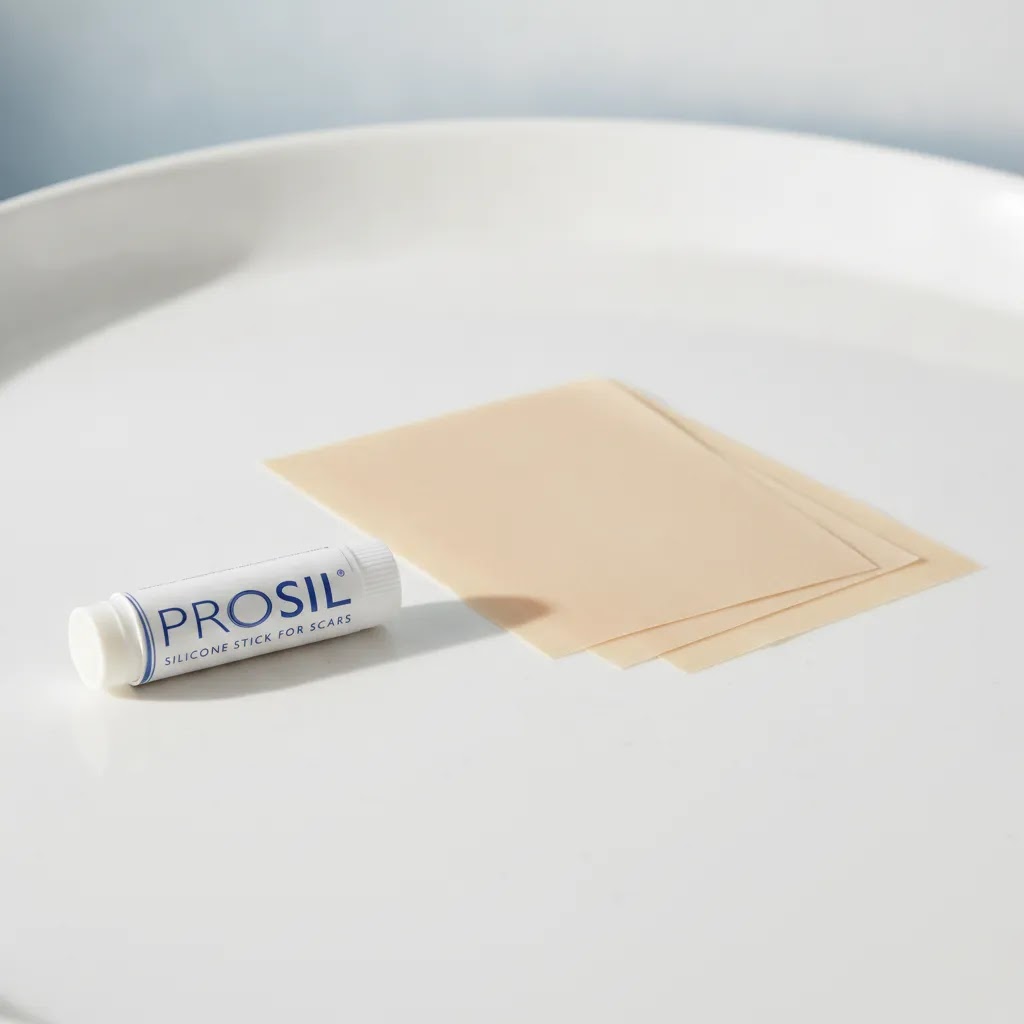
One of the most common questions is when to start scar treatment after surgery. In general, do not apply scar products to an open wound. Most clinicians recommend waiting until the incision fully closes and your treating professional confirms that topical scar care makes sense.
This timing matters because the early healing phase focuses on wound closure, not cosmetic improvement. Starting too soon can irritate healing tissue or interfere with wound care instructions. On the other hand, starting later than planned does not mean you missed your chance. Once scar therapy begins, consistency often matters most.
If your scar followed a cosmetic procedure, dermatologic treatment, or mole removal, ask the provider who performed it for specific timing guidance. A qualified clinic like Nuance Medical can help you judge whether a scar product fits your recovery stage. It can also help you recognize normal healing and know when to shift from wound care to scar management.
New scars vs old scars: what to expect from prosil silicone scar stick
Scar timelines can feel confusing because scars do not finish healing when the incision closes. A closed incision means the skin surface has sealed. However, the tissue underneath can keep changing for months. That is why expectations often differ for newer scars and older, more mature scars.
What “active remodeling” means in plain English
After the wound closes, your body keeps reorganizing collagen in the scar. The scar is still changing and settling. This remodeling phase is when many topical scar-care approaches, including silicone, are most often used because the scar is still active.
That is also why visible improvement, if it happens, usually appears gradually over weeks to months. A common real-world expectation is steady use over 8 to 12 weeks or longer, depending on the scar’s location and behavior. Some scars take longer to calm down and mature, especially when tension, friction, or sun exposure play a role.
What to expect with newer scars
Newer scars often respond better to consistent, well-timed topical care because the skin is still in that active remodeling window. Silicone may support comfort, hydration, and a calmer surface environment while the scar settles. Results still vary. Even so, early consistency is a common theme across most scar-care routines.
What to expect with older scars
Older scars are usually more stable, which means the body has already done most of its remodeling. Some people still use silicone on mature scars and may notice softening or subtle improvement. However, responses can be more variable. If a scar has been present for a long time, it helps to expect modest change rather than dramatic transformation.
When a scar deserves professional input
Some scars need more than at-home topical care. If a scar stays raised, itchy, tender, tight, or visually bothersome despite steady home care, get guidance from a qualified professional. A consultation can clarify whether the scar is simply maturing slowly, reacting to friction or sun, or needing a different approach. If facial redness is part of the concern, you may also find Red Acne Scars helpful.
Buying questions and common prosil silicone scar stick search confusion
BOFU readers often search with a mix of product names and unrelated terms. As a result, decision-making can feel harder than it needs to be.
Silicone scar gel vs prosil silicone scar stick
People often search for how does silicone scar gel work, scaraway silicone scar gel, or silicone based scar gel while also looking at stick products. The core idea stays similar: silicone supports scar care on the skin surface. However, the user experience differs. A stick may offer more controlled application, while a gel may feel better for broader or uneven areas. Neither format is automatically right for every scar. If you want broader comparisons, Mederma vs Biocorneum may help.
Cryotherapy scar removal cost and “near me” searches
Searches like cryotherapy scar removal cost or cryotherapy scar removal near me usually reflect confusion between scar management and lesion treatment. Cryotherapy is associated with freezing certain skin lesions, not with a standard home scar-care routine. If your concern is a scar rather than a lesion, a topical silicone product falls into a different category. For readers trying to sort those topics out, Nuance Medical also organizes related resources under Scar Treatment & Skincare and Cryotherapy & Freeze Products.
Can one product handle every scar concern?
Usually not. A small facial scar, an acne-related mark, and a longer surgical scar may each call for a different approach. The goal is not to buy the most complicated routine. Instead, choose a format you can use correctly and consistently while following professional guidance about timing, skin healing, and realistic expectations.
If you are comparing silicone options more broadly, the article BIOCORNEUM® SiliSilk™ Wins NewBeauty Award for Best Scar Gel may help you understand how gel-format scar care fits into the wider conversation.
Safety, ingredients, and prosil silicone scar stick side effects
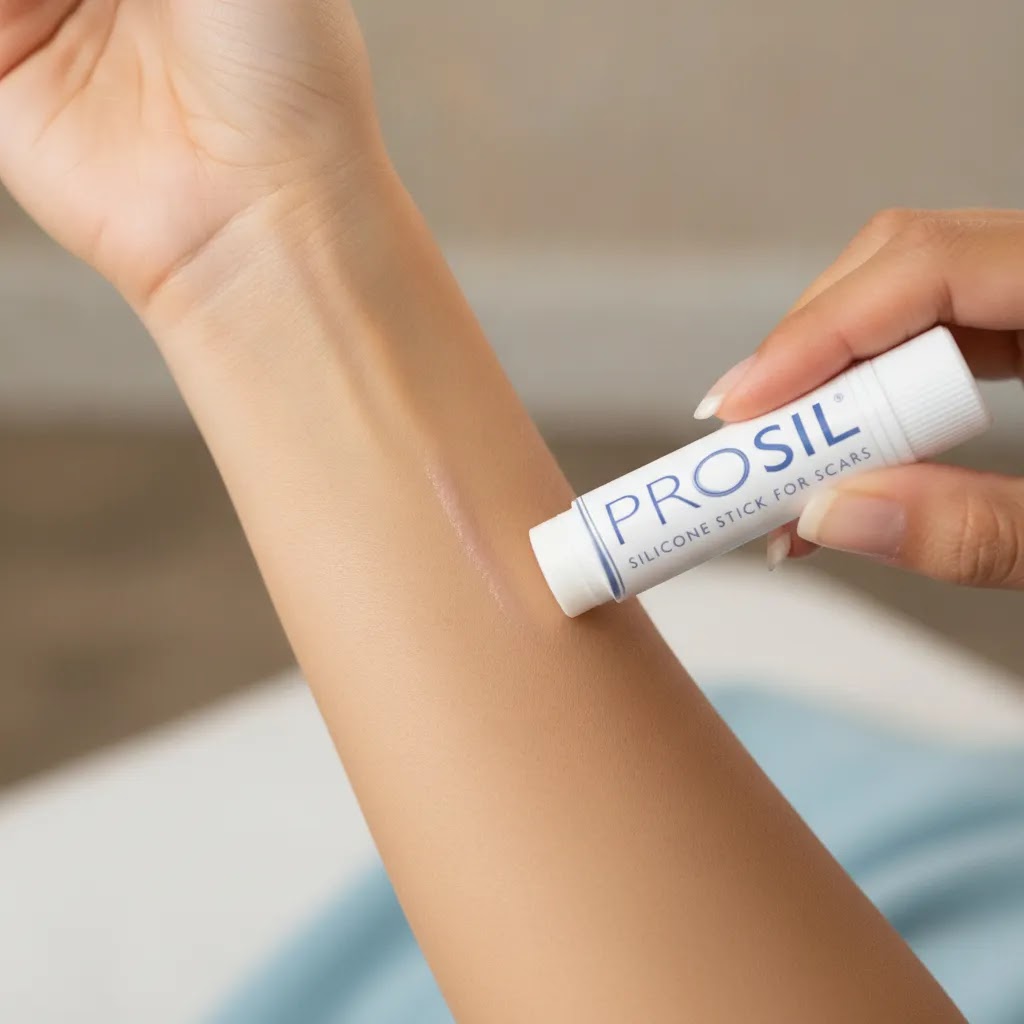
Most people shop for silicone scar care with effectiveness in mind first. Then they start asking what is in the product, how people define medical-grade silicone, and what side effects can happen. Those are fair questions. Even noninvasive topical products can irritate skin in the wrong context or on skin that is not ready.
Potential side effects and how to reduce avoidable irritation
As with any topical product, possible side effects include redness, irritation, rash, itching, or breakouts in acne-prone areas. This is more likely when someone applies the product too heavily, layers it with other occlusive products, uses it on skin that is not fully closed, or wears it under constant friction.
If you react easily, a simple patch-test approach may help. For example, try a small amount on a limited area of intact skin first and watch for irritation. If you notice worsening redness, burning, swelling, or persistent discomfort, stop using the product and seek guidance from a qualified clinician. Product directions matter. If your surgeon or treating provider gave you specific postoperative instructions, follow those first.
“Medical-grade silicone” and what that usually means
The phrase “medical-grade silicone” often describes silicone materials manufactured for medical use and designed to be skin compatible. In scar care, the practical point is not the label itself. Instead, focus on whether the product is meant for topical scar management, whether you use it on fully healed skin, and whether your skin tolerates it well.
Common ingredient questions: vitamin E, fragrance, and dyes
Some silicone products include additional ingredients such as vitamin E, while others focus on being fragrance-free or dye-free. These details can matter if you have sensitive skin. Added ingredients are not automatically harmful or automatically better. They simply change the formula, which may affect how it feels, how it wears under makeup, and how likely it is to irritate reactive skin.
If you break out easily, react to fragrance, or have a history of sensitivity, a simpler ingredient list is often easier to tolerate. A qualified practitioner can help you think through product selection, especially if your scar is on the face or another noticeable area.
Who should be especially cautious
Topical silicone is common, but some situations deserve extra care. People with very sensitive skin may need closer guidance on product choice and wear time. Pediatric use should involve caregiver oversight and attention to product instructions. Scars close to the eyes, lips, or other mucosal areas may also require more caution to avoid product migration and irritation.
Finally, silicone scar care is generally discussed for closed, healed skin. If the area is still open, weeping, crusting, or painful, pause and ask your treating professional what is appropriate at that stage.
Frequently Asked Questions
What is the main benefit of a prosil silicone scar stick?
The main appeal of the prosil silicone scar stick is convenience with precise application. A stick format may be easier to use on smaller scars or visible areas such as the face and hands. It also gives more control and less mess. In addition, it can fit into a daily routine more easily than some dressing-style products. That does not mean it fits every scar. Larger or longer scars may still lead some people to consider silicone sheets instead.
How does silicone scar gel work compared with a stick?
Both formats aim to place silicone over the scar surface, which may support hydration and a more balanced healing environment. That can matter because scar tissue often looks more noticeable when healing becomes irritated or overly reactive. The difference is mostly in delivery. A gel spreads from a tube or pump, while a stick gives direct, targeted application. The right choice often depends on scar size, location, and what you are most likely to use consistently.
When should you start scar treatment after surgery?
You generally should not begin silicone scar care on an open wound. Most people need to wait until the incision fully closes and their surgeon or treating clinician confirms that scar treatment is appropriate. This timing can vary based on the procedure, location, and how your skin heals. If you are unsure, ask before applying any product. A short delay for proper healing is usually better than starting too early and irritating the area.
Is a silicone stick better than silicone sheets for scars?
Not universally. A stick may be more practical for small, targeted scars and exposed areas where you want easy application. Silicone sheets may be more useful for longer surgical scars or places where broad coverage is easier to maintain. The better option is often the one that matches the scar and fits your routine. Some people even use different formats for different scars. Scar care tends to be more about suitability and consistency than about one product type replacing all others.
Can prosil silicone scar stick be used on facial scars?
The listed product features identify face and hands as relevant use areas, which is one reason the prosil silicone scar stick may appeal to people treating visible scars. Facial skin can still react easily, especially after procedures, acne inflammation, or recent healing. For that reason, timing matters. Make sure the area is closed and suitable for scar care before use. If the scar is near the eyes, lips, or another sensitive area, confirm use instructions with a qualified professional first.
Does a silicone stick help with acne scars?
The product listing includes acne among its identified use categories, but acne scarring can mean different things. Some marks are flat discoloration, while others are raised, depressed, or texturally uneven. Silicone products are discussed most often in relation to scars that are raised or still actively healing. If your concern is deeper textural acne scarring, you may need a broader treatment discussion with a professional rather than relying on one over-the-counter format alone.
Why do people search for cryotherapy scar removal near me when looking for scar care?
This usually happens because search terms blur together. Cryotherapy refers to freezing certain skin lesions or spots, while silicone scar care is a topical approach used after healing in appropriate cases. They are not interchangeable ideas. If your concern is a healing or established scar, you are usually choosing between scar-management formats such as sheets, gels, or sticks, not freezing treatments. A consultation can help clarify whether you are dealing with a scar, a lesion, or another skin concern.
How long does silicone scar care usually take to show changes?
Scar care usually requires patience. Changes, if they occur, often develop gradually over weeks to months rather than days. The timeline depends on the age of the scar, its location, the type of injury or procedure that caused it, and how consistently you use the product. Newer scars and older scars may respond differently. A realistic approach is to think in terms of steady use and gradual improvement, not instant correction. Your clinician can help you set appropriate expectations.
Can a silicone stick replace professional scar treatment?
No single home product should replace professional assessment, especially if the scar is changing, uncomfortable, unusually raised, or causing concern after surgery or a procedure. A silicone stick may be one helpful part of home care for the right person and the right scar, but it is still only one option. Some scars may benefit from in-office treatments, prescription care, or a different topical format. If you are uncertain, professional guidance is the safer next step.
How do I choose between a scar stick, a scar gel, and scar sheets?
Start with the scar’s size, location, and how likely you are to stay with the routine. A scar stick may suit small targeted areas. A gel may spread more easily across uneven surfaces. Sheets may work well for longer surgical scars where broad coverage helps. Also consider your lifestyle. If you need something simple for work, travel, or public-facing areas, the best option may be the one you can use reliably, not the one that sounds most intensive.
Does the silicone scar stick really work?
Silicone is one of the more common noninvasive options for scar management, and many people use it because it may support hydration and a calmer surface environment while a scar remodels. Whether you personally see improvement depends on factors like scar type, location, age, skin sensitivity, sun exposure, and how consistently you use the product. A qualified clinician can help you decide whether silicone is a reasonable option for your specific scar and what realistic improvement looks like in your situation.
Does Pro-Sil work on old scars?
Some people use topical silicone on older, more mature scars, but results can be more variable than with newer scars that are still actively changing. Older scars have typically completed most of their remodeling, so it is reasonable to expect subtle shifts rather than major change. If an older scar is persistently raised or cosmetically bothersome, discuss professional options instead of relying on topical care alone.
What are the side effects of Pro-Sil gel?
Topical silicone products may cause irritation, redness, itching, rash, or breakouts in some people, especially on sensitive or acne-prone skin. Using a thin layer on clean, dry, fully closed skin and following product directions can reduce avoidable irritation. If you experience persistent discomfort or a worsening skin reaction, stop use and seek guidance from a qualified healthcare professional.
What vitamins help with scar healing?
Nutrition can support normal skin healing, and vitamins such as vitamin C and vitamin A are often discussed in relation to collagen support and skin function. The right approach depends on your overall health, diet, and any medical conditions or medications. It is best to discuss supplements with a qualified clinician, since more is not always better, and some supplements are not appropriate for everyone. For topical scar appearance, factors like timing, sun protection, and consistent use of an appropriate scar-care format often make a more noticeable day-to-day difference than adding new supplements on your own.
Key Takeaways
- Prosil silicone scar stick is best understood as a targeted silicone scar-care format for smaller or more visible areas.
- Silicone may help support a hydrated healing environment, which can improve scar appearance over time in some cases.
- A stick format can be appealing for convenience and precision, but silicone sheets may still suit larger or longer scars better.
- You should generally wait until a wound is fully closed and cleared by a professional before starting scar treatment.
- Choosing the right scar product depends on the scar, the body area, and whether the routine is realistic for you to maintain.
Conclusion
If you want scar care that feels simple, targeted, and easy to maintain, the prosil silicone scar stick format makes sense to consider. It offers a useful middle ground for people who want the familiar logic of topical silicone without the bulk or routine demands that can come with sheet-based options. That can be especially relevant for facial scars, hand scars, acne-related concerns, or small post-procedure marks that need a more precise approach.
The most important decision is not choosing the trendiest format. Instead, choose a scar-care approach that matches your healing stage, your skin, and your ability to use it consistently. If you are sorting through your options, educational resources from Nuance Medical can help you compare formats with a more clinical lens. Finally, if you want guidance tailored to your situation, book a consultation with a qualified professional to discuss what may be appropriate for your scar and recovery timeline.