
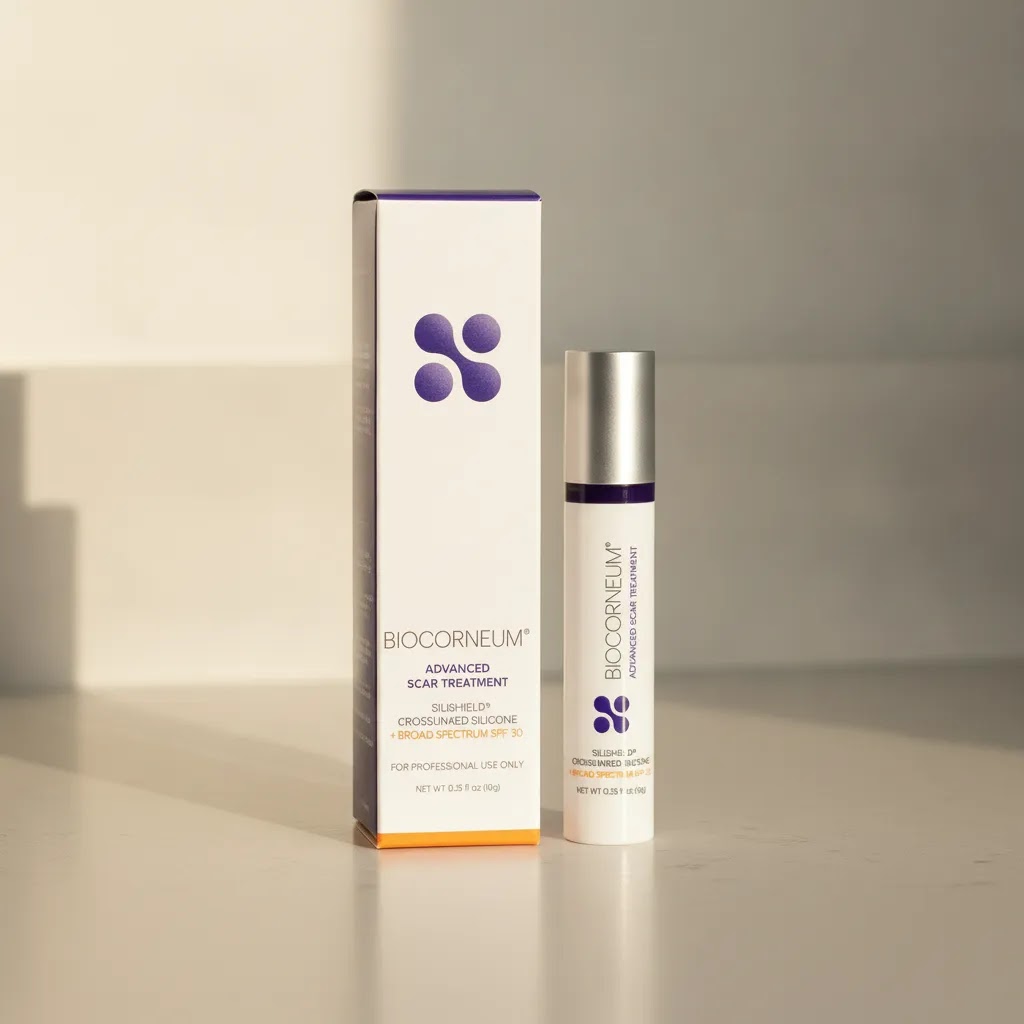
Biocorneum SPF 30 10g Product Snapshot
Biocorneum + SPF 30 combines a silicone-based scar gel with sun protection. In scar care, that pairing matters for a simple reason. Silicone helps support a smoother, softer, and less noticeable scar appearance over time. Meanwhile, sun protection may help lower the risk of visible discoloration from ultraviolet exposure.
The 10g tube is the smaller format, so this article focuses on practicality more than broad scar science. A small tube may appeal to people treating facial scars, trying the product for a short period, or carrying it in a purse or pocket. On the other hand, it may suit larger or wider scars less well, especially when the routine calls for repeated application.
If you are comparing this product with the wider scar-care category, our article on biocorneum scar treatment explains how many people position it within scar management discussions.
Biocorneum SPF 30 10g in Daily Practice
A 10g tube is small by design. That sounds obvious. Even so, size changes the buying decision more than many readers expect. For a product meant for regular use, tube size affects how often you may need to repurchase it, whether you start to ration it, and how easy it feels to stay consistent over several weeks or months.
For a narrow scar, a facial incision line, or a targeted post-procedure spot, 10g may feel appropriately sized. For larger scars, abdominal scars, breast surgery scars, joint-area scars, or several scars at once, the same tube may feel limited fairly quickly. That does not make it a poor option. It simply means the size should match the treatment area.
Professionals often care about three practical features in a small silicone gel tube:
- Whether application can be thin and even
- Whether the product dries in a wearable way under sunscreen, makeup, or clothing
- Whether the patient can realistically keep using it long enough to judge benefit
That last point is easy to underestimate. Scar care rarely delivers a dramatic result in one week. Instead, people usually see the most value through steady use over time, especially after the wound fully closes and a qualified clinician confirms that topical scar care makes sense.
Biocorneum SPF 30 10g Reviews: What Experts Notice
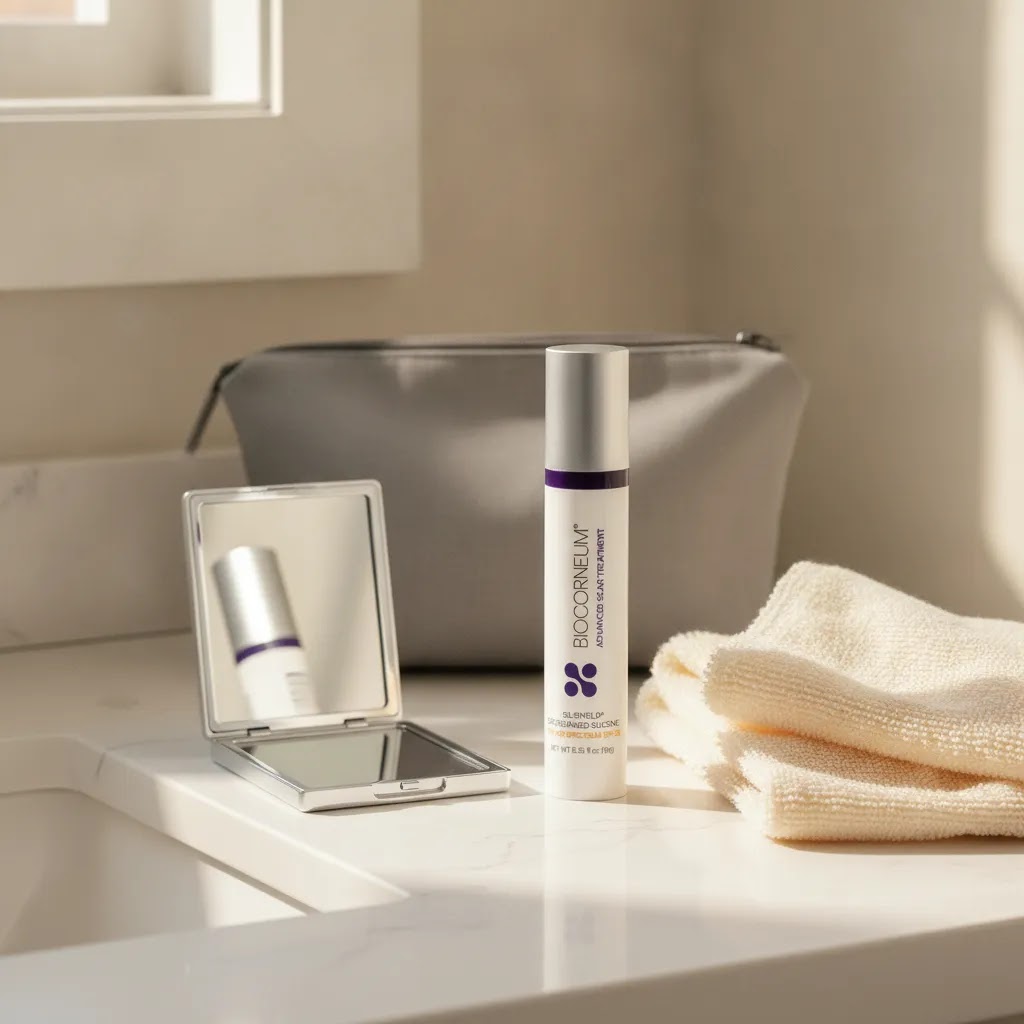
Across clinician, patient-education, and product-review discussions, reviewers judge the 10g format more on usability than novelty. They often focus on whether the silicone film spreads thinly, whether the product suits visible scars, and whether the built-in SPF makes daytime routines easier.
That convenience may matter most for facial scars or scars on sun-exposed areas such as the chest, shoulders, and hands. A healing scar can develop more visible pigment change after ultraviolet exposure. As a result, many scar-care discussions treat sun protection as part of appearance management, not as a separate step.
Professional commentary also stays realistic. No topical product can erase every scar. Likewise, silicone does not affect every scar type, skin type, or healing pattern in the same way. The most useful reviews usually mention:
- Scar age and whether the wound has fully closed
- Scar location and friction from clothing or movement
- How raised, thickened, or red the scar is
- Whether the user can commit to regular application
- How well the texture fits daytime wear
If you want to compare visible progress over time, our Biocorneum Scar Gel Before and After guide may help set grounded expectations around results and timeline.
How BIOCORNEUM + SPF 30 Works (Silicone Film + Sun Protection)
Professionals usually describe silicone scar gels by what they do on the skin surface. They do not describe them like an antibiotic ointment or prescription cream. In simple terms, the goal is to create a comfortable, consistent barrier over the scar that supports a healthier-looking maturation process over time.
Biocorneum SPF 30 10g and the silicone film
Biocorneum is often discussed in relation to crosslinked silicone technology, sometimes called SiliShield. Crosslinked silicone means the silicone molecules connect in a way that helps the gel form a flexible, breathable film after it dries.
In practice, that film may help in a few ways that matter for scar appearance:
- It can help reduce transepidermal water loss, which is a clinical term for moisture evaporating from the skin. Better hydration at the surface may support a scar that looks and feels smoother over time.
- It may reduce friction and minor irritation from clothing, movement, or repeated touch, which is relevant for scars on the chest, shoulders, or joints where rubbing is common.
- It creates a consistent “treatment layer,” which matters because many scar-care routines succeed or fail on adherence, not on having the most complex ingredients list.
Why SPF 30 matters for healing scars
SPF 30 in a scar gel serves a straightforward role. Broad-spectrum sun protection can help reduce the chance that a healing scar darkens or holds onto discoloration after UV exposure. Many clinicians point to UV protection as a core part of minimizing visible pigment changes in healing skin. For broader public guidance, the American Academy of Dermatology also discusses scar care and sun protection.
The built-in SPF may make daytime care easier. However, it still works best with smart sun habits. For example, limiting direct midday exposure, covering the area when possible, and reapplying sun protection during extended outdoor time can still matter.
What this scar gel does not do
Many patients overlook what this product is not. A silicone scar gel is not for open skin or unhealed wounds. It also does not replace post-procedure wound care instructions from your surgeon or clinician.
Just as importantly, it is not an instant fix. Scar remodeling is slow, and improvement tends to be gradual. Results also vary based on scar type, skin tone, scar location, and how the wound healed in the first place. A qualified practitioner can help you decide whether topical silicone fits your scar and when to start. In addition, the U.S. National Library of Medicine via MedlinePlus offers general background on scars and healing.
Pros and Considerations
Biocorneum SPF 30 10g Benefits
- Small-format convenience: A 10g tube may be easier to carry, store, and use discreetly during the day than larger formats.
- Targeted use for smaller scars: This size may make practical sense for limited treatment areas, especially on the face or other small visible sites.
- Silicone-based scar support: Silicone is widely used in scar management because it may help support a flatter, softer, and smoother scar appearance over time.
- Built-in SPF 30: Combining scar gel with sun protection may simplify daytime care and may help reduce darkening or prolonged discoloration in sun-exposed scars.
- May layer more easily into routine use: A gel format can be appealing for people who prefer not to manage sheets, tape, or bulkier dressings.
Biocorneum SPF 30 10g Considerations
- Limited volume: A 10g tube may run out quickly if the scar is large, if several scars are being treated, or if long-term use is planned.
- Results vary: Scar response depends on the type of scar, timing, skin characteristics, tension on the area, sun exposure, and consistency of use.
- Not for open wounds: Silicone scar products are generally intended for closed, healed skin, so timing should be guided by a qualified clinician.
- Texture tolerance differs: Some users prefer gel, while others may find sheets or different silicone formats easier to maintain consistently.
Who Biocorneum SPF 30 10g May Suit Best
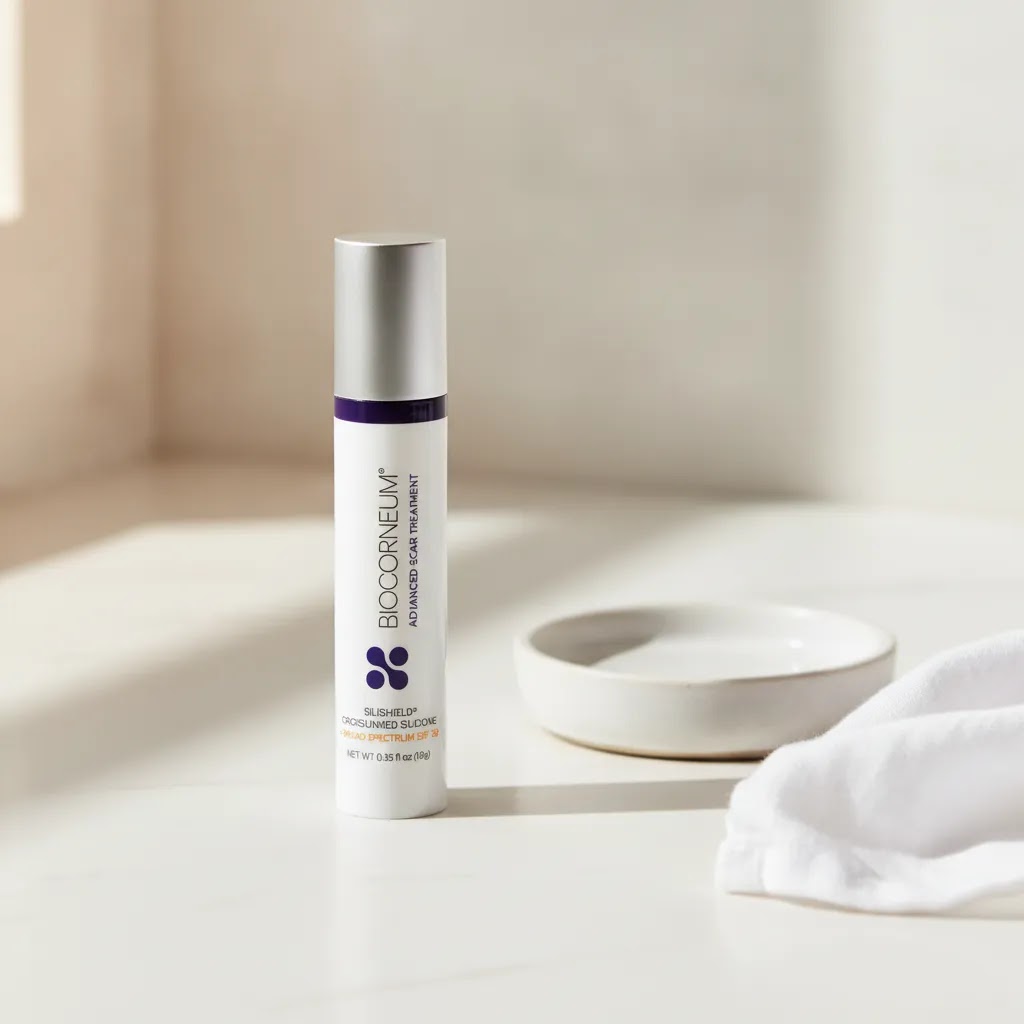
The 10g version may suit someone treating a small scar who wants a portable, daytime-friendly product and values having silicone care and SPF in one step. That can include readers researching scar management after a small surgical incision, mole removal, or another limited-area healing event once the skin is fully closed.
It may be less efficient for larger body scars or for someone who already knows they will apply product over a broader area for an extended period. In those cases, size becomes part of value, not just convenience. A qualified practitioner can help you decide whether a small tube makes sense for your scar dimensions, healing stage, and expected duration of use.
Biocorneum SPF 30 10g vs 20g vs 50g
Most frustration with scar gel does not come from the product being “bad.” It comes from choosing a tube size that does not match the commitment required. If you run out quickly, consistency becomes harder, and inconsistency is one of the main reasons people never learn whether silicone gel helps their scar.
While exact usage depends on how thinly you apply the gel and the surface area being treated, many product descriptions and review discussions use rough scar-length ranges to help people choose a tube size. As practical guidance, not a guarantee:
- 10g is often positioned for smaller scars, commonly described as under about 3 inches, especially if you are applying a very thin layer.
- 20g is often positioned for medium-length scars, commonly described around 4 to 6 inches.
- 50g is typically considered when the treatment area is larger, when there are multiple scars, or when you already know you will be using the gel for a longer period.
| Tube size | Often positioned for | Main practical trade-off |
|---|---|---|
| 10g | Smaller scars, commonly described as under about 3 inches | Portable, but may run out quickly |
| 20g | Medium-length scars, commonly described around 4 to 6 inches | More coverage with less portability |
| 50g | Larger treatment areas, multiple scars, or longer use | Best for volume, less ideal for carry-on convenience |
Think of these ranges as a starting framework, not a rule. A scar that is short but wide, or a scar in a high-friction location, can use more product than you expect. Climate and routine also matter. If you apply twice daily and treat more than one site, smaller tubes can feel limiting sooner.
The right tube size is usually the one that lets you stay consistent without feeling like you need to ration product. If you are unsure, a qualified practitioner can help you estimate realistic use based on your scar location, dimensions, and expected timeline. You can also compare bigger-format options in our Biocorneum Advanced Scar Treatment with Spf 30 article.
A Nuance Medical Perspective on Scar Care Selection
Nuance Medical approaches scar care with the same philosophy that guides the broader brand: precision, practicality, and medically credible decision-making. For readers comparing topical scar options, the goal is not to build the most complicated routine. Instead, the goal is to choose a format you can use correctly and consistently once a qualified professional confirms the skin is ready.
You can browse the broader Scar Treatment & Skincare category for related education, or explore brand updates such as Introducing SiliSilk™: Everyday Silicone Scar Care, Simplified and BIOCORNEUM® SiliSilk™ Wins NewBeauty Award for Best Scar Gel for additional context on how scar gel products are discussed within the Nuance Medical portfolio. If you are unsure whether silicone gel, sheets, or another scar-management approach fits your situation, a no-pressure consultation with a qualified practitioner is the safest next step.
How to Judge Whether a 10g Tube Makes Sense for You
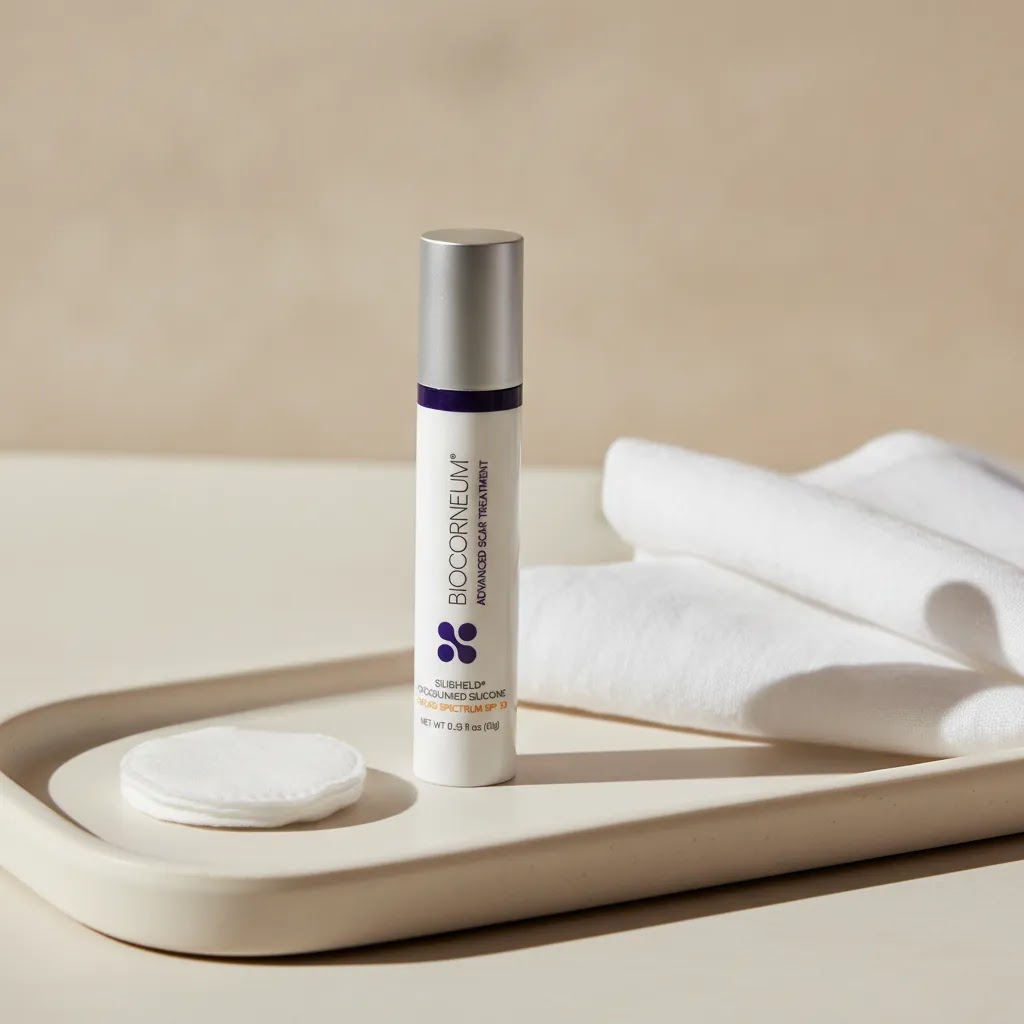
A product review helps most when it supports a decision, not when it simply lists specifications. For the 10g Biocorneum + SPF 30 format, five questions usually matter most.
1. How large is the treatment area?
This is the first filter. A small tube may match a short incision or one focused spot well. However, if your scar spans a larger area, crosses a moving joint, or includes multiple sites, the convenience of a small tube may be outweighed by frequent replacement.
2. Is daytime sun exposure a real issue for you?
If the scar sits on a sun-exposed area and you want one product that combines silicone care with SPF, the formula may feel efficient. If the scar is usually covered, the SPF feature may matter less day to day. Even so, sun protection remains a common recommendation for healing scars when they are exposed.
3. Will you actually use a gel consistently?
Some people strongly prefer gels because they feel simpler than sheets. Others do better with silicone sheets because the treatment stays in place once applied. Ultimately, a product only helps if the format suits your habits, clothing, workday, and comfort level. If you want a sheet-based comparison, see our guide to Biodermis Silicone Scar Sheets.
4. What stage is the scar in?
Scar products do not replace wound care. The skin usually needs to fully close before topical silicone products make sense. If there is scabbing, drainage, active irritation, or any uncertainty about healing, your clinician should guide the timeline.
5. What outcome are you realistically hoping for?
If you expect complete scar disappearance, any topical review may disappoint you. More realistic goals often include supporting a scar that looks flatter, softer, less prominent, or less prone to visible discoloration over time. Those outcomes may still be meaningful, but they are usually gradual and variable.
For readers comparing broader product categories beyond direct scar topicals, Nuance Medical also maintains other educational sections such as B2B Medical Supply. That area is less relevant to personal scar-gel selection, but it reflects the wider medical product context in which topical care products are often evaluated.
How to Use the 10g Tube (Application, Dry Time, and Frequency)
In a consultation setting, the routine is usually simple because the goal is consistency. Once your clinician confirms the skin is fully closed and ready for topical silicone, most people apply a very thin, even layer over the scar. They do not apply a thick coating.
With silicone gels, more product is not necessarily better. In fact, using too much often causes the issues people complain about most, including tackiness, pilling, or rubbing off onto clothing.
How often to apply Biocorneum SPF 30 10g
Many users apply silicone scar gel twice daily, often morning and evening. A steady routine is easier to maintain than occasional use. In review discussions, you may also see common timeframes such as about 60 days for newer scars and about 90 days for older scars.
These are not guarantees, and they do not apply equally to every scar. Still, they reflect a basic reality: scar appearance usually changes over weeks and months, not days. If you want more timeline context, our guide on How Long does It Take for Scars to Fade may help.
Basic application steps
In practical terms, a routine often looks like this:
- Clean and dry the skin first. Applying to damp skin can affect how well the film sets.
- Apply a small amount and spread it into a thin layer over the scar.
- Allow it to dry fully before dressing, layering other skincare, or applying makeup. Dry time is part of what makes a gel “wearable.”
- Once dry, many people find it can sit under makeup or be paired with additional sunscreen for longer outdoor exposure, depending on skin tolerance and how the film behaves on their skin.
Dry time, water resistance, and layering
Some product discussions also mention water resistance once the film has dried, often around 40 minutes. That can help if you deal with sweat or brief water exposure. However, you should not treat it as a reason to skip sun-protection habits or assume the film will stay perfect through heavy activity.
If you spend sustained time outdoors, reapplication and other protective steps can still matter, especially for sun-exposed scars.
Common application mistakes
Common mistakes are usually easy to correct:
- If the gel pills or rolls, you may be using too much, applying it over skincare that has not fully absorbed, or layering too quickly. A thinner layer and more dry time often help.
- If it stays tacky, the layer may be too thick or the area may be humid. A smaller amount can improve comfort.
- If you keep forgetting applications, the issue is usually not the product, it is the routine. Keeping the tube where you brush your teeth or with your morning skincare can make consistency more realistic.
As with any topical used on healing skin, stop and check with a qualified clinician if you notice persistent irritation or if the area does not seem fully healed. Ultimately, the safest scar-care routine is the one that matches your skin’s readiness and your ability to use the product correctly.
Frequently Asked Questions
Is Biocorneum + SPF 30 10g enough for a full treatment course?
It may be enough for a small scar, but it may not last long for a larger area or extended use. The practical answer depends on scar size, how thinly the product is applied, and how often it is used. Many readers find that tube size is one of the most important value considerations once they move beyond first impressions.
Why does SPF matter in a scar gel?
Healing scars can be more susceptible to discoloration when exposed to ultraviolet light. A scar gel with SPF may help simplify daytime care by combining two goals: silicone-based scar support and sun protection. It does not replace all sun-avoidance habits, and individual needs may vary by scar location, climate, and routine.
Can a 10g tube work for facial scars?
In many cases, yes. A smaller tube may suit a facial scar because the treatment area is often limited and portability matters. Facial skin can also make finish and wearability more important. That said, irritation potential, timing after procedures, and compatibility with other skincare should still be reviewed professionally.
Does silicone scar gel remove scars completely?
No topical scar product should be expected to remove a scar completely. Silicone may help support a scar that appears softer, flatter, or less noticeable over time, but results vary widely. Scar age, wound tension, genetics, skin tone, sun exposure, and adherence to the routine can all influence improvement.
When should you start using a silicone scar gel?
Silicone scar products are generally used after the wound has fully closed, not on open or actively healing skin. The exact timing can differ depending on the procedure, wound type, and any complications during healing. If there is uncertainty, a qualified medical professional should advise you before you begin application.
Is the 10g size better than a larger tube?
Not necessarily. It may be better for portability, trial use, or a small scar. A larger tube may be more practical for bigger scars or longer treatment plans. The better choice usually depends on surface area, budget, and whether the smaller size will encourage consistent use or simply lead to frequent replacement.
Can Biocorneum + SPF 30 be used under makeup or sunscreen?
Many gel-format scar products are chosen partly because they may fit more easily into a daytime routine. Whether it layers well depends on how much is applied, how long it is allowed to dry, and what products go on top. Behavior can vary by skin type, climate, and the rest of your skincare routine.
Are professional reviews more useful than consumer reviews?
They can be, especially when they discuss scar type, healing stage, formulation behavior, and realistic expectations rather than only first impressions. Consumer reviews may still help you understand texture, convenience, and packaging. The most useful evaluation usually combines both, then applies them to your own scar situation.
How does this compare with other silicone scar formats?
Gel and sheet formats each have advantages. Gels may feel more convenient for visible or irregular areas, while sheets may appeal to people who prefer a physical covering once placed. The better option depends on location, lifestyle, skin tolerance, and whether you are more likely to maintain one format consistently. If you are deciding between brands, our Mederma vs Biocorneum comparison may also help.
Does BIOCORNEUM actually work?
It may help, but results vary. Silicone-based scar products are widely used in scar management because they can support hydration and create a protective film over the scar, which may help improve how a scar looks and feels over time. The biggest factors that influence whether someone sees meaningful change are usually scar type, scar age, location, sun exposure, and consistent use over weeks to months. A qualified practitioner can help you assess whether topical silicone is a good fit for your scar and what a realistic timeline might look like.
What scar gel do plastic surgeons recommend?
Many plastic surgeons and dermatology professionals commonly recommend silicone-based scar products as part of post-procedure scar management once the skin is fully closed. Specific recommendations vary based on the procedure, the scar location, and the patient’s skin response, and your surgeon’s instructions should always guide timing and product choice. If you are unsure what to use, it is reasonable to ask your surgeon or a qualified clinician what they prefer and why, since the best option is often the one you can use correctly and consistently.
What is BIOCORNEUM with SPF 30?
Biocorneum + SPF 30 is generally described as a silicone-based scar gel that also provides SPF 30 sun protection. The silicone component is intended to dry into a breathable film over the scar, which may support hydration and reduce friction, while the SPF helps protect against UV-related darkening or prolonged discoloration on sun-exposed scars. It is not intended for open wounds, and it should be used based on guidance from a qualified professional, especially after surgery or procedures.
What is better, Mederma or BIOCORNEUM?
There is no single “better” option for everyone, because products differ in their primary approach and people differ in scar type, skin tolerance, and adherence. Biocorneum is typically discussed in the silicone scar gel category, where the focus is on forming a protective film and supporting hydration. Other scar gels may use different featured ingredients and may feel different on the skin. If you are comparing options, it can help to consider the scar’s location, whether sun exposure is a daily factor, and which format you are most likely to use consistently over time. A qualified practitioner can help you sort through options in a way that fits your specific scar and routine.
Key Takeaways
- The 10g Biocorneum + SPF 30 format is most appealing for small, targeted scars and portable daily use.
- Its main practical draw is the combination of silicone scar care with SPF 30 in one product.
- Professional reviews tend to focus on usability, finish, consistency, and scar-size fit rather than dramatic promises.
- A small tube may be less cost-effective for larger scars or long treatment timelines.
- Scar products should be chosen with attention to wound closure, scar location, sun exposure, and guidance from a qualified professional.
Biocorneum SPF 30 10g Product Info and Reviews: Final Take
The 10g version of Biocorneum + SPF 30 is best understood as a size-specific decision, not just a product decision. For a small scar, a visible area, or a routine where portability matters, it may be a thoughtful fit. By comparison, broader treatment areas may make the same tube feel too limited for easy long-term use. The most credible reviews stay grounded in these practical details because scar-care success often depends on matching the format to real life. If you are still weighing gel versus other silicone options, or trying to judge what is realistic for your scar, Nuance Medical’s educational resources can help you compare thoughtfully and move forward with more confidence.
Medical Disclaimer: The information provided in this article is intended for general informational and educational purposes only. It does not constitute medical advice and should not be used as a substitute for a professional consultation with a qualified aesthetic practitioner or healthcare provider. Individual results from aesthetic treatments vary. Always seek the advice of a qualified medical professional before undergoing any cosmetic procedure.